Detailed Guide to Making and Caring for Forsythia Bonsai
I. Making Methods
1. After about 3 years of growing, its trunk will become quite thick. You can bend it, or remove its top, or pinch it - this is the initial shaping. Be careful to cultivate transitional branches so that the thickness of the branches and trunk is more balanced once the bonsai grows up. Then you can also dig up some old stumps from the wild to make into bonsai; the form will be very elegant, and it can take shape in a very short time.
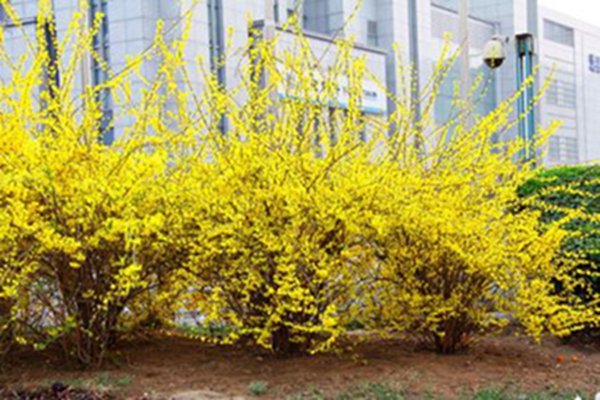
2. In spring it looks very brilliant, and in summer and autumn the green leaves are very lively. Common potted forms include the straight-trunk style, or the slanting style, or the curved style, or placed beside water, or placed on rocks - all are very attractive. If it is a plant propagated artificially, you can wire and prune its trunk when it is a seedling. Because its branches are relatively long, during its growth period you need to control branch growth, promote new side buds, and grow a compact crown. By June, when its new branches are 60 to 70 percent lignified, you can wire them to adjust the crown.
II. Care Methods
1. First, transplant it from winter to spring. Shape it first, cut off unwanted branches, then plant it in a relatively large flowerpot, preferably with relatively loose, sufficiently breathable sandy soil with good drainage. Then press the soil firm, water it thoroughly, and place it in a wind-sheltered but sunny spot. After it survives, wait until its soil is dry before watering; if you water, water thoroughly. Soil in the pot that is too wet or too dry is bad for its growth. During the growth period, pay attention to removing buds and cutting off excess branches.
2. It likes warm, bright areas, can tolerate cold and drought, but is afraid of waterlogging. During the growth period, you can place it outdoors in a spot with relatively sufficient sunlight and relatively good air circulation. Even in high temperatures, there is no need to shade it, the soil must not be too dry, and you should also pay attention to drainage as usual. Remove excess branches to keep its form graceful and its posture simple.