An Introduction to the Characteristics and Care of Variegated Greater Periwinkle
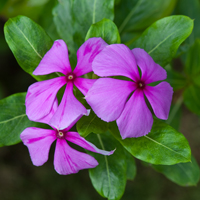
Variegated greater periwinkle is a variegated-leaf cultivar of the greater periwinkle (Vinca major) in the dogbane family Apocynaceae, and it is an evergreen trailing subshrub. Its stems are slender and soft, able to spread along the ground or trail downward, and its leaves are oval with creamy white or pale yellow-green markings along the edges, which is how it got its name. In spring it often produces small blue-purple flowers with an elegant shape that contrast nicely with the variegated leaves, giving it good ornamental value.
Because its stems are soft, it covers ground strongly, and it tolerates pruning, variegated greater periwinkle is often used as a groundcover plant to cover slopes, forest edges and the edges of tree beds; it is also suitable for hanging cultivation, adding greenery to balconies, pergolas or high indoor spots. Its overall form is low and neat, and its colors are bright, bringing greenery and a sense of layering to gardens and living spaces.
For care, it prefers a warm, humid, semi-shaded environment, fears strong direct sunlight, and also dislikes long-term waterlogging in the potting soil. During the growing season, keep the soil slightly moist; in summer, provide appropriate shade and pay attention to ventilation; in winter, reduce watering and protect it from the cold. It is not demanding about soil, and loose, fertile, well-drained sandy loam is most suitable.
Propagation is mostly done by cuttings: cut healthy stems with nodes and insert them into a moist medium, keeping humidity and bright, indirect light, and rooting is relatively easy. If you notice dull leaf color and leggy stems, it is usually related to insufficient light or poor ventilation; adjust the placement and prune lightly to encourage a more compact and full plant shape.
Related Reading