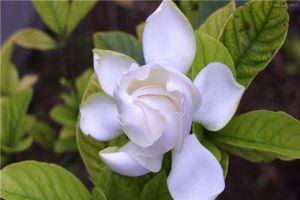
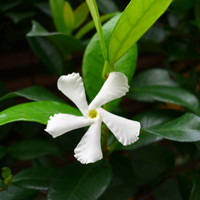
Variegated star jasmine (Trachelospermum jasminoides 'Variegatum') is an evergreen climbing ornamental plant with changeable leaf colors.
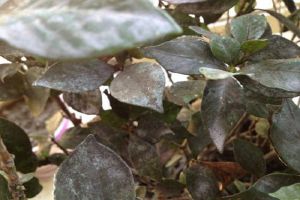
Variegated star jasmine is an evergreen woody vine of the genus Trachelospermum in the Apocynaceae family, and it is a variegated-leaf cultivar of star jasmine (Trachelospermum jasminoides). It gets its name from its rich leaf colors: new leaves are mostly pink or pale red, then gradually turn creamy white with green patches, and after maturing they slowly turn green again, so several colors can often be seen on the same plant at once, giving it high ornamental value.
It likes a warm, humid environment with plenty of sunlight, and can also tolerate partial shade. The more light it gets, the more vivid its leaf colors; with long-term lack of light it easily turns back to green. It has fairly good drought tolerance and fears waterlogging, and is not strict about soil, growing best in loose, well-drained soil. Its branches can both climb and creep along the ground. It is often used for courtyard landscaping in the south, and is mostly grown as a potted ornamental in the north.
In daily care, simply keep the soil slightly moist during the growing season, and avoid waterlogging that causes root rot; give it plenty of light in spring and autumn, provide appropriate shade during the high temperatures of summer, and in cold winter regions take care to protect it from the cold or move it indoors. To make the leaf colors more striking, fertilizer should not be too nitrogen-heavy, and an appropriate amount of phosphorus and potassium fertilizer can be added. Propagation is mainly by cuttings; cut healthy branches and insert them into moist sandy soil, and the survival rate is fairly high.
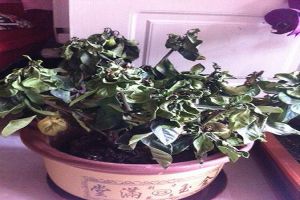
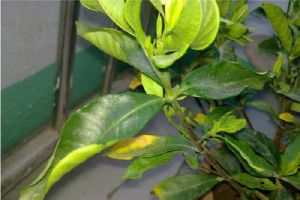
Common problems are leaves turning back to green or leaf tips turning yellow, which are mostly related to insufficient light, overwatering or lack of fertilizer; after adjusting the placement and watering frequency, it usually recovers slowly. In addition, as a plant in the Apocynaceae family, the white sap that flows out when its branches and leaves are broken may irritate the skin, so it is recommended to wear gloves when pruning, and households with young children and pets should also prevent accidental ingestion. It can be grown in hanging pots and can also be used as ground cover to decorate courtyards and balconies; it is easy to manage and very suitable for beginners.
Related Reading