Characteristics of Cosmos (Gesang Flowers) and a Guide to Planting and Care
Gesang flower cosmos generally refers to cosmos, whose Chinese botanical name is often written as qiuying. It is an annual herbaceous ornamental flower native to the Americas and now widely cultivated throughout our country. In plateau regions such as Tibet, people habitually call this brightly colored, tenacious flower Gesang flower, so in everyday usage, Gesang flower and cosmos are often regarded as the same flower.
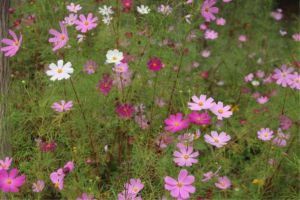
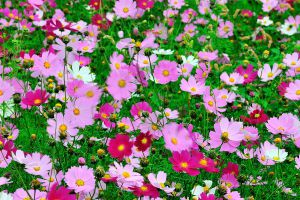
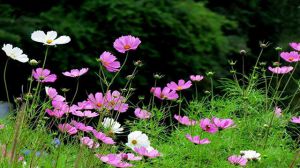
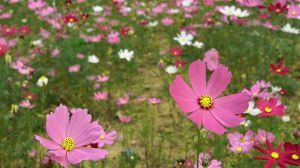
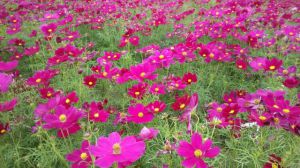
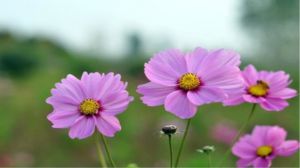
Cosmos has an open, spreading plant form, slender stems, finely divided feathery leaves, and light, saucer-like flowers. Common flower colors include pink, white, and purplish red, and the flowering period is mostly concentrated in summer and autumn. It likes a sunny, cool, and well-ventilated environment, is drought-tolerant and afraid of waterlogging, and has low soil requirements. It can grow well even in relatively poor land, but excessive water and fertilizer instead easily cause leggy growth, leading to fewer flowers.
Planting Gesang flower cosmos is mostly done by sowing, generally after temperatures warm up in spring. After sowing, keeping the soil slightly moist is enough for successful seedling emergence. Daily management is relatively extensive; watering follows the principle of watering when dry and stopping when wet, fertilizing should be sparing rather than heavy, and appropriately controlling water and fertilizer during the growing period helps keep plants compact and sturdy with abundant, vividly colored flowers. Removing spent flowers promptly after blooming can also encourage another round of flowering, and it can self-propagate through naturally dropped seeds.
Because of its strong adaptability and good ornamental effect when planted in masses, Gesang flower cosmos is often used for flower sea landscaping, courtyard beautification, and greening along both sides of roads. It is a non-toxic flower, suitable for home courtyard planting, and is also very popular with photography enthusiasts. It should be noted that it differs from cineraria and other Asteraceae flowers in both appearance and habits, so seeds should be carefully distinguished when purchasing.