Oilseed crops are a category of crops whose seeds contain a large amount of fat and are used to extract oil for edible purposes or as industrial and pharmaceutical raw materials. They mainly include soybean, peanut, rapeseed, sesame, castor, sunflower, perilla, and tiger nut. The oil content of the seeds can generally reach 20-60%. Fiber crops such as cotton, flax, and hemp also contain a large amount of oil in their seeds and are important raw materials for the oil industry. Perennial woody oil plants include coconut, oil tea, oil palm, and walnut. The oil cake remaining after pressing oil contains a large amount of protein and other nutrients, which can be used to produce secondary food products and is also a good concentrated feed and fertilizer.
Overview
Peanut
Among various oilseed crops, peanut has high yield per unit area and high oil content. It is a warmth-loving and poor-soil-tolerant crop with low soil requirements, and well-drained sandy soil is best. Peanut production is widely distributed, and it is grown throughout the country except in Xizang and Qinghai, mainly concentrated in Shandong, Guangdong, Henan, Hebei, Jiangsu, Anhui, Guangxi, Liaoning, Sichuan, Fujian, and other provinces and regions, among which Shandong ranks first in the country in output, followed by Guangdong. At present, peanut production in the country is mainly concentrated in two regions: one is the hilly land around the Bohai Bay and the sandy soil areas along rivers, which is China's largest peanut production base and export base; the other is the hilly and coastal areas of Fujian, Guangdong, Guangxi, Taiwan, China, and other places in South China.
Rapeseed
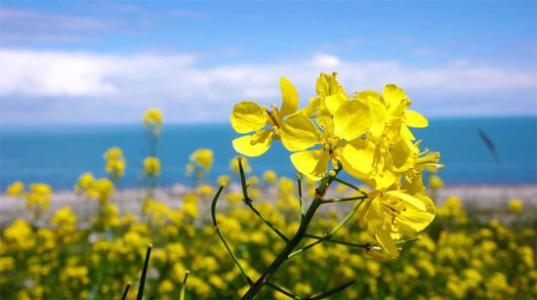
Rapeseed is the oilseed crop with the largest sown area and the widest regional distribution in China. China is the country that produces the most rapeseed in the world. Rapeseed is a cool-loving crop with low heat requirements and low soil requirements. According to different sowing periods, it can be divided into spring rapeseed and winter rapeseed. The boundary between the distribution of spring and winter rapeseed corresponds to the dividing line between spring and winter wheat but is slightly farther south. China mainly grows winter rapeseed. The Yangtze River Basin is the largest winter rapeseed producing area in the country, among which Sichuan Province ranks first in the country in both sown area and output. Next are Anhui, Jiangsu, Zhejiang, Hubei, Hunan, Guizhou, and other provinces. Spring rapeseed is mainly concentrated in the northeastern and northwestern northern regions.
Sesame
China is one of the countries that produces the most sesame in the world. Sesame is a high-quality oilseed crop with a very high oil content. Sesame is widely distributed in China, mainly in Henan, Hubei, Anhui, Shandong, and other provinces, among which Henan Province ranks first in the country in output.
Soybean
China is the homeland of soybean. As early as 5000 years ago, soybean took root in the fertile soil of China. After the Middle Ages, soybean was introduced to the West through Arabia. The United States has only more than 70 years of history of large-scale soybean cultivation, yet it has leaped to become the world's number one soybean producer, with output reaching 75 million tons in 2000, accounting for 50% of global soybean production. China, however, has become the world's number one soybean importer, with annual imports reaching 14 million tons. Its annual output currently ranks third in the world after the United States and Brazil. Soybean is both a grain crop and an oilseed crop, and it is also an important raw material for secondary food products. It has high nutritional value, so soybean holds a special position in agriculture. Soybean is a warmth-loving crop, requiring high temperatures during the peak growing season, and dry conditions are suitable at harvest time, making it very suitable for cultivation in the temperate regions of northern China. Soybean is widely distributed in China, but is most concentrated in the Songliao Plain of Northeast China and the Huang-Huai Plain of North China. The Songliao Plain is China's most important soybean production base, mainly concentrated along the Songhua River, the Liao River, and the Harbin-Dalian railway line. Among them, Harbin, Liaoyuan, and Changchun are called China's "three great warehouses" for soybean.
Cottonseed
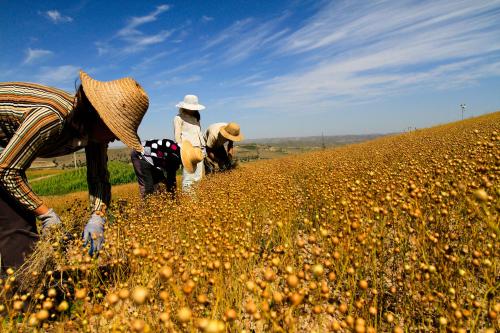
The seed of cotton, whose commercial importance lies in its oil and other products. Cottonseed oil is used for salad oil and cooking oil, and after hydrogenation is used as shortening and margarine. The cake meal or seed kernels left after oil extraction are used as feed for poultry and livestock. The short lint remaining on the seeds after the cotton fibers are removed with a cotton gin can be used to make roving and various fiber products. The seed hulls can be used as roughage for ruminant animals.