A Detailed Guide to Peanut Planting Techniques and Management Methods
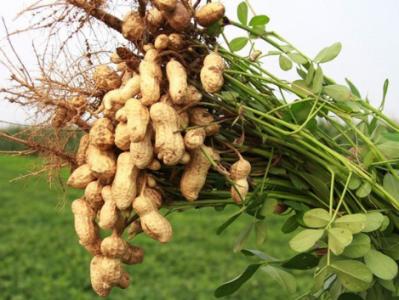
The peanut, formerly known as groundnut (scientific name: Arachis hypogaea Linn.), is a nut with abundant production and wide consumption in our country, also known as the "longevity nut", "mud bean" and so on. It belongs to the order Rosales, family Fabaceae, an annual herbaceous plant, with stems erect or prostrate, 30-80 cm long, wing petals and keel petals separate, pods 2-5 cm long, 1-1.3 cm wide, inflated, with thick pod walls, and a flowering and fruiting period from June to August. It is mainly distributed in Brazil, China, Egypt and other places. It can be used as a raw material for soap, hair oil and other cosmetics.
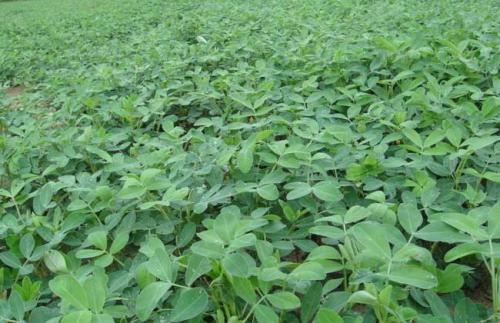
- Sowing time. When the soil temperature at 5 cm in spring stabilizes at 12°C, pearl bean-type peanuts can be sown. From late April to early May, plastic film mulching cultivation can be about 7-10 days earlier.
- Sowing density and method.Ridge planting: ridge spacing 50 cm, hole spacing 13-17 cm, that is 120,000-150,000 holes/hectare, with two seeds per hole.
Plastic film mulched bed planting: two rows per bed, small row spacing 40 cm, hole spacing 13-17 cm, two seeds per hole, that is 120,000-150,000 holes/hectare.
Field management
After peanut sowing, check the field and protect the film frequently. If the film is lifted by wind or has a breach that lets air through, cover it tightly and press it down immediately to ensure the warming and moisture-preserving effect. After peanut seedlings emerge, guide the seedlings out in time and seal the film holes tightly with wet soil. Along with guiding the seedlings, pull the first pair of lateral branches out of the film, remove excess soil piled on the film holes in time, and after full emergence check the seedlings and replant promptly.
During the growth and development of peanuts, do a good job of protecting the film and prevent wind damage and trampling by people and livestock. Strengthen the prevention and control of diseases and insect pests. These are mainly stem rot, root rot and crown rot in the early stage, and leaf spot disease in the middle and late stages. It is recommended to use Jingbo Good Peanut three high-yield programs: the seedling stage to early flowering stage program, the late full-flowering stage to pod-setting stage program, and the full-pod stage program.
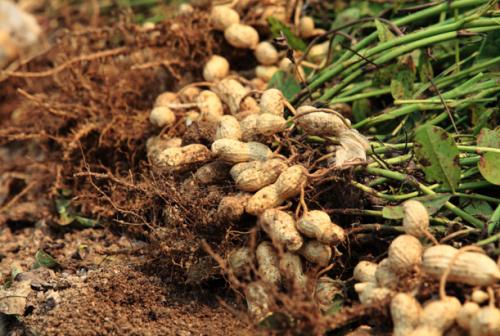
- Land preparation. Land preparation must be fine; autumn land preparation is essential, with deep plowing to 30 cm, repeated fine harrowing to ensure the soil is loose on top and firm below with good permeability, and ridges formed in autumn and compacted. Through the low-temperature effect of winter, kill the fungi in the soil that cause peanut stem rot and root rot, reducing the occurrence of diseases and insect pests.
- Fertilization. In continuous peanut cropping, organic fertilizer must be increased; combined with autumn plowing, apply 4000-5000 kg of high-quality farmyard manure per mu. At sowing, mainly use phosphorus and potassium fertilizers, applying 15 kg of diammonium phosphate per mu and 8 kg of potassium sulfate. In early to mid-August, spray 2% monopotassium phosphate as a foliar fertilizer twice, and at the same time use a special peanut microbial preparation containing nitrogen-fixing bacteria, phosphate-solubilizing bacteria, potassium-solubilizing bacteria and other bacteria as well as an appropriate amount of medium and trace elements; the disease control effect is remarkable.
- Variety selection. Strengthen quarantine and strictly prohibit the introduction of seeds from diseased areas. Choose disease-resistant and high-yield varieties and replace varieties in time. Before shelling peanuts, choose sunny weather and sun the seeds for 2-3 days. Along with shelling, select first-grade seeds that are large and plump, with bright skin color, a high rate of full pods, good uniformity, clear reticulation, moderate size, attractive appearance, and high germination vigor and germination rate.
-
Management. After emergence, if there are missing plants or broken rows, germinate seeds and replant. After full emergence, clear the seedlings and restrain growth by hand, pulling away the loose soil around the seedling roots so that the two cotyledons are exposed. About 15 days after the highland barley stage, fill the holes back with soil. During the seedling stage, rosette stage and flowering stage, carry out three cultivations and weedings. The first cultivation should be shallow to prevent too much soil from burying the stems and affecting lateral branch development; simply loosen the surface soil and remove all weeds. The second cultivation is at the nodule formation stage; this cultivation can be slightly deeper, generally about 6 cm. The third cultivation is at the flowering stage; this cultivation must be done with extra care to avoid damaging the pegs, with a cultivation depth of about 5 cm. That is, master the principle of "shallow, deep, shallow"; about 15 days after flowering, hilling soil to 3 cm is appropriate, not too thick. Strengthen the prevention and control of diseases and insect pests, and control diseases as soon as they are found.
Land preparation and fertilization
Land preparation. After the previous crop is harvested in autumn, stubble is removed, and after autumn plowing, harrowing and compacting, new ridges are made. For plots prepared for plastic film mulching cultivation, make beds with a bottom width of 75-80 cm, bed height 5 cm and bed surface width 65-70 cm, and make small ridges 20-25 cm wide and 15 cm high between beds for taking soil at sowing.
Fertilization. Along with autumn land preparation and ridge making, apply decomposed barnyard manure, kang hole soil, composted green manure, etc. Apply 15,000-30,000 kg/hectare, by opening furrows and broadcasting thinly for ridge planting, or by broadcasting for bed planting. In ridge planting cultivation, farmyard manure can also be broadcast thinly before sowing in the sowing year. At sowing, apply phosphoric acid diammonium 150-225 kg/hectare and potassium sulfate 75-120 kg/hectare as seed fertilizer. For acidic soil, apply lime with the base fertilizer. If the pH value (acidity and alkalinity) is 6.0-6.5, apply lime 450 kg/hectare; if the pH value is 5.5-6.0, apply lime 675 kg/hectare.
Nutritional value