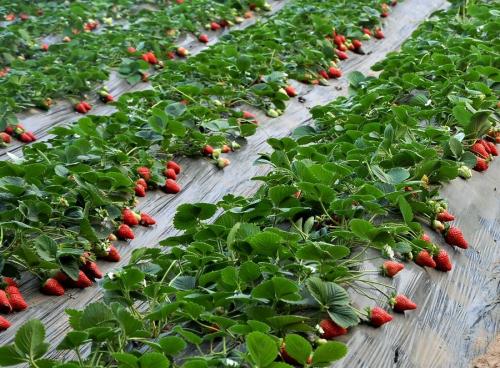
Strawberry Anthracnose: Pictures, Control Methods and Healthy Seedling Cultivation Techniques
How should strawberry anthracnose be controlled?The Agricultural Research Institute of the Council of Agriculture, Executive Yuan successfully developed healthy strawberry seedling cultivation techniques, which are different from growing strawberries in pots.Let's take a look together!
The Agricultural Research Institute of the Council of Agriculture, Executive Yuan successfully developed healthy strawberry seedling cultivation techniques and strategy procedures that can be integrated into farmers' existing cultivation models, not only increasing the success rate of healthy strawberry seedlings but also reducing the replanting rate in the field, effectively raising strawberry yield and quality and increasing strawberry farmers' income.
Strawberry is an important economic crop in Taiwan, China. Although the total domestic production area is only about 550 hectares, with 90% concentrated in Miaoli County, because of its small volume and high price, the total output value of fresh and processed fruit exceeds 1.8 billion yuan. If strawberry seedlings are estimated at 4,500 plants per fen, the total annual demand reaches 25 million plants. However, in recent years, due to major outbreaks of strawberry anthracnose, the supply of strawberry seedlings has been insufficient, and combined with abnormal climate, after strawberries are transplanted in September, there is still frequent high temperature (above 25°C) between October and November, causing transplanted seedlings to suffer from anthracnose, resulting in necrosis of the underground crown, wilting of aboveground leaves and gradual death. To compensate for missing plants, the replanting rate reaches as high as 30% to 40%, creating a major crisis for the strawberry industry. Solving the problem of strawberry anthracnose brooks no delay.
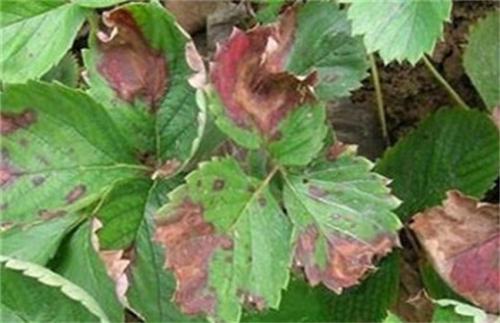
Facing the challenge of anthracnose, the Agricultural Research Institute developed healthy strawberry seedling cultivation techniques. First, it uses specific pathogen-free strawberry tissue culture seedlings, combined with the application of microbial agents, to cultivate healthy strawberry seedlings. Then it uses gas water heaters to sterilize the growing medium, and through flooding, adding organic matter and covering with transparent plastic sheeting to disinfect the field soil. Finally, microbial agents are applied to the sterilized growing medium and field soil, using beneficial microorganisms to first colonize and occupy the ecological niches where anthracnose pathogens might infect strawberries, preventing the anthracnose pathogen from growing and reproducing, thereby reducing infection and disease in strawberry seedlings in nurseries and after transplanting in the field.
In this demonstration observation field, the seedling survival rate of the untreated group was 83.9%, while the survival rate of healthy strawberry seedlings cultivated with microbial agents increased to 95.1%. The strawberry replanting rate in the untreated field was 37.6%, while the strawberry replanting rate in the treated field dropped to 10.7%. The additional cost of using microbial agents for 6 months per fen does not exceed 1,800 yuan, yet it can reduce losses and expenditures by about 25,300 yuan (including about 20,500 yuan for replanting strawberry seedlings per fen and 4,800 yuan in replanting labor). In addition, cultivating healthy strawberry seedlings with microbial agents allows strawberries to be planted in mid-September. Other farmers who do not adopt this technique may have to delay planting until the end of October due to a shortage of transplanted seedlings or excessively high temperatures, delaying the market opportunity for strawberry harvest.