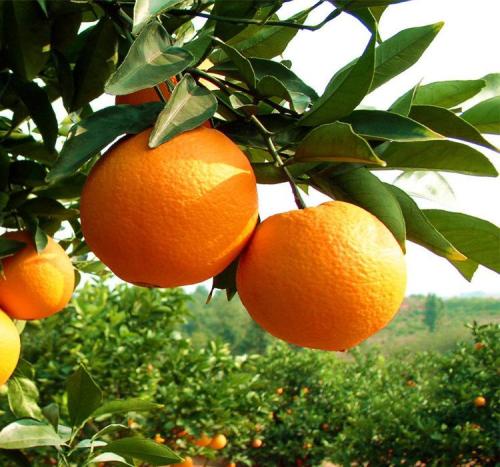
Best Planting Time for Orange Trees and Watering and Fertilizing Requirements
We have all eaten oranges as a fruit,and seeing dark green leaves decorated with bright orange fruit may tempt you to grow your own citrus tree.So do you know whether this fruit is difficult to grow? How should it be planted?
Providing shade and edible fruit, orange trees (Citrus sinensis) come in different sizes, from 8-foot dwarfs to 20-foot standard varieties. The best way to plant an orange tree requires careful assessment of your property and soil type.
Time and Location
Orange trees need time to adapt to a new environment. Early spring to spring is the best time for citrus planting, because they have all of spring and summer to establish themselves in the soil in warm weather. Choose a sunny, south-facing area with no grass. Ground cover plants tend to steal nutrients and soil moisture from orange trees, which affects their growth and fruiting prospects. Any nearby concrete, such as a walkway or patio, can help your newly planted orange tree stay warm on sunny days by reflecting heat.
Soil Preparation
Your soil must be well drained and fertile. The best soil consists of a balanced mixture of organic matter, sand and clay. A smart way to determine whether your soil structure is healthy for orange trees is to add water. An inch of standing water on the soil surface should be absorbed into the ground after one hour. If the water remains on the surface, you need to amend the soil with sand to loosen compacted soil.
Positioning the Tree
Your planting hole needs to be twice the diameter of the tree's root ball. This large hole provides a comfortable area for new roots to adapt and spread into the surrounding soil. The top of the root ball should remain 1 inch above the topsoil, because it will sink into the ground once it is established. If you plant the root ball flush with the surrounding soil, the tree will eventually sink into the ground. When moist soil directly touches the trunk above the root ball, fungus becomes a major problem. Planting the orange tree with the root ball's position in mind can prevent disease problems in the future.
Watering and Fertilizing
Consistent deep watering of a new orange tree ensures it has enough moisture to promote healthy growth. Generally, the top 5 to 6 inches of soil should be moist, but not soggy. A good practice is to fertilize the tree during the growing season after the planting process. Do not add fertilizer to the hole at planting time, because it can burn the roots. Fertilizers formulated for citrus have a high nitrogen content, which can supplement the tree's nutrient needs for vigorous growth and fruiting.