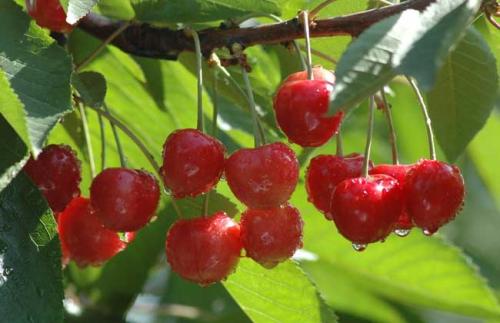
West Indian Cherry Propagation Methods and a Detailed Guide to Cutting Method Planting Time
West Indian cherry plants are established in fields, containers, or gardens. There are four methods of propagating seedlings: cuttings, sowing, air layering, and grafting. What are these four methods like? Let's take a look together!
The sowing method, due to its single false fruiting habit, unfilled seeds, low germination rate, high genetic variability, uneven seedlings, and later fruiting age, is generally less commonly used than the cutting method or air layering method for propagation. Although the air layering method roots more easily, its effectiveness varies greatly among different varieties, and it is more labor- and time-intensive for mass propagation. The cutting method is still the simplest and most successful, and it can preserve the excellent characteristics of the parent plant.
I. Sowing Method
After harvesting West Indian cherries, crush the skin and flesh to remove the stones, wash off the flesh adhering to the outside of the stones with clean water, then place them in a cool place to dry for 1-2 days before sowing. When sowing, place the stones directly in a shallow pot or a 72-cell tray. They germinate about 10-30 days after sowing, germinating faster during high temperatures and very slowly during low temperatures. When the seedlings grow to 5-10 cm, transplant them into soft plastic pots. West Indian cherry seeds germinate easily but unevenly, and some seeds produced by certain plants often lack viable embryos, with germination rates often below 30%.
II. Cutting Method
During the growth period from March to October, select semi-mature healthy branches, 0.7-1.2 cm in diameter, each segment 15-20 cm long, with 4-6 leaves attached. Insert them into river sand, vermiculite, peat soil, or a mixture of several of these, all suitable as seedbed media. The cuttings especially need to be kept moist and shaded. To promote rooting, a rooting hormone (IBA) treatment can be used. After cutting, roots develop in about 1.5-2 months. Transplant after the root system grows vigorously. If managed properly, the cutting method will have a 60-90% survival rate, with even better results when cuttings are taken in March or October. The rooting rate of sour varieties is significantly higher than that of sweet varieties.
III. Layering Method
In horticultural practice, the layering method is the fastest way to produce large trees, but its effectiveness varies greatly among West Indian cherry varieties. Chen Bohui (1997) conducted experiments at the Tainan District Agricultural Research and Extension Station, Yunlin Branch, using 10 plants each of the existing sour and sweet varieties on site, using the ring-barking method wrapped with sphagnum moss, covered with plastic sheeting, and tied tightly above and below. The results showed that the sour variety had an 80% rooting rate 1 month after layering treatment, while the sweet variety in the grafting method showed only callus tissue after a 3-month trial period with no root development.
General nursery producers engaged in layering propagation carry out layering during the growth period from March to October. After 2-4 months when rooting is complete, they cut them off and first plant them in soft pot containers, then move them to fields or pots for permanent planting in March-April of the following year.
IV. Grafting Method
Side grafting and cut grafting can be used, but they are rarely adopted.