-

Detailed Explanation of Key Techniques for Mixed Culture of Snails and Earthworms
Using a multi-tiered frame with multi-level flat netting for mixed culture of snails and earthworms can achieve the goals of low energy consumption, small space, simple management, and rapid high yield. I. Variety Selection For snails, the White Jade snail can generally be used, but it is best to use the more cold-tolerant French Light Great snail, so that it can grow and reproduce in sync with earthworms throughout the four seasons. For earthworms, choose species that grow and develop quickly, have strong reproductive capacity, broad adaptability, long lifespan, and are easy to domesticate and manage. At present, the most ideal varieties are Beixing No. 2 and Daping No. 2.</p><p>II. Culture Method Idle houses or plastic greenhouses can be used for culture. Snails are cultured using multi-tiered frames with multi-level flat netting, while earthworms are cultured in boxes. The multi-tiered frame is 3 m long, 1.2 m wide, and 3 m high, with 11 tiers of bed frames arranged from top to bottom, each tier 20 cm apart, and the lowest tier 60 cm above the ground. Each tier is fixed with nylon netting stretched tight to form a supporting net bed. The mesh of the top 1-2 net beds is 1 mesh or larger, so that egg-laying breeder snails cannot pass through the mesh, while medium and young snails can fall through the mesh. The mesh of the 3rd-4th net beds is 2 mesh, the 5th-6th net beds is 3 mesh, the 7th-8th net beds is 4 mesh, the 9th-10th net beds is 6 mesh, and the bottom net bed is 8 mesh. On one side of the topmost net bed, make an egg-laying and hatching bed 30 cm wide and 25 cm high, and place hatching substrate about 20 cm thick into the egg-laying and hatching bed. The substrate is made by mixing sawdust, rice straw (cut into 2 cm lengths), and garden soil at a ratio of 1:1:1 and fermenting the mixture. Apply lime slurry around each tier of the frame to prevent snails from crawling off the net beds.</p><p>The bottom layer of the multi-tiered frame is enclosed with wooden boards to form a box 30 cm high. Place 10 cm thick garden soil into the bottom of the box, then add fermented material of rotted cow dung or pig dung and rice straw, and mix in 20% well-fermented sawdust as feed for the earthworms. The moisture content of the feed should be kept above 60%.</p><p>III. Stocking and Culture When the temperature is above 15°C, stocking and culture can begin. The top tier of the frame is the breeder snail tier, and outbred parent-line breeder snails can be stocked at a density of 200 per sq m. Breeder earthworms can be stocked at 2.5 kg per sq m (about 5,000 individuals).</p><p>Snails have a very broad diet. Various vegetables, aquatic plants, crop stems and leaves, and even the leaves of broadleaf trees can all be used for feeding. Earthworms have an even more omnivorous diet; almost all plant residues, humus, decaying animals, and household garbage are their food. When feeding, wash the green feed and place it directly on the 1st-2nd net beds. In this way, the small fragments left after the breeder snails eat will fall into the net beds below and become feed for the medium and young snails, while the feces and food residues produced by the snails on each net bed fall onto the earthworm bed and become food for the earthworms. According to estimates: 5 kg of large snails (about 100 individuals) excrete about 0.3 kg of feces per day, and together with the snails' food residues, this can feed more than 0.5 kg of earthworms. When the young snails bred by the breeder snails fall downward and become distributed among the net beds on each tier, the snails' feces and food residues are basically enough to feed the earthworms in the earthworm bed. In this way, not only is the tedious work of feeding and cleaning feces reduced, but the feed utilization rate is also greatly improved.</p><p>IV. Key Management Points With reasonable regulation of the environmental ecology, snails and earthworms have almost no threat of disease.</p><p>1. Temperature The temperature should be kept above 20°C. If the temperature reaches 30°C, attention should be paid to taking cooling measures. If the temperature is below 15°C, heating should be carried out.</p><p>2. Light Snails and earthworms are both shade-loving animals and have the habit of hiding by day and coming out at night. During culture, pay attention to the amount of light. The illuminance of one 3-watt bulb per 10 sq m in a dark room is suitable.</p><p>3. Humidity Snails and earthworms both like humid environments. The indoor air humidity should be kept at 60%-70%. The humidity of the snail hatching substrate should be kept at 30%-40%, while the humidity of the earthworm feed should be kept at 60%-66%. Snail feed should be soaked and then fed.</p><p>4. Air High-density culture of snails and earthworms will produce large amounts of harmful gases. Therefore, attention should be paid to frequent ventilation to maintain sufficient oxygen. At the same time, during their life activities, earthworms will continuously deposit feces on the surface of the feed, so the earthworm feces should be cleaned frequently to facilitate air circulation.</p><p>5. Grading and Harvesting</p><p>Grading of snails Snails have the habit of the large eating the small, so large, medium, and small snails of different ages in months cannot be mixed. Net beds with different mesh sizes are used for culture so that the snails automatically screen and grade themselves, that is, snails of different sizes will retract their heads when frightened (such as by strong light or vibration) and tumble down to the lower tier. When snails of each grade grow to the age in months of the next higher grade, manual selection is needed. At the same time, the adult snails above can all be harvested.</p><p>Harvesting of earthworms When most earthworms in the bed have reached a body weight of 400-500 mg, at which point the density per sq m has reached 15,000-20,000 individuals, most of the adult earthworms can be harvested.</p>
-
Rapid Finishing Breeding Technology for Meat Ducks in Multi-Tier Cages
I. Advantages of Cage Rearing for Meat Ducks: First, it makes full use of the duck house space, increases stocking density and raises output per unit area. Second, mechanized equipment can be used to reduce labor intensity. Third, the diet is nutritionally complete and feed intake is uniform, and the finishing time is shortened to about 60 days,
-
The multi-tiered planting model in greenhouses yields over 12,000 yuan per mu.
Multi-tiered planting in greenhouses yields over 12,000 yuan per mu.
-

DIY Multi-Tier Plant Stand Made from Scrap Wood Picked Up for Free - Not Selling It Even for 200 Yuan
The space at home is too small, yet the number of plants keeps growing, pot next to pot, and there is really no room to place them all. We might as well make a plant stand ourselves and stack the pots up - it saves space and money! DIY plant stands, money-saving secrets 1. Low-level plant stands...
-
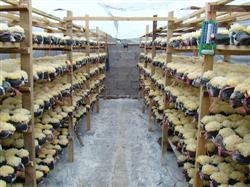
A Detailed Guide to Practical Multi-Tier Three-Dimensional Cultivation Techniques for White Wood Ear (Tremella fuciformis)
White wood ear, also known as white fungus, snow ear, or Sichuan ear, is a "prized fungus" used both as food and medicine, with broad market prospects. Artificial cultivation techniques for white wood ear are constantly being improved. Here we introduce the practical techniques for indoor multi-tier three-dimensional cultivation of white wood ear in Gutian County, Fujian Province, the "home of white wood ear": 1. Mushroom house setup: The specifications of a professional cultivation house or shed...
-
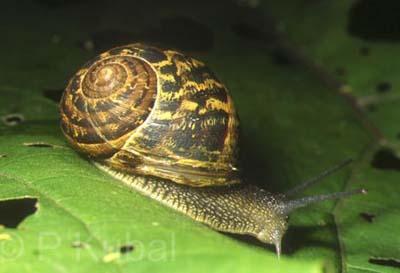
Detailed Explanation of Indoor Multi-Tier Farming Techniques for the Roman Snail
Indoor Multi-Tier Farming Techniques for the Roman Snail
条件筛选