Detailed Explanation of Indoor Multi-Tier Farming Techniques for the Roman Snail
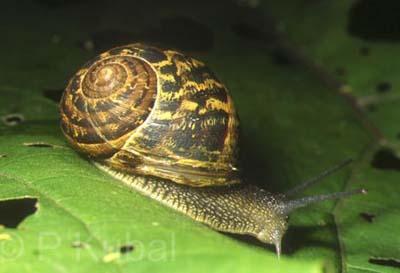
The Roman snail (Helix pomatia) has a high egg-laying capacity, a high reproduction rate and a short production cycle, and originates from western France and Algeria. The Roman snail is a rare type among edible snails and is listed as one of the world's four famous snails; the main producing countries are France and the United Kingdom, and China is the third-largest producer of the Roman snail. The Roman snail is the second type of edible snail domesticated in China. It was first introduced in the 1960s and introduced again in 1987; it has been domesticated in various parts of northern and southern China for more than ten years, and is an edible snail suited to development in China's north temperate climate. The artificially farmed Roman snail is now scattered throughout the provinces and regions north of the Yangtze River in China. It has been proven to be the rare edible snail variety most suitable for household farming.
 Farming Techniques" />
1. Rearing Environment
The farming room should be dark and damp. Snails like darkness, not because they do not need sunlight, but to avoid direct strong light. For example, buildings, single-storey houses, basements, air-raid shelters and the like can all be used for farming. Each group occupies 1 sq m.
2. Custom-Made Rearing Boxes
The rearing practice of snail farmers across the country proves that: a rearing box of 40*50*10cm holds about 100 breeding snails; one group of breeding snails (200 snails) needs only two such wooden boxes, or boxes can be custom-made according to actual conditions (wooden boxes made of odourless poplar, willow or birch are best). Plastic basins, brick pools and the like can also be used instead.
3. Requirements for the Rearing Soil
For breeding snails, finer river sand is better; for young snails, loose and moist vegetable-garden soil rich in humus can be added, but it must not contain pest eggs, and above all must not be contaminated by harmful substances such as chemical fertilizers and pesticides.
4. Temperature Control
Mating and egg-laying can occur when the temperature is controlled above 12 degrees; 15°C-25°C is the most suitable temperature for reproduction; below 7 degrees above zero or above 32 degrees, they enter a dormant state. Therefore, every effort must be made to keep the indoor temperature above 15 degrees, so that more eggs are laid and economic returns are increased. Under suitable conditions, the Roman snail can breed 3-5 times a year, and each breeding snail produces more than 2 kg of marketable snails per year.
5. Maintaining Humidity Is the Core of Management
Indoor air humidity should be controlled within the range of 70%-85%; the rearing soil should form a ball when squeezed and crumble at a touch (this is the sign of 30%-40% humidity). For breeding snails, a rearing soil humidity of 30% is sufficient. For marketable snails, 35%-40% is best. The thickness is generally 8 cm.
6. Feeding High-Quality Feed Is the Guarantee of Success
Snails are omnivorous animals. Green feed: such as Chinese cabbage, lettuce, sunflower leaves, melon leaves, bean leaves, tomatoes, eggplants, etc.; succulent feed: such as various melon rinds, fruit tubers, cucumbers, potatoes, carrots, etc. Then add some concentrated feed. Snails have a wide diet but eat little; one group of breeding snails eats only two large cabbage leaves a day. Breeding snails are fed once every two days, marketable snails once a day. Feeding at dusk is best.
7. Breeding of Snails
Snails are hermaphroditic lower molluscs; when the breeding snails are sexually mature, after cross-fertilisation, every one of them lays eggs regardless of sex. After mating, breeding snails begin to dig holes and build chambers to lay eggs after about 10 days, and egg-laying takes 1-2 days. Collect the egg clusters and place them in a container lined with half a bottle of moist sandy soil for natural incubation; incubation is completed in 12-15 days.
8. Management of Marketable Snails
In the rearing of the Roman snail, managing young snails and growing snails well is the key to success. (1) Keep the rearing boxes clean and hygienic. (2) Maintain a reasonable density to prevent crowding; 2000-3000 per sq m is suitable, and the boxes should be divided at the proper time as the individual snails grow. (3) Control temperature and humidity well; the temperature is generally controlled between 12°C-30°C, and the water content of the rearing soil is best at 40%. (4) Pay attention to ventilation and air exchange.