-
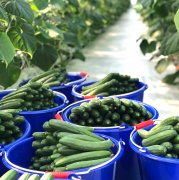
Cucumber cultivation is highly challenging, but young farmer Lin Kai-yao uses technology to solve the problems
When describing cucumbers, people usually say they are sweet, crisp and refreshing, but have you ever heard that cucumbers are "mischievous"? That's right! Young farmer Lin Kai-yao says cucumbers are animals wearing a plant's skin, and the mischievous kind at that. He once set up
-

Over 2,000 job openings in Kaohsiung support young people, youth unemployment rate continues to fall
Kaohsiung City - Youth Bureau, to help young people under 24 find work, commissioned 1111 Job Bank to run the "Employment Hero Youth - Online Job Expo," with job openings surpassing 2,000, paired with the "Youth Work Check-in Incentive Program" (https://you...
-
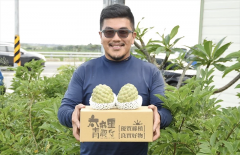
Taitung Organic Sugar Apple Marketing Success: Young Farmer Li Chun-yi's Eco-Friendly Grass Cultivation
Providence University alumnus Li Chun-yi once worked as a part-time worker and supervisor at a concert organizing company, then returned to his hometown in Taitung to grow sugar apples, transforming from an urban youth into a rural farmer, overcoming skeptical looks from those around him to prove that the eco-friendly "grass cultivation" method is correct
-

Cadmium-containing rice crackers: Three departments clarify that cooking congee for young children to eat is no problem, and soil monitoring is up to standard
The cadmium-containing rice cracker incident continues to spread; three ministries and commissions jointly clarify: cooking congee for young children to eat is no problem, and all soil monitoring is up to standard
-
A Detailed Explanation of the Formation Process of Young Cactus Stems
Cacti bear little resemblance to ordinary terrestrial plants. They have no leaves, and their spindle-shaped or warty bodies are vastly different from the branches of ordinary plants. However, a few cacti, besides having typical cactus flowers, also produce common young stems and leaves, such as Pereskia. This genus consists of many-branched shrub-type or small tree-type plants. The young stems are round and slightly fleshy. Generally speaking, the lateral buds of flowering plants are borne in the leaf axils, and most of them merely become small buds without further growth. But in many plants, at least some of the lateral buds grow into short, slender shoots, such as those of <span style="color:#FF8000;">apple</span> trees and pear trees. On these young shoots, the new leaves are almost all borne at a single point . This point is remarkably similar to the areole of a cactus, because the spines of a cactus are in fact its modified leaves. </p> <p align="center"> </p> <p align="center"> Pictured: young cactus stem </p> <p>   In fact, some plants do have leaves modified into prickles, such as Berberis, in which transitional forms ranging from leaf-like spines to prickles have been found. Botanists call these modified leaves and buds prickles rather than spines (only bud-derived structures are called spines, such as those of Rubus). The spines of cacti are also formed by the modification of leaves, so the botanically correct term is also prickles. However, this book still refers to them as spines according to customary usage. When new shoots or flower buds emerge from an areole, it clearly demonstrates that the areole does indeed contain buds. Theoretically, every areole is capable of producing new shoots. If the new shoot above any areole is removed, a new shoot will emerge from that areole to replace the removed one. </p> <p>   The leaves of some Pereskia species have become very small and narrow. The genus Opuntia also has leaves, which are round but soon fall off. The leaf-like basal segments of many Opuntia plants are easily mistaken for flat new leaves. In fact, when young, these cacti still produce small and feeble leaves; new stem segments emerge from the areoles on the leaf-like stem segments, while true new leaves are no longer produced. </p> <p>   The round young stems of Pereskia often give rise to variants with hump-like, angular, or ridged stems. At this point, as the plant grows, the spirally arranged areoles become increasingly obviously arranged in longitudinal rows. The areoles of cacti with angular stems are also arranged spirally during their seedling stage. </p> <p>   The amount of water stored within the body of a cactus varies greatly with the seasonal alternation between rainy and dry seasons, and the ridged structure is particularly suited to this growth pattern. </p> <p>   When water is scarce in the dry season, the ribs become thinner; when water is abundant in the rainy season, the ribs thicken, yet the overall form of the plant does not change much. In other words, without any change in the plant's surface area, the internal water storage capacity differs greatly, like the bellows of an accordion. In contrast, the stem segments of pad-shaped cacti shrink irregularly when water is scarce. Moreover, the surface area of ribbed cacti is larger relative to the plant's total volume than that of other types (all green plants need a certain surface area to receive sunlight). </p> <p>   The number of ribs can increase to a great many. For example, many Trichocereus cacti bear a very large number of ribs, but the genus with the greatest number of ribs is Stenocactus, which can produce as many as 120 thin, cardboard-like ribs. The young stems of many climbing and epiphytic cacti are slender and long, slightly cylindrical, or bear only irregular hump-like protrusions. The thicker young stems bear ribs, and as the plant grows, these ribs eventually become thin and wing-like, which helps the plant grow healthily in a semi-shaded environment. Later, the three-winged stems eventually give rise to two-ribbed, leaf-like flat stems. </p> <p>   On many ribbed cacti, the protrusions on the ribs are more or less distributed in a hump-like pattern. If sunlight shines directly from above, the various protrusions will to some extent shade one another from the sun. Therefore, when the shape of the ribs is clearly distinguishable, one can see that the ribs are mostly arranged in a spiral. If the ribs are composed of isolated, unconnected warty protrusions, as in Rebutia or Mammillaria, then the spiral direction of the ribs is difficult to discern, and only chains of warty protrusions arranged in intersecting diagonal rows can be seen on the plant surface. As with the arrangement of leaves, the number of warty protrusions in each row is often 5, 8, 13, 21, 34... that is, each number is the sum of the previous two. This arrangement allows the warty protrusions to be distributed densely and evenly, and maximally ensures that they do not shade one another from the sun. </p> <p>   Cacti that bear large warty protrusions differ most in form from ordinary cacti. These warty protrusions superficially resemble leaves, as in Ariocarpus or Obregonia, but the warty protrusions bear an areole, and flowers can emerge from within the areole. Therefore, the warty protrusions are not leaves but part of the stem. On some small spherical or leaf-like cacti, such as Blossfeldia or Lophophora, the spindle ridges can only be identified by the arrangement of the areoles. </p> <p>   Recommended articles: </p> <p>   The External Structure and Morphology of Cacti </p> <p>   An Evolutionary Overview of the "Living Fossil" Cacti </p> <p>   Cacti Shed Their High-Priced "Outer Garment" and Are Replaced by Low-Priced Ones </p> <p>   In Summer, Small Potted Plants Are Sought After, and Cacti Rank at the Top </p>
-
The young postgrad born in 1988 at the Dazeshan Grape Demonstration Orchard
A young man born in 1988, a botany postgraduate from Qingdao Agricultural University, came to Dazeshan 3 years ago and has devoted all his energy to tending and building up the orchard. He loves his work, and with his passion for agriculture he pours his knowledge and talent into the vineyard. His name is Wang Wen
-
Top Ten Famous Oranges in China, See Which Ones You've Tried
Oranges are a fruit loved by men and women, young and old alike. They are recognized as the fruit with the highest vitamin content, and are of great help in strengthening the body's resistance and immunity. In addition, there is a rich variety of oranges, sweet and sour, with a unique flavor
-
How to Treat Chicks with Diarrhea and Watery Droppings? A Guide to Medication Methods for Young Chicks
Young chicks refer to chickens from 0 to 50 days of age, when the chick's body has not yet developed well. If a chick has watery diarrhea, promptly refer to the content below in this article, and based on the shape of the watery droppings the chicken passes, determine the illness the chicken has, and promptly take corresponding treatment measures.
-
What is the estimated price of donkey meat and a young donkey from 2018 to 2019?
Now on the market, if we talk about which livestock meat is the most expensive, I think there is probably nothing more expensive than donkey meat. Not only is it expensive, but it is also very hard to buy. The reason for this is that in recent years rural farming has become mechanized, and the scene of every rural household raising donkeys no longer exists. As our
-
What do koalas eat to grow up, what natural enemies do they have, and how many young do they give birth to at a time?
The koala, also known as the koala bear, tailless bear, kola bear, and sloth bear, is a precious ancient arboreal animal of Australia. They are rather picky about food and eat only eucalyptus leaves, and even the water their body needs is obtained from eucalyptus leaves. So what natural enemies do koalas have? How many
条件筛选