-
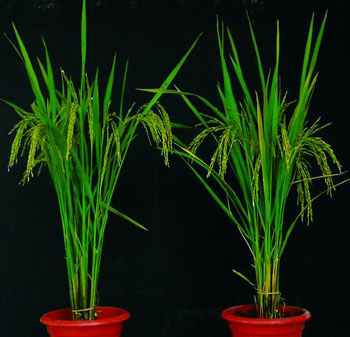
Cracking the Rice Code to Add More Weight to Yield Increases
Cracking the Rice "Code" to Add More Weight to Yield Increases
-

New soil-moisture-probing furrow sowing technology achieves green yield increases, helping farmers raise incomes and become prosperous
New soil-moisture-probing furrow sowing technology brings green yield increases and farmer prosperity
-

Briefing on the Results of the Corn Seedling Cutting Yield Increase Technology Held in Langfang
Briefing on the Results of the Corn Seedling Cutting Yield Increase Technology Held in Langfang
-
What does grain yield increase rely on? Ningxia's agricultural technology system explores multiple composite technologies
Ningxia's agricultural technology system explores multiple composite technologies to help increase grain yield
-
New Hebei goji berry variety can achieve substantial yield increase
New Hebei goji berry variety can greatly increase yield
-
Angelica sinensis with shade net coverage: high yield increase and quality improvement benefits
The shade cultivation technique for Angelica sinensis starts from the three-leaf stage of its growth (that is, from mid-May to early August after summer begins, when temperatures are high and light is intense). A shade net with a 50% shading rate is timely placed over Angelica sinensis, providing a suitable micro-environment of moderate temperature, weak light, and moisture that mimics its original ecological growing conditions. By lowering temperature, increasing humidity, and reducing light, it reduces the early bolting rate of Angelica sinensis in dry flatland cultivation to about 30%; moreover, shade cultivation of Angelica sinensis also helps prevent and reduce pest and disease damage, thus improving the quality of Angelica sinensis.
-
Interplanting autumn soybeans in rice paddies yields good increases in both output and income
According to trials: after the mid-season rice harvest, by using the temperature and light conditions in the field, planting an additional season of autumn soybeans can increase soybean yield by 60-120 kg/mu, with economic income of 150-420 yuan/mu, giving a relatively good effect of increasing both output and income, and it is suitable for extension in ratoon rice areas below 400 m in altitude. The key technical points are as follows: 1. Suitable site and good varieties: fields below 400 m in altitude with no water for retaining ratoon rice, as well as all rice seed production fields, can be planted. After the rice grains have set, open ditches to drain water; after the rice harvest, promptly clear weeds and rice stubble, without plowing, and according to
-
Clever Fertilization in the Late Stage of Cotton: Disease Prevention and Yield Increase at the Same Time
In the late growth stage of cotton, the root system's ability to absorb nutrients declines noticeably, but if fertilizers such as nitrogen, phosphorus, potassium, zinc and boron are sprayed on the cotton leaves, they can prevent premature senescence, promote early maturity, prevent disease, prevent boll shedding and help set large bolls, with a significant yield-increasing effect. 1. Apply nitrogen fertilizer to prevent premature senescence: each time use 75-100 kg of 1% urea solution per mu, spray once every 5-7 days, for 2-3 consecutive sprays, which can enhance leaf photosynthesis and prevent premature senescence and increase yield. 2. Apply phosphorus fertilizer to promote early maturity: in the late stage of cotton, spraying phosphorus fertilizer on the leaves,
-
Why oyster mushroom transplanting gives such good yield increases
Practice has shown that thinning and transplanting densely clustered mushroom buds gives good yield increases. The transplanting method is as follows. 1. Transplant at the right time: transplant when the mushroom buds have just appeared. 2. Planting material: there are no strict requirements; they can be planted on either spawn material that has not yet fruited or material that has already been harvested. Spawn material that has not yet fruited helps the mycelium wounds from transplanting heal and the fruiting bodies develop well. 3. Transplanting method and management: transplanting should be done by digging holes in the spawn brick or spawn bed. Place the small clump of mushroom buds that has been picked into the hole that has been dug, and press firmly around it so that the mushroom buds and the spawn material on the surface of the spawn brick or bed
-
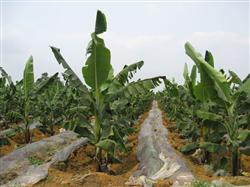
Bananas Grown in Ridge-and-Furrow System Show Significant Yield Increase
Dryland bananas grown by conventional methods tend to have relatively low yields, but using ridge-and-furrow planting can fundamentally overcome the main factors limiting dryland banana yields and achieve a good harvest. Over the past two years, banana growers in some banana-producing areas have adopted this technique and generally achieved significant yield increases. The technique is described below. 1. Site selection...
条件筛选