Bananas Grown in Ridge-and-Furrow System Show Significant Yield Increase
Dryland bananas grown by conventional methods tend to have relatively low yields, but using ridge-and-furrow planting can fundamentally overcome the main factors limiting dryland banana yields and achieve a good harvest. Over the past two years, banana growers in some banana-producing areas have adopted this technique and generally achieved significant yield increases. The technique is described below. 1. Site selection...
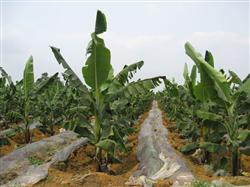
Dryland bananas grown by conventional methods tend to have relatively low yields, but using ridge-and-furrow planting can fundamentally overcome the main factors limiting dryland banana yields and achieve a good harvest. Over the past two years, banana growers in some banana-producing areas have adopted this technique and generally achieved significant yield increases. The technique is described below.
1. Site selection: Choose terrace land or gently sloping land (about 10 degrees) with deep, loose soil, sheltered from wind and facing the sun, and not easily flooded or eroded by floodwater, with a water source nearby; the best option is a site where water can be pumped for irrigation. Avoid choosing land with a high water table or low-lying land.
Furrow opening: The plot can be plowed and harrowed, or furrows can be opened directly at a row spacing of 2-2.5 m, running east-west; on sloping land, open furrows along the contour lines. The furrows should be 0.8 m wide and 0.5 m deep. Apply organic farmyard manure and phosphate fertilizer, backfill with topsoil, and keep a depth of 0.25-0.3 m, then gradually earth up and expand cultivation while backfilling.
2. Transplanting: Use tissue-cultured plantlets grown in nutrient bags, and transplant during the rainy season. Before transplanting, dig holes in the planting furrow at a plant spacing of 1.8-2 m. Remove the nutrient bags at transplanting, water thoroughly immediately after transplanting to settle the roots, cover the furrow surface with rice straw, leaves, etc., and carry out a second mulching before winter.
3. Fertilization and earthing up: In the early stage, apply frequent light topdressings, mainly water-soluble fertilizer; where conditions do not allow, irrigate or apply dry fertilizer promptly after rain, and apply heavy fertilizer at the key stage. Combine fertilization with earthing up: light fertilizer with light earthing up, heavy fertilizer with heavy earthing up, to avoid roots floating upward and being sunburned, improve fertilizer efficiency, and increase the wind resistance of the banana plantation.