-
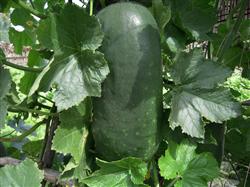
What are the cultivation and management methods for black-skinned winter melon?
How do you manage the cultivation of black-skinned winter melon? What are the special points to note? For growing black-skinned winter melon, you can refer to the following methods for management: Fertilizing: After planting, fertilize once every 7 to 10 days on sunny days (10% to 15% human manure and urine, or 0.5% to 1% urea), applying lightly in the early stage and heavily in the later stage. The key topdressing for winter melon...
-
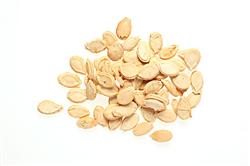
How to Save Seeds from Winter Melon? Key Techniques and Methods Explained
How do you save seeds from winter melon? How should you grow winter melon for seed saving? For winter melon seed saving, you can refer to the following growing methods: Plot selection. Winter melon is a cross-pollinated crop that relies on insect or wind pollination. To keep the variety pure, the seed production field should be at least 1000 m away from other winter melon fields. Manual selection. Raising seedlings and sowing...
-
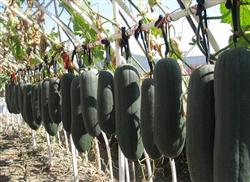
How can you grow black-skinned winter melon (wax gourd) for high yields?
How can you grow black-skinned winter melon for high yields? Is there a detailed growing method? To achieve high yields when growing black-skinned winter melon, you can refer to the following methods: 1. Sowing and raising seedlings. 1. Seed treatment. Because winter melon seeds have a relatively thick seed coat and do not absorb water easily, they should be soaked to promote germination and disinfected before sowing. Soak the seeds in a 250-fold dilution of 50% carbendazim for 20 minutes. After disinfection, wash the seeds with clean water, then soak them for 5-6 hours, remove them and promote germination. The germination temperature should be about 30°C.
-
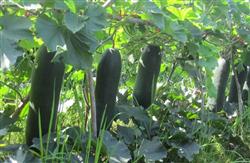
What are the cultivation methods for black-skinned winter melon?
How do you grow black-skinned winter melon well? Is there detailed technology to refer to? Black-skinned winter melon likes warmth and tolerates heat, with an optimum growing temperature of 22-28°C. Winter melon is not strict about light; if seedlings are kept at around 16°C with 11 hours of sunlight, they flower early and the female flower nodes are low. Winter melon has a well-developed root system and strong absorption capacity...
-
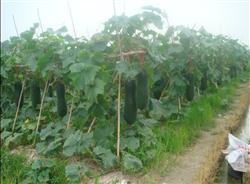
What should be noted when growing winter melon?
What should be noted when growing winter melon? Please provide guidance. When growing winter melon, note the following key points: 1. Soil selection. For growing winter melon, choose a well-drained, deep, fertile sandy loam or clay loam, with a previous crop field where no cucurbit crops have been grown for more than three years; a previous rice crop is even better. 2. Timely sowing. In the Guangzhou area, winter melon cultivation is divided into spring planting and autumn planting, with spring planting being more common, generally sown in January-February. Under the premise of taking cold-protection measures for winter melon seeds, early sowing is better than late sowing, so in recent years it is mostly sown in early to mid-January, which can extend the growth period, especially the vegetative growth period, so that winter melon sets fruit around the rainy season when air humidity is relatively high and the temperature is above 20°C. Autumn-planted winter melon is generally sown around Minor Heat (early to mid-July).
-
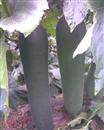
What are the methods to prevent black-skinned winter melon from cracking?
What methods can prevent black-skinned winter melon from cracking? Which methods are the most effective? To prevent black-skinned winter melon from cracking, you can refer to the following methods: (1) Choose crack-resistant varieties; (2) In rainy areas or rainy seasons, use deep furrows with high beds or ridge-based trellis cultivation; (3) Apply more organic fertilizer to increase the soil's permeability and water-holding capacity, so that the soil supplies water evenly, promoting vigorous plant growth, and prune promptly so that the fruit develops normally;
-
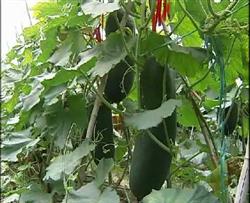
Guide to Topdressing Methods and Key Techniques for Winter Melon
How should topdressing be carried out for winter melon? Please give guidance. When topdressing winter melon, attention should be paid to the rational combination of nitrogen, phosphorus and potassium. If the plants are growing vigorously, topdressing can be reduced or omitted. If the leaf color is pale or yellowing, topdressing should be applied promptly. In the early growth stage of winter melon, topdressing should be reduced. Around the opening of female flowers, water and fertilizer should be controlled. After 1 to 2 fruits have set...
-
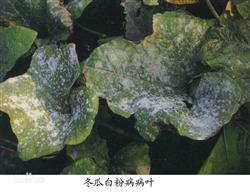
How to prevent and control powdery mildew in winter melon? Master these growing essentials
How to prevent and control powdery mildew in winter melon? Please explain effective prevention and control methods. For powdery mildew in winter melon, you can refer to the following methods for prevention and control: 1. Choose disease-resistant varieties. Choose early-to-mid maturing winter melon varieties such as Guangyou No. 1 and Huidou, or mid-to-early maturing varieties such as Guangyou No. 2, Guanxing No. 2, and Qixingzai. 2. At the early stage of the disease, spray Nongkang 12...
-
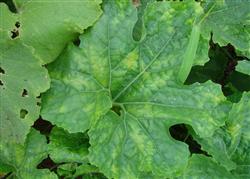
How to prevent and control viral diseases in winter melon cultivation?
How to prevent and control viral diseases in winter melon? Please introduce effective methods for preventing and controlling viral diseases. The main methods for preventing and controlling viral diseases in winter melon are the following 5 points for reference: (1) Choose relatively disease-resistant varieties. Raise seedlings in a centralized way, or lay silver-gray film in the field to repel aphids. (2) Timely control aphids in the field. You can use 20% fenpropathrin·malathion emulsifiable concentrate at 1500 times dilution, or 25%...
-
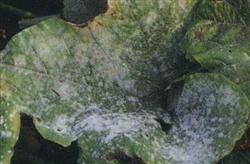
What are the control methods for gray mold of winter melon?
How to control gray mold of winter melon? Please introduce effective control methods. Gray mold of winter melon can be controlled by the following methods: 1. Choose disease-resistant varieties. 2. Select and keep disease-free seeds, making sure to save seeds from disease-free greenhouses and disease-free plants, and use the frozen filter paper method to test whether the seeds carry the fungus. 3. Hot water or...
条件筛选