-

Can you still eat sprouted Chinese yam? Read this and you will understand
Can you still eat sprouted Chinese yam?
-

Is pumpkin hot or cool in nature? Read this and you will understand
Is pumpkin hot or cool in nature?
-
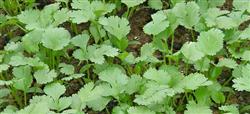
Cilantro Summer Planting Tips: Do These Things Well and It Will Grow Well
How can you grow cilantro well in summer? Please give guidance. To grow cilantro well in summer, you can refer to the following methods: 1. Variety selection: Choose varieties that are heat-tolerant, slow to bolt, and fast-growing, such as Beijing cilantro, North China Large Leaf, etc. 2. Land preparation and fertilization: Choose a plot with relatively fertile soil, good water and fertilizer retention, one that can be irrigated in drought and drained in waterlogging, with good permeability, and where cilantro has not been grown for more than 5 years; never practice continuous cropping. Apply 4000 kg of decomposed farmyard manure and 100 kg of cake fertilizer per 667 sq m (1 mu). The residues of the previous crop must be cleared away to reduce the occurrence of pests and diseases. Plow deeply and harrow finely, and make beds; the beds should preferably be 1-1.5 m wide and 8-10 m long.
-
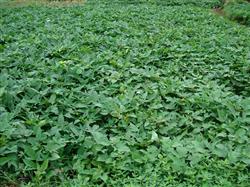
Do sweet potatoes need vine turning? Read this article and you will understand
Do sweet potatoes need vine turning? Please share this with readers: experiments have proven that when sweet potatoes (also called shan yu or di gua) are not vine-turned during the growing period, they can increase yield by about 25% compared with plots where vines are turned, and some even reach as high as 30%. The main reason vine turning reduces sweet potato yield is: damage to vines and leaves. Practice has proven that each time vines are turned, 66...
-
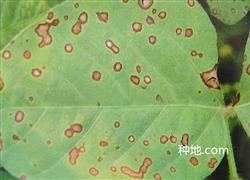
What does continuous and alternating soybean cropping mean? Read this article and you will understand
How should soybean leaf spot disease be prevented and controlled? What are the causes of the disease? 1. Distribution Soybean leaf spot disease occurs in Sichuan, Henan, Shandong, Jiangsu and other places in China, and occurs more often in autumn soybeans. 2. Symptoms The lesions on the leaves are light brown to grayish white, irregular, with dark brown edges. In the later stage, the lesions develop...
-

Wheat drought conditions will worsen further; experts advise watering as soon as possible
In the second half of this month, our province will remain dry with little rain, and relevant experts advise promptly irrigating wheat fields in drought-affected areas to minimize the reduction in the summer grain harvest. In early May, temperatures in most parts of our province were on the high side, and precipitation continued to be below normal. Varying degrees of drought disaster occurred in Linzhou, Puyang, Lushi, Luanchuan, Yichuan, Xuchang, Xiangcheng, Shangqiu and other places, and soil moisture was lost relatively quickly, which had a certain adverse impact on the grain filling of winter wheat and the sowing of spring-sown crops and seedling growth. The meteorological department forecasts that by May 18, except for some local areas in northern Henan, eastern Henan and southern Henan where soil moisture is suitable,
-
What are the basic facts about Ophiopogon japonicus? This article will give you a rundown
Ophiopogon japonicus is a new and superior ground cover plant promoted and planted by China's landscaping departments in recent years. It is enjoyed for its flowers in summer and its greenery in spring, autumn and winter. Its tuberous roots are used in medicine and have the effects of moistening the lungs to stop coughing and benefiting the stomach to promote fluid production. Ophiopogon japonicus is a perennial evergreen herbaceous plant of the Liliaceae family, with spindle-shaped tuberous roots at the ends of the roots. The leaves are velvety, 15 to 20 cm long. The flower stems emerge from the leaf clusters, with racemes in spike form, bisexual flowers, and 6 tepals. The flowers are light purple when they first open and gradually turn white. It can be used as ground cover under trees. The flowering period is July to August; the fruiting period is September to October. Ophiopogon japonicus
-
Will rice suffer from quinclorac phytotoxicity after reseeding
Question: 4 mu of direct-seeded rice is at the 3-leaf 1-heart stage. Very few seedlings emerged after sowing, there are no seedlings in the low-lying areas, and the emergence rate is less than 50%. The sowing rate was 7-7.5 kg per mu. Not long ago, quinclorac was used for the "second kill" weed control. May I ask, if rice is reseeded in the areas of this field where no seedlings emerged, will the reseeded rice suffer from quinclorac phytotoxicity? Answer: Quinclorac is a selective herbicide for controlling barnyardgrass in paddy fields. It is generally applied at the 2-leaf 1-heart stage of rice, and applying it too early easily causes phytotoxicity. Before the 1-leaf stage of the seedlings, especially at the needle standing stage, applying quinclorac at the conventional rate
-
Will potato tubers continue to enlarge?
The tuberization stage is the period when tubers form and rapidly expand. Water consumption during the peak tuberization stage accounts for more than half of the total water requirement of the whole growth period. Soil moisture content should be maintained at about 70% of field capacity, that is, when picked up it forms a ball, and when dropped from a height of one meter it breaks apart; this is ideal. In the late tuberization stage, that is, one week to 10 days before harvest, irrigation should be stopped to facilitate harvest.
-

What vegetables are good to plant in autumn? Read this and you will know
1. Suit measures to local conditions and choose suitable varieties. Autumn vegetable production features high temperatures, little rain, and frequent diseases and pests, so it is best to choose excellent varieties that are disease-resistant, heat-tolerant, and high-yielding...
条件筛选