-
-
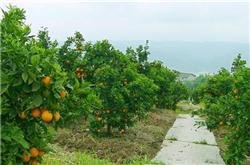
What are the ways to supplement organic fertilizer in orchards?
There are mainly three ways to supplement organic fertilizer in mountain orchards: First, intercropping and relay intercropping green manure crops to increase soil organic matter. Most mountain orchards have acidic and infertile soil. After fruit harvest and before fruit set, from autumn to spring, vigorously expanding intercropping and relay intercropping of leguminous green manure around the orchard to improve soil texture is a good way to supplement organic matter...
-
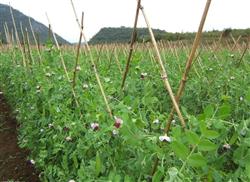
Applying organic fertilizer to vegetables has its rules; more is not always better
Traditional agriculture holds that vegetable fields should be given large amounts of organic fertilizer, and some even believe that the more organic fertilizer, the better. But according to the results of many trials in various places in recent years, appropriately increasing the application of organic fertilizer can effectively control excessive nitrate in vegetables, while blindly increasing organic fertilizer will cause excessive nitrate in vegetables. The nitrate contained in vegetables...
-
The application of organic fertilizer should be done in moderation; more is not always better
Biological organic compound fertilizers, which combine organic fertilizers with inorganic fertilizers and come with various microorganisms or high-energy compounds, have been launched on the market and are very popular among farmers, with fairly obvious effects. First, they can improve the physical and chemical properties of the soil, enhance water and fertilizer retention performance, and increase the ability to supply fertilizer continuously; second, they can significantly inhibit cotton, melon...
-
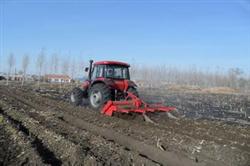
Smart ways to use nitrogen fertilizer: economical and efficient application
1. Good nitrogen retention. Changing nitrogen fertilizer from surface application to deep application can greatly reduce volatilization losses and denitrification. It reduces fertilizer consumption by weeds and algae, giving nitrogen fertilizer a good nitrogen-retention effect. Apply nitrogen fertilizer 7--9 cm deep. According to measurements, when ammonium bicarbonate spherical fertilizer is applied deep, 30 days after fertilization the nitrogen loss is 3...
-
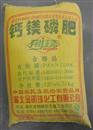
What are the correct ways to use calcium-magnesium phosphate fertilizer?
How do you use calcium-magnesium phosphate fertilizer? Please give an introduction. The main production areas of calcium-magnesium phosphate fertilizer are in China. Because its raw materials are widely available and its production process is simple, it has developed rapidly in recent years in the phosphate mining areas of southern China. The fertilizer appears as a grayish-white, blackish-green or brown glassy fine powder, and its composition is fairly complex, mainly Ca3(PO...
-
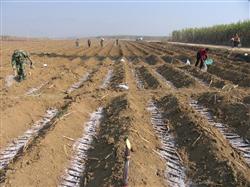
What are the ways to improve fertilizer use efficiency?
What methods are there to improve fertilizer use efficiency? Please explain the methods. To improve fertilizer use efficiency, you can refer to the following methods: combining organic fertilizer with inorganic fertilizer. Farmyard manure is organic fertilizer, with complete nutrients and long-lasting fertilizer effect; chemical fertilizer is inorganic fertilizer, with single nutrients, higher content, and quick effect. Combine organic...
-
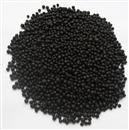
What are the ways to increase the use rate of organic fertilizer?
How can the use rate of organic fertilizer be increased? Are there any good methods to improve the fertilizer efficiency of organic fertilizer? We also ask experienced netizens to help explain. Applying organic fertilizer plays an important role in improving crop yield and quality. But with the progress of science and technology and the continuous improvement of soil fertility levels, it has been found in production that too much...
-
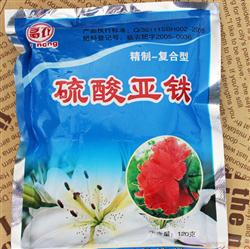
What are the correct ways to use iron fertilizer?
Which crops are prone to iron deficiency? How many application methods are there for iron fertilizer? How can iron fertilizer be used for good results? The following brief introduction from Gengzhongbang Planting Network is for netizens' reference. Crops sensitive to iron include soybean, sorghum, sugar beet, spinach, tomato, apple, etc. Generally, grasses and other crops rarely...
条件筛选