What are the correct ways to use calcium-magnesium phosphate fertilizer?
How do you use calcium-magnesium phosphate fertilizer? Please give an introduction. The main production areas of calcium-magnesium phosphate fertilizer are in China. Because its raw materials are widely available and its production process is simple, it has developed rapidly in recent years in the phosphate mining areas of southern China. The fertilizer appears as a grayish-white, blackish-green or brown glassy fine powder, and its composition is fairly complex, mainly Ca3(PO...
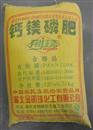
How do you use calcium-magnesium phosphate fertilizer? Please give an introduction.
The main production areas of calcium-magnesium phosphate fertilizer are in China. Because its raw materials are widely available and its production process is simple, it has developed rapidly in recent years in the phosphate mining areas of southern China. The fertilizer appears as a grayish-white, blackish-green or brown glassy fine powder, and its composition is fairly complex, mainly Ca3(PO4)2, along with P2O5, CaO, MgO, SiO2, CaMg and other components. Because production areas differ, product specifications vary considerably: generally the P2O5 content is between 14% and 20%, the CaO content is between 25% and 30%, the MgO content is between 10% and 15%, and the SiO2 content is between 25% and 40%. It can thus be seen that calcium-magnesium phosphate fertilizer is a multi-element fertilizer based mainly on phosphorus and also containing calcium, magnesium, silicon and other components. Calcium-magnesium phosphate fertilizer is insoluble in water, non-toxic, non-corrosive, does not absorb moisture and does not cake, and is a chemically alkaline fertilizer. It is broadly suitable for all kinds of crops and for phosphorus-deficient acidic soils, and is especially suitable for the acidic red soils of southern China where calcium and magnesium leaching is severe. The specific use characteristics are as follows:
(1) It is best suited for deep application as a base fertilizer. After calcium-magnesium phosphate fertilizer is applied to the soil, its phosphorus can only be dissolved by weak acids, and it must undergo a certain transformation process before crops can use it, so its fertilizer effect is relatively slow and it is a slow-release fertilizer. It is generally applied together with deep plowing, spreading the fertilizer evenly into the soil and mixing it with the soil layer, so as to facilitate its dissolution by soil acids and to benefit crop uptake.
(2) In paddy fields in southern China it can be used to dip rice seedling roots. The dosage is about 10 kg per mu; it causes no harm to the seedlings and the effect is also relatively good. (3) Mix and compost it with more than 10 times its amount of high-quality organic fertilizer for more than 1 month; the composted fertilizer can be used as a base fertilizer or seed fertilizer, and can also be used to dip rice seedling roots.
When using calcium-magnesium phosphate fertilizer, the following points should be noted:
(1) Calcium-magnesium phosphate fertilizer works relatively well when used in combination with superphosphate and nitrogen fertilizer, but it cannot be mixed and applied with them.
(2) Calcium-magnesium phosphate fertilizer generally cannot be mixed and applied with acidic fertilizers, otherwise the fertilizer effect will be reduced.
(3) The dosage of calcium-magnesium phosphate fertilizer must be appropriate; generally the dosage per mu should be controlled between 15 and 25
kg. Applying too much calcium-magnesium phosphate fertilizer will not only fail to increase the fertilizer effect but will also lead to diminishing returns. Usually, when 35 to 40 kg of calcium-magnesium phosphate fertilizer is applied per mu, it can be applied every other year.
(4) Calcium-magnesium phosphate fertilizer is best suited to crops with a strong ability to absorb citrate-soluble phosphorus, such as rapeseed, radish, leguminous green manure, leguminous crops and cucurbit crops.
Click to get more nitrogen, phosphorus and potassium application techniques
Click to get more chemical fertilizer application techniques