-

No-till potato cultivation technology vigorously promoted in Guangxi
The regional on-site meeting for winter potato industry development was held in Luchuan County. Participants visited the no-till cultivation demonstration site for winter potato with rice straw mulching in Luchuan County, and listened to introductions of typical experiences from units such as Luchuan, Pingnan, Qinbei, Wuming and Inner Mongolia Hulunbuir Hesheng Potato Industry Company. The meeting proposed that in 2007 the winter-planted potato area in our region strive to reach 130,000 hectares, with a total output of 3.2 million tons; demonstrate and promote a batch of new high-quality, high-yield potato varieties, strive for a certified seed coverage rate of over 95%, and promote the application of virus-free
-
Hydrangea Fertilizer and Water Management Tips: Do These Well and It Will Bloom More Vigorously
Hydrangea, also known as florist's hydrangea, has many flowers, large blooms, bright colors, a long flowering period, and high ornamental value. Hydrangea can grow normally and bloom smoothly in fertile, well-drained acidic soil. Therefore, when caring for hydrangea, you must master the fertilizer and water management tips well: in early spring each year, combine repotting with improving the potting soil to prevent the soil from compacting and becoming alkaline. When repotting, remove about two-thirds of the old potting soil, use 5 parts leaf mold, 4 parts fully decomposed pond mud, 1 part clean fine river sand, mix in 15-20 grams of ferrous sulfate, stir thoroughly and evenly, then prepare
-
Jiaxing, Zhejiang, China, vigorously promotes a new fish therapy species - the doctor fish
Jiaxing Jinhongwan Ornamental Fish Professional Cooperative is a comprehensive ornamental fish enterprise in Xiuzhou District, with ornamental fish farming as its leading variety and integrating breeding, farming, sales, and export. Mr. Chen Zhiyu, the head of the cooperative, devoted himself to research on the reproduction of hot spring fish for many years, and this fish has now been successfully artificially bred in Sanya, Hainan, China. In order to better promote doctor fish fry and carry out industrial development, on the one hand, the cooperative has increased its efforts in base construction. Because the breeding of doctor fish has relatively high requirements for water quality, climate, and other conditions
-
Plastic-mulched cotton grows vigorously, so lodging and premature senescence must be prevented early
Many cotton farmers, in the process of growing plastic-mulched cotton, are prone to some technical mistakes that cause cotton plant lodging and premature senescence. The former is triggered by removing the film too late, while the latter is caused by untimely or insufficient topdressing. Therefore, the following measures should be taken promptly: remove the plastic film at the right time. Plastic-mulched cotton has a much stronger capacity to absorb fertilizer and water in the early stage than directly sown cotton. If the film is removed at the right time and field management is strengthened, plastic-mulched cotton can give full play to its advantages; if the film is removed late or not removed at all, it is not conducive to the cotton roots growing downward, causing most roots to be distributed in the upper soil layer,
-
The Chinese honey locust is a tree species with both ecological and economic benefits, worthy of vigorous promotion
The Chinese honey locust is a tall tree with a full-fruiting period lasting 200 years, and is an ecological and economic multipurpose tree species with broad development potential in our country. The Chinese honey locust is drought-tolerant and water-saving, with a well-developed root system, and is suitable for growing in areas with a frost-free period of no less than 180 days, a minimum temperature not below minus 20°C, at least 2400 hours of sunlight, and rainfall not exceeding 800 mm. The Chinese honey locust is heat-tolerant, cold-resistant, and pollution-resistant, making it a good tree species for urban and rural landscape forests and road greening, and also an important hedge species. The Chinese honey locust can fix nitrogen, has wide adaptability
-
Pruning roses takes skill: master these few techniques for more vigorous blooms
Rational pruning is the key to controlling the flowering period of roses. In practice, pruning should be carried out according to the overall growth vigor of the rose plant. There are two types of buds on rose flowering shoots. At the 1st to 5th leaf below the flower, the upper buds on the shoot are pointed; the flowering shoots they produce are short, with about 6 to 9 leaves, and they set buds early, usually in 15 to 18 days, with small flowers. The middle buds on the shoot (at the 6th to 9th leaf below the flower) are round; the flowering shoots produced by round buds are long, with about 13 to 16 leaves, and they take longer to set buds, usually around 25 days, with large flowers; the bud eyes at the base of the shoot are flat, the buds have low vigor, sprout slowly, and easily produce vigorous water shoots, and the flowering shoots take even longer to set buds, usually more than 30 days.
-
How to fertilize spider plants? Master these fertilization techniques for more vigorous growth
Spider plant, known as the "air flower," when its pot is placed on a balcony or railing, can beautifully complement other potted flowers above and below. Spider plant is also a natural purifier, able to remove harmful substances from the air. Research shows that spider plant can absorb more than 80% of harmful gases indoors, with an extremely strong ability to absorb formaldehyde. An engineer from the Indoor Environment Monitoring Center of the China Decoration Association believes that spider plant is one of the most suitable plants for placement in living rooms. Spider plant is a foliage plant that is relatively tolerant of fertilizer; if fertilizer and water are insufficient, it easily develops scorched tips and ages, with leaves turning yellow, losing
-
Rice straw return technology is being vigorously promoted and applied.
Vigorously promoting rice straw return is one of the most economical and effective ways to recycle nutrients through the soil-crop-soil cycle. It not only plays a very important role in improving soil and building up soil fertility, but also has great significance for improving soil potassium and silicon nutrient conditions, balancing crop nutrition, and alleviating the contradiction between the shortage of potassium fertilizer resources in our country and the excessively rapid rise in chemical fertilizer prices. 1. Increasing soil organic matter content. Rice straw has a high organic matter content. Generally, dry rice straw has an organic matter content of 40%. After being returned to the field, it is beneficial to the
-
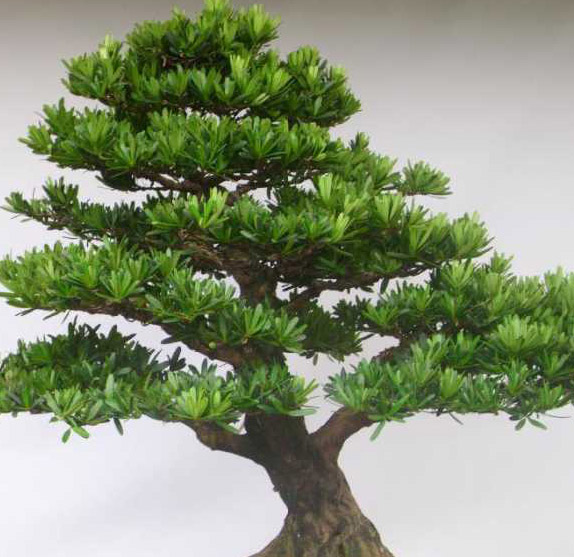
How to care for a potted Buddhist pine (Podocarpus macrophyllus) so it grows vigorously
The Buddhist pine is an evergreen shrub of the family Podocarpaceae. Its stems are upright and straight. In spring and autumn it sprouts new branches and leaves once each season; the internodes are dense and it produces many branches. The leaves are linear-lanceolate, glossy and dark green, alternate, and arranged in a spiral pattern as they grow. It likes warm, humid and semi-shaded environments, and prefers fertile, moist, well-drained soil.
-
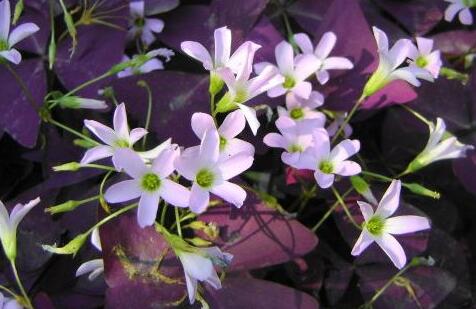
How to grow purple shamrock so it flourishes into a full pot? Six tips to make it beautiful and vigorous
Among the plants in the genus Oxalis, the purple shamrock (Oxalis triangularis), native to South America, is known for its brilliantly colored flowers. It is not only easy to grow but also grows very fast. However, to make it both beautiful and vigorous, some tips are still needed. So how do you get purple shamrock to flourish into a full pot? Below, the editor will teach you six tips.
条件筛选