-
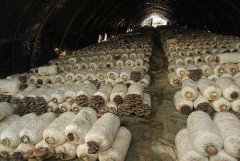
Using coffee grounds to grow mushrooms has many clever uses; how much is a ton of spent mushroom substrate?
What are some of the clever uses of coffee grounds? Coffee grounds are usually treated as waste, but they actually have many clever uses, such as being used to remove odors, and they can also be used as soil for growing mushrooms. Coffee grounds contain a large amount of antioxidants and are very suitable as a nutrient source in soil.
-
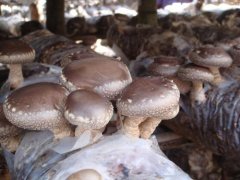
How to grow mushrooms on coffee grounds: cultivation and growing method, can spent mushroom substrate be reused?
Coffee shops today produce a fairly large amount of coffee grounds every day, so someone discovered that coffee grounds can be used to grow mushrooms, and this is a usable resource. Coffee grounds are an excellent medium for growing mushrooms (especially suitable for oyster mushrooms). Here we should thank the coffee brewing process
-
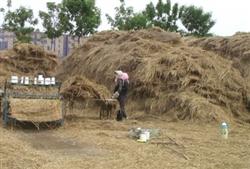
Straw Mushroom Cultivation Methods and Techniques Using Straw
How do you grow straw mushrooms with straw? What season is best for growing straw mushrooms? Does anyone have a method to share? Straw is a common by-product in rural areas. Zhongdi Network has compiled the method for growing straw mushrooms with straw, listed below for readers' reference. Key points to note when growing straw mushrooms with straw: suitable growing season for straw mushrooms...
-
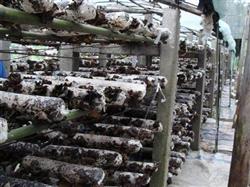
How to grow black fungus (wood ear mushroom) using vertical/three-dimensional cultivation? Detailed growing techniques
How to grow black fungus using vertical/three-dimensional cultivation? Please explain the method. For vertical/three-dimensional cultivation of black fungus, you can refer to the following methods: 1. Spawn preparation: The spawn production technique for wood ear mushroom is the same as for conventional edible fungi. 2. Spawn-running management: For the culture medium for cultivating wood ear mushroom, you can adapt to local conditions and use local materials, using cottonseed hulls or mixed wood sawdust as the culture medium. April-May...
-
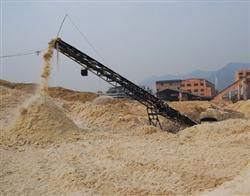
How is bamboo fungus (Dictyophora indusiata) cultivated using mulberry branches and sugarcane bagasse?
How is bamboo fungus cultivated using mulberry branches and sugarcane bagasse? Please give an introduction. Bamboo fungus is a well-known edible mushroom, rich in nutrients and delicious in taste. Previously, there was no artificial cultivation in this county, and no fresh products were sold on the market. People were not as familiar with bamboo fungus as with other mushrooms, thinking that its cultivation techniques might be relatively complicated, but this is not the case...
-
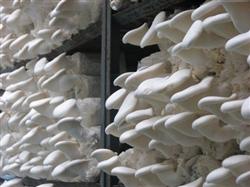
Technique for Reusing Pleurotus nebrodensis Spent Substrate to Cultivate Oyster Mushrooms
Pleurotus nebrodensis, also known as Ferula mushroom, Ferula pleurotus, or Ferula mushroom. Pleurotus nebrodensis has tender flesh and a delicious taste, with high edible value. Its cap is thick-fleshed, fine-textured, crisp and tender, with a delicious flavor resembling abalone. It does not fall apart even after long cooking and retains its unique flavor. It is known as the "porcini of the grasslands" and a pleurotus species, and is quite popular with consumers...
-

Detailed Explanation of Bag Cultivation Technology for Shaggy Mane (Coprinus comatus) Using Fermented Substrate
I. Cultivation Timing and Spawn Selection (1) According to the actual conditions of each mushroom grower, substrate production is carried out in winter, spring, and autumn respectively. Since shaggy mane has the characteristic of not fruiting without casing soil, spawn bags can be mass-produced during the slack farming season, and casing soil applied 20-30 days in advance according to market demand for fruiting. (2) Select varieties with plump fruiting bodies, moderate individual size, few scales, disease resistance, and high yield. For fresh sales, choose solitary-growing varieties; for salting, choose cluster-growing varieties. II. Substrate Formulas Formula 1: cottonseed hulls 58%, corncob 30%, nitrophosphate-potassium 2%
-
Prospects for using mulberry stalks to grow edible fungi look promising
The Microbiology Experimental Plant of the Guangxi Academy of Sciences Institute of Biology recently invented a technique for growing edible fungi using mulberry branches and stalks, and is carrying out an industrialization demonstration in the sericulture experts' compound in Luoxi Town, Yizhou City, Guangxi. According to professionals, the mulberry stalks left over each year after sericulturists plant mulberry and raise silkworms can, after being processed and crushed, serve as the main raw material for cultivating edible fungi (oyster mushrooms, enoki mushrooms, shiitake mushrooms, jade yellow mushrooms, wood ear mushrooms, etc.), and using the mulberry stalks from each mu to cultivate edible fungi can increase income by more than 2000 yuan. Based on the county (city) with the largest mulberry and silkworm production base in the country
-
Detailed Explanation of the Open-Field Cultivation Technique for Shiitake Mushrooms Using Substitute Materials
Recently, Gutian County in Fujian Province hosted the National Edible Fungi Technology Market. More than 700 people from research, production and management units as well as specialized household growers from 20 provinces, municipalities and autonomous regions gathered in Gutian. After visiting the county's field-cultivated shiitake mushrooms, everyone praised them without exception. Gutian County uses a new technique for open-field cultivation of shiitake mushrooms with substitute materials, and mushrooms emerge 70-80 days after inoculation. On average, every 100 kg of sawdust or cottonseed hulls can produce 8-12 kg of dried shiitake mushrooms, which is more than 10 times the per-unit yield of the old log cultivation method, and the production cycle has been shortened from the original more than two years to 10 months. The product's shape
-
Detailed Explanation of High-Temperature Open-Air Cultivation Technology for Shiitake Mushrooms Using Sawdust
The technology of cultivating shiitake mushrooms (Lentinula edodes) using sawdust as the raw material under high-temperature conditions of 30°C breaks the seasonal restrictions of traditional shiitake cultivation, allowing production in all four seasons. The method is: add water to sawdust and boil for 10-20 minutes, scoop out, drain, spread out and air-dry. For every 1.5 kg of dry material, add 500 ml of a mixed solution made from the filtrate containing 0.1% carbendazim and 0.2% monopotassium phosphate, mix well and let cool, then place the culture material on pieces of plastic film of about 0.17 sq m, mix in 40%-50% spawn, crumble and mix thoroughly, pour onto another piece of plastic
条件筛选