-
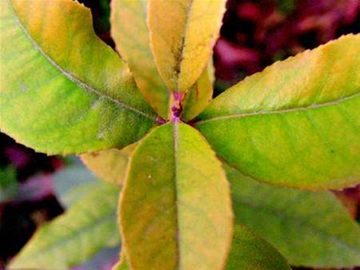
Causes and Control Methods of Gardenia Chlorosis
Symptoms and pathological changes: Chlorosis is an important physiological disease of gardenia. The disease is widely distributed and occurs very commonly in areas north of the Yangtze River. It mainly occurs on the leaves, starting from the young tender leaves at the top; the leaves fade, the mesophyll between the veins turns yellow, then the veins also fade, and the whole leaf turns yellowish-white. Finally,
-
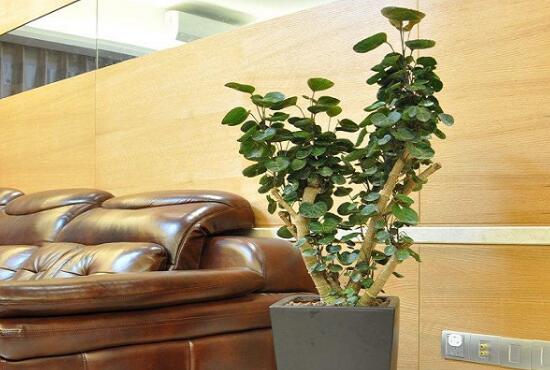
What to do when a money tree (Pachira aquatica) drops its leaves? Cause analysis and methods of supplemental lighting and less watering
The money tree, a foliage plant, has leaves shaped like a bib that make people like it at first sight. It is fair to say that the ornamental value of the money tree is entirely reflected in its leaves, so when the money tree keeps dropping leaves, flower lovers must be very anxious! So what should be done when the money tree drops its leaves?
-

What are the causes and control methods of premature senescence in rice?
Causes and control methods of premature senescence in rice
-
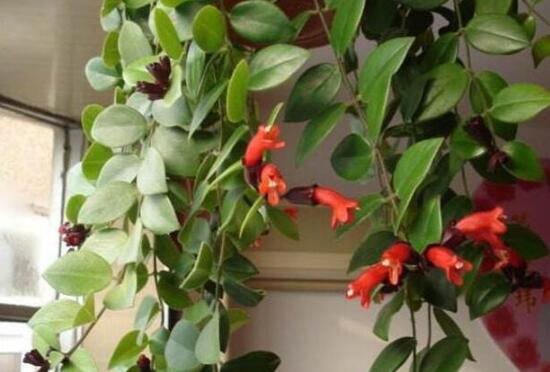
Lipstick Plant likes diffused light. What are its cultivation methods and precautions?
Everyone is surely familiar with spider plants; they are plants that can absorb formaldehyde. As the "beauty" of the family, the lipstick plant gets its name because its flowers look like lipstick, and it is deeply loved by flower enthusiasts. In daily life, many people want to grow lipstick plants, so how do you grow a lipstick plant?
-

What causes deformed lion's mane mushrooms? Causes and prevention methods
Causes and prevention methods of deformed lion's mane mushrooms
-

-

What to Do About Cracked Fruit in Wampee? Causes and Control Methods Explained
What to Do About Cracked Fruit in Wampee
-

A Detailed Explanation of the Common Causes of Deformed Mushrooms and Their Prevention and Control Methods
The manifestations of deformed mushrooms are diverse, and the main ones commonly seen in production are: landmine mushrooms, hollow mushrooms, big-butt mushrooms, hard opening and early opening, red roots, and water rust spots. Landmine mushrooms. The main cause of their formation is that the casing soil material is too coarse, the soil texture is somewhat hard, the casing soil is relatively thick, the surface layer of the casing soil contains relatively little water, while the temperature and humidity conditions of its lower part and the substrate are suitable for the occurrence and growth of fruiting bodies, so fruiting bodies are easily differentiated and formed on the surface of the substrate or in the middle and lower layers of the casing soil, and then emerge through the soil surface. Solution: select high-quality humus soil, and according to a certain ratio
-
What to do when sawtooth mushrooms appear? Causes and control methods
The young mushroom fruiting bodies develop normally, but the edges of the caps look like sawteeth, uneven and jagged. The main cause of this disease is stimulation by strong wind. When the wind is strong, humidity drops, and the young tender oyster mushroom fruiting bodies are affected by these adverse environmental conditions, which disrupts their metabolism, damages the tissue cells at the edge of the caps, and produces sawtooth-shaped oyster mushrooms. Control methods: In windy weather, do not open ventilation openings or open fewer of them. If ventilation is urgently needed, when the wind is from the north open only the vents on the south side, and when the wind is from the south open only the vents on the north side. At the same time, increase the amount of water sprayed to raise the humidity in the mushroom shed.
-
Causes and Control Methods of Yellow Mushroom Disease in Pleurotus pulmonarius
In recent years, because Pleurotus pulmonarius has good economic returns and can fill the gap in summer edible mushroom products, its production in Jiangshan City has developed rapidly, and by 2004 the total had exceeded 8 million bags. However, in the recent period, some mushroom farms in Jiangshan have experienced mushroom death. Through observation, it was clearly determined that the dead mushrooms were caused by yellow mushroom disease. 1. Symptoms of yellow mushroom disease. Yellow mushroom disease is a bacterial disease caused by infection with Pseudomonas bacteria, which causes the fruiting bodies to discolour, rot and stink, and the incidence rate is generally higher in the first flush. When the disease occurs, a slime-like pathogen appears on the surface of the mushroom bags, part of the mycelium shows yellowing symptoms, and in severe cases the pathogen directly attacks the mushroom bodies, causing the affected mushrooms to develop lesions, turn yellow, and even die. It takes only a few hours from infection of the mushroom body by the pathogen to the appearance of symptoms (dead mushrooms). ① Dry rot type: it can occur from the young mushroom stage to the mature stage; after onset, the cap or stipe shows localized scorched yellow, causing light-coloured mushrooms to become yellow mushrooms, and the mushroom bodies grow slowly, gradually becoming rigid until the whole mushroom body shrinks and dries up, like being dried by lack of water. ② Wet rot type: the affected site or the entire cluster of mushrooms has a sticky, moist feeling; in severe cases, all diseased mushrooms show pale yellow water-soaked rot, with sticky secretions and a foul odour.
条件筛选