Causes and Control Methods of Gardenia Chlorosis
Symptoms and pathological changes: Chlorosis is an important physiological disease of gardenia. The disease is widely distributed and occurs very commonly in areas north of the Yangtze River. It mainly occurs on the leaves, starting from the young tender leaves at the top; the leaves fade, the mesophyll between the veins turns yellow, then the veins also fade, and the whole leaf turns yellowish-white. Finally, brown spots appear on the leaves, and scorching develops inward from the leaf tips and margins. In mild cases, only the young leaves fade; in severe cases, the whole plant turns yellow generally. The disease is caused by a lack of microelements, often because the plant is grown in alkaline soil, which fixes iron into an insoluble state that the plant finds difficult to absorb and use. It is generally more severe in winter and spring than in summer.
Control methods for gardenia chlorosis: 1. The growing area should be chosen with well-drained, slightly acidic, fertile soil. 2. Around the root zone of affected plants, pour a 30-50 times diluted ferrous sulfate solution into large holes, or spray the leaves 2-3 times with a 1000 times ferrous sulfate solution, so that the leaf color turns green again.
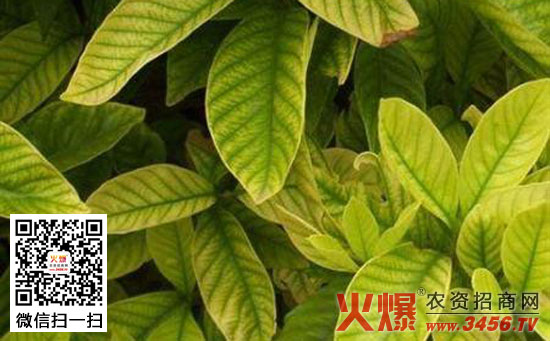
Symptoms of gardenia chlorosis
The leaves fade green, first occurring on the tender leaves at the tips of the branches, starting from the leaf margin and developing toward the center of the leaf; the leaf color changes from green to yellow, gradually worsening, and the mesophyll turns yellow or light yellow, but the veins remain green; later the whole leaf turns yellow, then yellowish-white and white, and the leaf margins develop grayish-brown to brown, necrotic and withered areas; the top leaves of the whole plant are the most severely affected, while the lower leaves are normal or nearly normal; in severely affected plots, the plant weakens year by year and finally dies.
Pathogen of gardenia chlorosis
This disease is caused by unsuitable cultivation conditions, such as overly sticky soil, excessive lime content, heavy alkalinity, low-lying dampness, and insufficient iron supply, and is an important physiological disease.
Occurrence pattern of gardenia chlorosis
It is prone to occur in calcareous soil areas
Control methods for gardenia chlorosis
1. Horticultural control: Use well-drained, loose, fertile acidic soil for cultivation; for potted plants, use acidic soil such as mountain soil, and replace the potting soil once every 1-2 years; use organic fertilizer, and mix ferrous sulfate and zinc sulfate into the organic fertilizer when it is being composted.
2. Chemical control: In the early stage of the disease, irrigate the affected plants with 2%-3% ferrous sulfate, or spray the leaves with 0.1%-0.2% ferrous sulfate, or use iron chelates in the soil such as Guoguang EDTA-Fe, for example "Guoguang Huangbailu", or amino acid chelated iron for spraying and irrigation; when treating chlorosis with chemicals, the effect is better before new shoots sprout.
How to prevent and control gardenia chlorosis?
Gardenia chlorosis is a plant disease that is mainly prone to occur in calcareous soil areas.
1. Disease symptoms
The leaves fade green, first occurring on the tender leaves at the tips of the branches, starting from the leaf margin and developing toward the center of the leaf; the leaf color changes from green to yellow, gradually worsening, and the mesophyll turns yellow or light yellow, but the veins remain green; later the whole leaf turns yellow, then yellowish-white and white, and the leaf margins develop grayish-brown to brown, necrotic and withered areas; the top leaves of the whole plant are the most severely affected, while the lower leaves are normal or nearly normal; in severely affected plots, the plant weakens year by year and finally dies.
2. Disease pathogen
This disease is caused by unsuitable cultivation conditions, such as overly sticky soil, excessive lime content, heavy alkalinity, low-lying dampness, and insufficient iron supply, and is an important physiological disease.
3. Occurrence pattern
It is prone to occur in calcareous soil areas.
4. Control methods
(1) Horticultural control: Use well-drained, loose, fertile acidic soil for cultivation; for potted plants, use acidic soil such as mountain soil, and replace the potting soil once every 1-2 years; use organic fertilizer, and mix ferrous sulfate and zinc sulfate into the organic fertilizer when it is being composted.
(2) Chemical control: In the early stage of the disease, irrigate the affected plants with 2%-3% ferrous sulfate, or spray the leaves with 0.1%-0.2% ferrous sulfate, or use iron chelates in the soil, 0.2 grams per 22 cm (6 inch) flower pot. When treating chlorosis with chemicals, it should be done in the early stage of the disease, otherwise the effect is poor.