What to do when a money tree (Pachira aquatica) drops its leaves? Cause analysis and methods of supplemental lighting and less watering
The money tree, a foliage plant, has leaves shaped like a bib that make people like it at first sight. It is fair to say that the ornamental value of the money tree is entirely reflected in its leaves, so when the money tree keeps dropping leaves, flower lovers must be very anxious! So what should be done when the money tree drops its leaves? Below, the editor brings you an analysis of the reasons why the money tree drops its leaves.
I. When the money tree drops its leaves, find the cause
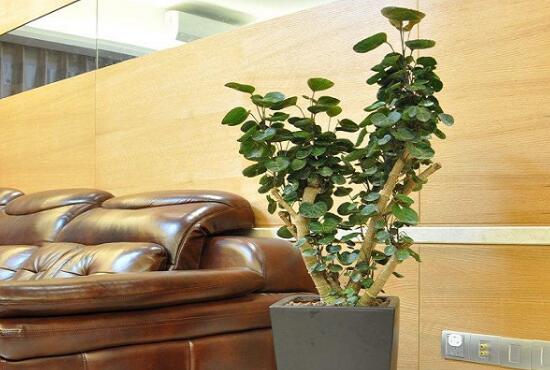
Indoor cultivation is not the same as outdoor cultivation, because of neglect in care, or not following the money tree's cultivation methods at all, the result may be leaf drop, seriously affecting the plant's ornamental value. As for what to do when the money tree drops its leaves, you must first find the cause of the leaf drop, then solve it accordingly. Let's read on.
II. Analysis of the reasons why the money tree drops its leaves
1. Poor ventilation
When it comes to the reasons why the money tree drops its leaves, everyone should first consider whether it is an environmental problem. One of the requirements for cultivating the money tree indoors is ventilation. Once it is too enclosed, it will cause the money tree to lack oxygen, producing yellow leaves and leaf drop.
Solution: In this situation, it is easy to remedy. Ventilate the room often, but everyone should note that the plant should not be exposed to cold wind.
2. Insufficient light
The money tree is relatively shade-tolerant, so many flower lovers ignore its light requirements. In fact, the money tree likes light, and proper light can make it grow better. If it is kept in a dark place for a long time and supplemental lighting is not provided on time, the money tree's leaves will turn yellow and even drop.
Solution: It is very simple. Place the money tree in a spot with diffused light, and every 3-5 days let it go out to get some sun to supplement the sunlight needed for growth. Note that when the outside light is strong, it should be properly shaded.
3. Cold wind and waterlogging
The money tree grows in ventilated places, but it is not cold-tolerant. In winter, if it is exposed to cold wind and no warmth measures are taken, leaf drop will occur; in addition, although the money tree likes humidity, it dislikes waterlogged soil. Once watered too much, it will also cause the money tree to drop leaves.
Solution: Take warmth measures in winter; if there is water accumulation in the pot, replace the potting soil, and afterward just keep the soil moist.
4. Improper fertilization
The money tree needs a certain amount of fertilizer during growth, but we cannot fertilize too much. Once there is too much or too concentrated fertilizer, it will also cause leaves to turn yellow and drop.
Solution: Take the money tree out of the pot, wash the roots with clean water, rinse continuously several times, then soak the roots in clean water. After the leaves recover, replace with new soil and replant.
5. Pests
In the process of growing the money tree, it will inevitably suffer from pest and disease damage, causing the leaves to be damaged, turn yellow, and drop. When encountering pests and diseases, everyone should determine which kind of pest it is, then spray the leaves with the relevant pesticide, and after a period of time it will recover its health.
In general, the reasons why the money tree drops its leaves are mainly the above 5. After reading the whole article, everyone should know what to do when encountering leaf drop again! In fact, leaf drop is caused by one reason, but it is often caused by multiple factors, so when everyone encounters this situation, they must make a correct diagnosis, so as to suit the remedy to the case.
Determined to build a science popularization building about succulent knowledge, striving to collect and repost... Updating common summer-growing types and winter-growing types
This post was last edited by Honey Pot on 2014-8-29 16:28The materials were collected and reposted by me from various places, hoping to be helpful to everyone
1. What are succulents --
Succulents are also called succulent plants or fleshy plants. In horticulture they are sometimes called succulent flowers, but the name succulent plants is the most commonly used. Succulent plants refer to a class of plants in which a certain part of the plant's vegetative organs, such as the stem or leaf or root (a few species have two parts at the same time), has developed parenchyma tissue for storing water, and appears thick and juicy in appearance. Most of them grow in arid regions or regions that are arid for part of the year. For a long time each year, the roots cannot absorb water, and they rely only on the water stored in their bodies to sustain life. Sometimes people like to call these plants desert plants or psammophytes, which is not very accurate. Succulent plants indeed have many that grow in desert regions, but not all grow in deserts, and many plants that are not succulents also grow in deserts.
2. Classification of common succulents --
There are more than 10,000 species of succulents in the world. Among them, common succulents include Cactaceae, Aizoaceae, Euphorbiaceae, Crassulaceae, Liliaceae, Asclepiadaceae, Agavaceae and Asteraceae. Some species in Bromeliaceae, Commelinaceae, Apocynaceae, Portulacaceae and Vitaceae are also commonly cultivated. In recent years, succulents from Fouquieriaceae, Didiereaceae, Cucurbitaceae, Moraceae, Moringaceae and Dioscoreaceae have also been introduced, but they are still very rare at present.
3. Various terms related to succulents
[Leggy growth] means it grows a very long neck, looking like a bean sprout. The main reasons are insufficient light and too much watering.
[Old stump] Grown for many years, the old leaves have fallen off, leaving a stem covered in scars.
[Beheading] A method of propagation. Cut off the head of the succulent. Then used for [stem cutting]. A method of propagation, not suitable for all varieties.
[Leaf cutting] Peel off the succulent's leaves, place them facing up on the soil, and wait for them to take root and sprout. A method of propagation, not suitable for all varieties.
[Stem cutting] Insert the beheaded succulent into loose, low-water soil and wait for it to take root and sprout. A method of propagation, not suitable for all varieties.
[Aerial roots] Roots that can form without touching the soil, as long as conditions allow. Both [beheading] and [leaf cutting] can do this.
[Cresting] Simply put, it is a deformity, though some crests are very beautiful. It is when affected by external factors, it grows into a clump or a strip beyond its original proper state.
[Turning to water] Rotting of leaves, roots and stems caused by too much water or moisture, becoming transparent, and finally disappearing.
[Common goods] Relatively common varieties that are relatively cheap and easy to propagate.
[Open-air growing] Literally: growing in the open air, which can also be called rough growing.
[Clustering] The state in which a single mother plant has multiple pups and they grow together. Many varieties will cluster, a typical one being Aeonium.
[Cutting off water] Simply stopping watering.
[Fading] Losing the color it originally should have because of a poor growing environment.
[Molting] Apparently only Lithops species molt. The butt blooms, a layer of skin comes off, and it grows a ring bigger.
[Pot bursting] Literally, a full pot.
[Dormancy] Depending on the variety, entering a dormant state in certain seasons, stopping growth or growing slowly.
[Top dressing] Using beautiful media to spread on the surface of the potting soil for decoration. It is recommended not to use media that is too light, to avoid splashing caused by watering and wind.
[Unpotting] Generally means without a pot. This term is often seen when shopping online.
[Enclosed growing] Creating a greenhouse effect, adding a lid or covering with film.
[Drying roots] Newly bought succulents need to wait for the roots to dry before potting, to avoid root rot. Succulents bought online basically all need to be dried. Of course, some attentive shop owners will dry them before shipping.
[Variegation] A kind of variation in the succulent's color. Basically XX variegation, anything with variegation is a good thing.
4. About buds [Side buds] As the name suggests, side buds can be subdivided into the following types ↓
[Butt buds] Side buds sprouting from the base of the plant, generally used to describe Haworthia, and relatively favored by enthusiasts.
[Head] The half with the growth point when beheading. Among Haworthia enthusiasts, a head produced by a good mother plant will be priced far higher than side buds from other positions.
[Beheaded seedling]: A seedling obtained by beheading, generally better in appearance than butt buds and cutting seedlings.
[Cutting seedling]: As the name suggests, cutting seedlings can be subdivided into the following types ↓
[Leaf-cutting seedling]: A small seedling obtained through leaf cutting. Depending on the position of the leaf selected, the difference in the appearance of the small seedling is obvious -- not obvious in Crassulaceae, very obvious in Haworthia.
[Stem-cutting seedling]: Mainly obtained by rooting from a cut stem or head.
[Root-cutting seedling]: It is said that only Haworthia can succeed at this.
[Areole-cutting seedling]: It is said that only some cacti with areoles can succeed at this.
[Tissue-culture seedling]: A young seedling obtained through plant tissue culture technology.
5. About plant sources [Wild-collected plants] Plants collected from the wild. It is strongly not recommended that everyone buy them. No buying and selling means no poaching.
[Wild species] Wild varieties from their place of origin, including original species and natural hybrids.
[Original species] A type of plant that can give rise to other new biological types.
[Hybrid] A variety produced by crossing original species, also called a "crossbred species."
[Natural hybrid] A variety produced by crossing original species under natural conditions.
[Artificial hybrid] Obtained by the same reasoning.
[Horticultural variety] An artificial hybrid with certain special ornamental uses.
[Seed-grown plant] A plant developed from seed that has not been grafted.
[Grafted plant] A plant in a grafted state, generally cacti, occasionally Euphorbia.
[Landed plant] The state of a grafted plant after the rootstock is cut off and only the scion is retained.
[Woody core roots] When a landed plant is being landed, it retains the woody core of the rootstock, referring to the roots sent out by the woody core.
[Own roots] In the broad sense, own-root plants include seed-grown plants. Generally, plants with the words "own roots" refer to when the rootstock is completely removed during landing and the root system is the scion's root system.
Reposted from the internet
Note:
Rootstock: The plant that bears the scion during grafting propagation.
Scion: In plant grafting operations, the buds, branches and other meristematic tissues used for grafting onto the rootstock are called the scion.
6. Professional abbreviations
[Yu] Abbreviation for the cactus genus Lophophora, generally used when speaking broadly of the genus Lophophora. Subdivided abbreviations are Yin, Cui, Wu, etc. --
[Niu] Gasteria --
[Xiang] Haworthia maughanii --
[Niao] Some things in Aizoaceae whose names end with the character "bird"; the most famous one does not have the character bird, and is Conophytum --
[He] Refers to the Ruihe line under the hard-leaved Haworthia --
[Gui] Generally refers to Dioscorea elephantipes, and in a few cases refers to Ariocarpus fissuratus --
[Wild turtle] Specifically refers to Ariocarpus fissuratus --
[Long] Generally refers to Agave, in a few cases refers to Dioscorea elephantipes, and in extremely few cases refers to Didierea
[Feng] Refers to Astrophytum myriostigma
7. About soil and media There are many kinds of soil suitable for succulents, roughly including: akadama, kanuma, hyuga, volcanic rock, kiryu, humus soil, xiantu, peat, perlite, pumice, vermiculite, ceramsite, coal cinder, and so on.
High-end media: akadama, kanuma, hyuga, volcanic rock, kiryu, xiantu, and so on. These soils generally cannot be dug up by you; you have to spend money to get them... Not absolute, some people grow great succulents with cheap soil, and greenhouses propagating common goods also cannot afford to use such good media.
Budget-level media: humus soil, coal cinder, charcoal crumbs, plant ash, perlite, and so on. These are all simple and easy-to-get media. You can buy them at the flower market without spending much money. They are economical and practical, and the effect is not necessarily worse than professional succulent soil.
The media itself is not the problem; the ratio of media combined with water and sunlight is the real key!! (* ̄ω ̄)
It is generally recommended that beginners buy ready-mixed special soil from shops. Once you get good at it, you can try mixing your own. The ratio is a very profound question. I do not understand it at all. Experts are welcome to share their knowledge.
The original poster's own suggestion: Whether using containers with holes or without holes, pure granular soil is recommended. According to the TB shop's description -- it retains fertilizer, retains moisture, is breathable, and is rich in multi-dimensional elements. Relatively, it can also reduce pests and diseases.
8. Containers Potted plants are roughly divided into three major categories [with drainage holes] [without drainage holes] [shaped pots]
[With holes]
Generally ordinary flower pots all have drainage holes. For succulents, drainage is very important. As long as water is controlled, succulents can all grow very well.
There are also many choices for the material of flower pots, such as ceramic, terracotta, metal, plastic, and so on.
Ceramic flower pots are generally quite beautiful. The surface is sealed with a layer of glaze, so the pot itself does not absorb water or breathe. Because the appearance is good-looking, it is also the most common.
Terracotta pots are also called international pots. The whole thing itself is a treasure that is breathable and water-absorbing. Personally, I think it is quite suitable for growing succulents, and also quite suitable for beginners. After watering, a terracotta pot will change color because it absorbs water. When the water has mostly flowed and been absorbed, the pot will return to its original color. This characteristic can be used to control moisture. However, relatively speaking, moisture is lost relatively quickly, so watering must be done more frequently. It is also not as good-looking as other craft pots.
Small black (white) square pots, cheap... cheap... still cheap... a few cents each, and they look good when arranged.
[Without holes]
For glass containers, wooden boxes, iron buckets and some pots without holes, the bottom layer should be well covered with things like ceramsite and pumice. It is recommended to use pure granular soil for flower vessels without holes.
9. Tools
[Tweezers] I think the most, most, most essential necessity for growing succulents. Using tweezers feels like having divine help. I feel everything else can be optional.
[Watering can] Many succulents have powder on the surface. That powder exists only once in a lifetime; once wiped off, it is gone. So when watering, you must be very careful about the powder. When I am lazy, I use a bulb blower instead of a watering can, drawing up water and shooting it at the roots.
[Spray bottle] Succulents without powder can all be sprayed, replacing watering to supplement moisture. Plant surfaces all have the function of absorbing and releasing moisture. There is one drawback: when dry, there will be water stains.
[Brush] After planting, there are often particles of dirt such as dust and sand on top, which can be removed with a brush. Do not use it on ones with powder.
[Bulb blower] What the brush cannot reach, use blowing. Otherwise, blowing with your mouth also works. Pay attention to the force; do not blow away the top dressing.
[Plant labels] Record the variety name or the date, etc. You can DIY them yourself with a backing board. 2 yuan gets you several dozen labels.
[Small shovel/pot shovel] When fixing plants in some small pots, the soil needs to be placed in from the edges. Using a shovel saves your hands from getting dirty, and also makes it less likely to dirty the plant or spill outside.
[Transfer pot] When repotting or fixing plants, it can temporarily hold them, and can also collect soil scattered during the process. Soil is very expensive, do not spill it
Mainly it is a hygiene issue, and you will not get nagged.
[Slow-release fertilizer/insecticide] This needs no explanation...
[Grow light] Provide supplemental light during continuous cloudy days.
10. Detailed explanation of potting steps Note: Reposted. Personally, I think steps 2 and 3 are unnecessary
1. No matter whether bought from a flower market, a greenhouse, or online, throw away all the soil from the original pot. (Online purchases are generally unpotted)
2. Wash the plant's roots. Confirm that basically all the soil carried on the root system is rinsed off. Because it very likely contains a large number of insect eggs and bacteria. Wash gently. Damaging roots is unavoidable, but injure as few roots as possible. You can place the roots in a basin of water and shake them back and forth. It is recommended not to turn on the faucet with very strong water to flush, as this will break a large number of roots. Repeatedly shake and soak-wash several times like this, until the white main roots can be seen.
3. After cleaning the root system, if you feel it is necessary, do a root trim. Cut off those diseased roots and dead roots that have turned black or even have only empty shells left. And appropriately trim off those lateral roots that have grown too long and are heavily tangled, to encourage the growth of new fibrous roots. This will make the whole root system look evenly distributed and neat. After root trimming, the newly regrown root system will be strengthened, making the plant grow more robustly. If you feel unsure, you can also skip trimming. It does not matter, as long as you remove the dead roots and diseased roots.
4. At this point the root system will definitely be damaged. Dry the plant's root system. Note, it is natural air-drying. Generally, it can be potted the same day (a few hours).
6. Mix the media in advance. There are methods for choosing media above, everyone can refer to them.
7、
Choose the flower vessel. Personally, I suggest that for Crassulaceae succulents, ceramic pots are the best match. For Haworthia, resin or plastic flower vessels can be chosen. If you are an "appearance-first person," then you can choose porcelain pots, but they must have holes at the bottom. Things like ironware and rattan baskets should not be considered. Rust and mold will drive you crazy later. At first it may not be obvious, but after a long time you will know. It is equivalent to sending the succulent into the tiger's mouth. Do not let your imagination run wild and then swallow the bitter fruit yourself ha!
8. Put the medium into the pot. The principle is: large particles at the bottom, small particles on top, to help with drainage.
9. Plant the specimen and cover with soil until the roots are completely covered. You can use akadama, kanuma, etc. as top dressing; vermiculite or various kinds of gravel are not recommended. Spray a layer of water on the soil surface so the soil is just slightly damp; a little moisture is enough to help new roots sprout. The saying goes "plant in moist soil, keep it dry" - note it is NOT "plant in wet soil, keep it dry"! That one-character difference still makes a difference.
10. Right after potting, place the plant in a spot with bright, indirect light; direct blazing sun is not suitable. Keep it ventilated and cool, and do not water. Next comes the acclimatization stage.
11. After a week, resume watering, restore full sun, and return to normal care. During the acclimatization period, if you feel the potting soil is too dry, you can spray a thin mist of water or fungicide on the soil surface every day, just to increase humidity - but know when to stop! After the acclimatization period, you must water decisively, otherwise the plant will keep wilting, going soft and dropping leaves due to lack of water, and the death rate may increase.
Actually, all these plans of mine are the most conservative ones. The toughness of many succulent plant varieties is beyond anything you can imagine. Once you have grown them for a long time, you will find that these methods are all too cumbersome, and only the more delicate varieties need such a complicated process. Hehe, but if you have not been around succulents for long and have not yet fully grasped their habits, then just go with the conservative plan. If you are already an experienced grower, then carry on as usual. One last nagging remark: this potting method can only be carried out during the growing season, definitely not during the dormant period. If you want to force it anyway, that is up to you, but be prepared to take responsibility for the consequences of your actions...
11. How the plant looks after potting
Generally, after potting a succulent, you will find that it is either all limp or keeps dropping leaves. Many flower lovers get so anxious that they look everywhere for doctors and medicine. At this point you need to analyze calmly. (In fact, the result is mostly Case 2 below - you are worrying over nothing.)
Case 1: You did not fully follow my potting method above. So check whether the roots or the plant became infected with bacteria after potting. Or the plant already had disease and damage when you bought it, or the potting soil was not thoroughly sterilized. Once damage and pests are ruled out, it is bacterial infection. Excessive moisture in the substrate is the most common cause of bacterial infection, so do not water thoroughly in advance during acclimatization. Because at this point the roots have not recovered their ability to absorb nutrients and water at all; too much moisture in the substrate will only cause bacteria to multiply massively and increase the chance of root rot.
Case 2: No need to worry at all, because this is normal.
When a plant has just been potted, its roots will inevitably be damaged to some degree, so acclimatization is really root recovery. While the roots have not fully recovered and cannot normally absorb nutrients and water, the plant will rely on consuming the nutrients stored in the outer old leaves to maintain normal physiological functions and the growth of new tissue. So what shows is limp stems and leaves, and the outer old leaves gradually shrivel and fall off.
At this point you do not need to worry at all that something is wrong with the plant's health. Once the roots recover, the old leaves will stop shriveling and dropping, and then the plant's growing point will begin to show activity and start growing. But old leaves dropping is something that happens to healthy plants too; it is just that plants whose roots have not recovered will drop old leaves very quickly. At this time the old leaves are sacrificing themselves for the greater good. The way to judge whether the roots have resumed growth is to pinch the stem with your hand and gently lift the plant to feel whether it has a slight "grip on the ground"; this tells you whether the roots have taken hold. But do not use too much force and pull the plant out.
Old leaves that fall off after their nutrients are exhausted have basically turned into a piece of kraft paper. After the old leaves become soft and dry, you do not need to pick them off early; once the nutrients are completely used up, they will fall off on their own. If you pick them off before their nutrients are fully consumed, it is equivalent to speeding up the fall of another leaf. They all fall off in order.
Then, for plants that have passed the acclimatization period: those that should be watered should have their watering frequency restored to normal. Do not keep tiptoeing around and being afraid to water, otherwise even if the roots recover their health, they cannot absorb and provide enough nutrients and water for the plant, and the plant will remain wilted, limp or even dropping leaves, and will never reach its best ornamental effect.
Source: Hao Duo Rou
12. About watering amounts
Liliaceae (Liliaceae) Haworthia (Haworthia),
winter-growing type, grows as usual in winter, dormant in summer; common ones include Haworthia fasciata, 'Jincheng', Haworthia cooperi, Haworthia truncata, Haworthia maughanii, Haworthia cymbiformis, Haworthia cooperi var. obtusa, Haworthia retusa, etc.
Month_________Watering amount
January_______Very tiny amount or no water
February_______ Tiny amount
March_______ Large amount
April_______ Large amount
May_______ Small amount
June_______ Tiny amount
July_______ Very tiny amount or no water
August_______ Very tiny amount or no water
September_______ Tiny amount
October_______ Large amount
November______Small amount
December______ Tiny amount
Succulent Plant Watering Amount Reference Table (2)
Crassulaceae (Crassulaceae) Kalanchoe (Kalanchoe), summer-growing type, grows as usual in summer, dormant in winter; common ones include
Kalanchoe thyrsiflora, Kalanchoe marmorata, Kalanchoe tomentosa, Kalanchoe beharensis, Kalanchoe rhombopilosa, etc.
Month ______ Watering amount
January _____Very tiny amount or no water
February _____Small amount
March _____Large amount
April _____Large amount
May _____Large amount
June _____Small amount
July _____Very tiny amount or no water
August _____Tiny amount
September _____Small amount
October _____Large amount
November____Large amount
December____Small amount
Agavaceae (Agavaceae)
Agave (Agave), summer-growing type, grows as usual in summer, dormant in winter; common ones include Agave americana, Agave potatorum, Agave stricta, Agave victoriae-reginae, etc.
Sansevieria (Sansevieria), summer-growing type, grows as usual in summer, dormant in winter; common ones include Sansevieria trifasciata, Sansevieria trifasciata 'Hahnii', Sansevieria gracilis, etc.
Month ______ Watering amount
January _____Very tiny amount or no water
February _____Very tiny amount or no water
March _____Small amount
April _____Small amount
May _____Large amount
June _____Large amount
July _____Large amount
August _____Large amount
September _____Large amount
October _____Small amount
November____Small amount
December____Tiny amount
Succulent Plant Watering Amount Reference Table (3)
Aizoaceae (Aizoaceae)
Faucaria (Faucaria), spring-and-autumn-growing type; common ones include Faucaria felina, Faucaria tuberculosa, Faucaria bosscheana, Faucaria candida, Faucaria grandis, etc.
Month ______ Watering amount
January _____Tiny amount
February _____Small amount
March _____Small amount
April _____Large amount
May _____Large amount
June _____Small amount
July _____Tiny amount
August _____Tiny amount
September _____Tiny amount
October _____Large amount
November____Large amount
December____Tiny amount
13. Common succulent plant varieties (summer-growing type) and (winter-growing type) being updated
| Reposted from Tahua for everyone to see: (1) Common summer-growing type (meaning varieties that do not go dormant in summer and grow vigorously) succulents 1. Cactaceae: most plants in the cactus family belong to the summer-growing type 2. Euphorbiaceae: most plants in the Euphorbiaceae belong to the summer-growing type (I have Euphorbia ritchiei, Euphorbia aeruginosa, Euphorbiadecaryi) 3. Kalanchoe: common ones include Kalanchoe thyrsiflora, Kalanchoe rhombopilosa, Kalanchoe porphyrocalyx, Kalanchoe blossfeldiana, Kalanchoe tomentosa 'Chocolate Soldier', Kalanchoe eriophylla, Kalanchoe marmorata, Kalanchoe tomentosa, Kalanchoe beharensis, etc. 4. Crassula: common ones include Crassula rupestris, Crassula muscosa, Crassula falcata, Crassula ovata, Crassula capitella 'Campfire', Crassula lycopodioides, Crassula perfoliata var. minor, etc. 5. Orostachys: common ones include Orostachys malacophylla, Orostachys 'Phoenix', Orostachys 'Fuji', Orostachys chanetii, Orostachys iwarenge, Orostachys spinosa, etc. 6. Agave: common ones include Agave americana, Agave potatorum, Agave potatorum 'Kichiokan', Agave stricta, Agave victoriae-reginae, etc. 7. Stapelia: common ones include Stapelia glanduliflora, Caralluma frerei, Stapelia gigantea, Huernia macrocarpa, Stapelia flavirostris, etc. 8. Ceropegia: common ones include Ceropegia woodii, Ceropegia linearis, etc. 9. Beaucarnea: Beaucarnea recurvata 10. Sansevieria: Sansevieria trifasciata 11. Aloe: Aloe arborescens, Aloe nobilis, etc. 12. Sempervivum: Sempervivum 'Beta', Sempervivum arachnoideum, etc. 13. Echeveria: Echeveria laui, Echeveria 'Black Prince', Echeveria chihuahuaensis, Echeveria 'Pulidonis', Echeveria shaviana, Echeveria 'Hanatsukasa', Echeveria x imbricata, Echeveria 'White Peony' (summer-spring-autumn growing type), etc. 14. Adenium: Adenium obesum, Adenium somalense 15. Pachypodium: Pachypodium lamerei, Pachypodium densiflorum, Pachypodium brevicaule, Pachypodium geayi, etc. 16. Plumeria: Plumeria obtusa 17. Alluaudia: Alluaudia procera, Alluaudia ascendens, Alluaudia comosa 18. Pedilanthus: Pedilanthus tithymaloides, Euphorbia canariensis, Euphorbia leucocephala, etc. 19. Cissus: Cissus quadrangularis 20. Anacampseros: Anacampseros arachnoides, Anacampseros telephiastrum 'Variegata', Anacampseros albissima, etc. 21. Portulacaria: Portulacaria afra, Portulacaria afra 'Variegata', Portulacaria afra 'Foliis variegatis', etc. 22. Trichodiadema: Trichodiadema barbatum, Trichodiadema bulbosum, Trichodiadema intonsum, etc. 23. Stapelia: Stapelia variegata, Stapelia gigantea, Stapelia grandiflora, Stapelia flavopurpurea, etc. 24. Delosperma: Delosperma echinatum, Delosperma cooperi, Delosperma tradescantioides 25. Fenestraria: Fenestraria rhopalophylla, Fenestraria aurantiaca 26. Frithia: Frithia pulchra, Frithia humilis 27. Dorstenia: Dorstenia gigas, Dorstenia foetida 28. Commelina: Commelina communis, etc. Blue Senecio, Pachyphytum 'Amethyst', Pachyphytum oviferum, Echeveria 'Hongzhilian' are all plants with no obvious dormant period. Echeveria 'White Peony' is a Crassulaceae hybrid, belongs to the summer-growing type, and is dormant in winter. 29. Glottiphyllum: Glottiphyllum nelii 30. A hybrid of Graptopetalum and Echeveria: Echeveria 'White Peony' 31. Jatropha: Jatropha podagrica 32. Rhipsalis: Rhipsalis paradoxa (Qingliu) White Phoenix Chrysanthemum (Aizoaceae, genus Bergeranthus), Blue Senecio, Pachyphytum 'Amethyst', Pachyphytum oviferum, Echeveria 'Hongzhilian', Crassula 'Qinggeshi' (Crassula genus), Orostachys 'Phoenix'... are all plants with no obvious dormant period. (3) Common "winter-growing type" and "spring-autumn-growing type" (meaning they go dormant in summer and grow in winter, spring and autumn) succulents 1. Haworthia: common ones include Haworthia fasciata, Haworthia cymbiformis, Haworthia cooperi var. obtusa, Haworthia retusa, Haworthia 'Jincheng', Haworthia cooperi, Haworthia truncata, Haworthia maughanii, etc. 2. Bowiea: common ones include Bowiea volubilis (mine is Bowiea volubilis), etc. 3. Gasteria: common ones include Gasteria gracilis, Gasteria bicolor var. liliputana, Gasteria armstrongii, Gasteria 'Zhaoyi', Gasteria 'Dinosaur', Gasteria 'Liuli Dian', etc. 4. Crassula: common ones include Crassula 'Ba', Crassula 'Yuchun', Crassula rupestris (green tower), Crassula 'Duxing', Crassula 'Luqianhui', Crassula 'Xingyunu', Crassula 'Longgongcheng', Crassula 'Lique', etc. 5. Sedum (spring-autumn growing type): common ones include Sedum adolphi, Sempervivum tectorum, Sedum morganianum, Sedum pachyphyllum, Sedum pachyphyllum 'Yachiyo', Sedum rubrotinctum, Sedum makinoi, etc. 6. Aeonium (spring-autumn growing type): Aeonium 'Sunburst', Aeonium 'Variegatum', Aeonium 'Aidranjiny', Aeonium 'Mingjing', Aeonium 'Yanrihui', Aeonium 'Xiying', Aeonium arboreum 'Zwartkop', etc. 7. Lithops (Lithops spp.): common ones include Lithops, Lithops marmorata, Lithops aucampiae, Lithops pseudotruncatella, and 'Lifuren' 8. Conophytum (Conophytum spp.): 'Shaonian', 'Jiguang', 'Guangyuanshi', 'Tianshi' 9. Pleiospilos (spring-autumn growing type): common ones include Pleiospilos nelii, 'Qingluan', 'Fengluan', etc. 10. Glottiphyllum (spring-autumn growing type): common ones include 'Anlu', 'Zaoyinv', 'Zhehe', etc. 11. Adromischus (spring-autumn growing type): Adromischus cristatus, 'Shenxiangqu', 'Yusujin', etc. 12. Cotyledon (spring-autumn growing type): Cotyledon tomentosa, 'Xubozhiguang', 'Funiang', Cotyledon undulata, etc. 13. Cotyledon: 'Afanggong', 'Qifengjin', 'Shashanhu' 14. Graptopetalum (spring-autumn growing type): 'Meililian', Graptopetalum paraguayense, 'Bieluzhu' 15. Anacampseros: Anacampseros telephiastrum, 'Xuechange', 'Renjin', 'Quncan' 16. Faucaria: 'Qunbo', 'Sihaibo', 'Huangbo', 'Nubo', 'Xuebo', 'Daxuexibo' 17. Bergeranthus: Bergeranthus 18. Rhombophyllum: Rhombophyllum dolabriforme, etc. 19. Frithia: Frithia pulchra 20. Titanopsis: Titanopsis calcarea, Titanopsis hugo-schlechteri, Titanopsis primosii 21. Dinteranthus: Dinteranthus vanzylii, Dinteranthus microspermus 22. Gunniopsis (spring-autumn growing type): 'Xiaosongbo', 'Xibao', 'Zihuangxing', etc. 23. Glottiphyllum (spring-autumn growing type): 'Baolv', etc. Those not marked as (spring-autumn growing type) are all winter growing type. Monilaria moniliformis, Psilocaulon absimile, Senecio rowleyanus, and Senecio citriformis are spring-autumn growing type. 24. Hereroa (spring-autumn-winter growing type): Hereroa tugwelliae 25. Portulacaria: Portulacaria afra (suitable for temperatures of 20~32 degrees), should be a short-summer-dormancy type. 26. Asteraceae Senecio (spring-autumn-winter growing type): 'Qibaoshu', Senecio rowleyanus, Senecio citriformis, Psilocaulon absimile 27. Sempervivum: 'Zimudan' (Sempervivum 'Ruby Heart'), Sempervivum arachnoideum (winter growing type, grows in spring and autumn) 28. Echeveria: Echeveria 'Luna', Echeveria 'Perle von Nurnberg', Echeveria 'Xuehuang' (thick-leaved), Echeveria elegans 29. Haworthia: Haworthia cooperi var. truncata 'Jingzhihuajin' (short summer dormancy) 30. Aizoaceae Monilaria: Monilaria moniliformis 31. Aizoaceae, Gunniopsis: 'Qiusong' (also called 'Xiaosonglv') In addition: Senecio mandraliscae, Pachyphytum 'Taomeiren', and Pachyphytum 'Xingmeiren' are all plants with no obvious dormancy period |
How to Deal with Frostbite on Succulents and What to Know About Winter Care
Source: Reptile WorldFriends new to the succulent hobby may, on a moment's impulse, have excitedly and willfully brought home all kinds of adorable succulents from the internet or the flower market, only to be troubled by not knowing how to care for them, causing the succulents to die young.
Especially now that it is winter, what should you do if a succulent gets frostbitten? How can you prevent this from happening?
Today I will briefly explain to everyone~ How should you handle a frostbitten succulent?
If, when your succulent is being grown outdoors, it develops an abnormal semi-transparent appearance, its leaves drop for no reason, or its leaves become soft, then your succulent may have been frostbitten.
At this point, quickly move the succulent to a warm indoor place and let it gradually recover. Absolutely do not water it or expose it to strong sun. Then remove the damaged leaves and apply a little fungicide such as carbendazim or thiophanate-methyl to the wounds.
After observing for a period of time, if the stem of the succulent is normal and some of the leaves are normal, then in a warm environment the succulent will slowly recover. If the stem is frostbitten and black frost spots appear, but the leaves at the top are intact, then you can behead the succulent, keeping the parts that were not frostbitten for cuttings.
If the entire plant is frostbitten and cannot recover after being observed for a period of time, then there is basically no saving it...... Frostbite in succulents is irreversible, and it depends entirely on whether the degree of frostbite exceeds the plant's own tolerance. Artificial rescue methods are extremely limited!
What issues should be noted when succulents overwinter?
1. Before the temperature is about to reach the succulent's minimum tolerance temperature, you should begin controlling water, reducing the water content inside the succulent, artificially prompting the succulent to enter dormancy, and making the succulent rely on itself to improve its cold resistance.
2. When repotting during the growing season, appropriately add some slow-release fertilizer and rice husk charcoal to increase potassium. Potassium can strengthen the succulent's photosynthesis, make the stems tough, and prevent lodging. It can also promote the development of the succulent's roots and stems. The main fertilizer varieties with potassium as the primary nutrient element include potassium chloride, potassium sulfate, potassium nitrate, rice husk charcoal, plant ash, etc. This can also speed up the rate at which the succulent becomes an old stump.
3. In winter, strictly control watering and fertilizing, and keep the potting soil dry. If the succulent's leaves show signs of water shortage (wrinkled leaves, dried-out lower leaves), choose a nice sunny day and water near noon or in the afternoon when the temperature is higher, and make sure the water temperature is the same as room temperature.
4. Build a small warm greenhouse for the succulent, which can greatly increase the safety of the succulent through winter. If conditions do not allow, you can use the enclosed growing method, but be sure to pay attention to ventilation!
5. Watch the weather forecast more and guard against sudden temperature drops! Many succulents die from sudden temperature drops. In winter, it may be five or six degrees with bright sunshine today, and tomorrow the snow may block the door, so paying attention to the weather forecast every day is essential!
6. Those of you in the north with heating should not be careless. Heating is nice, but if the succulent stays indoors all the time, poor ventilation and overly dry indoor air can cause some problems, such as attracting pests or black rot due to lack of ventilation. Moreover, excessively high temperatures can cause soil moisture to evaporate too quickly, and being too close to the radiator may even bake the succulent to death.
7. In winter, the angle of light changes, and succulents may become leggy due to insufficient light. If conditions allow, you can use grow lights to prevent legginess, or you can just let it be. After all, keeping the succulent alive is the primary task. In spring of the coming year, you can behead it and pull off the leaves, which is also a very fun thing to do!
8. When watering in winter, you can use the same watering method as in summer, that is, watering a small amount along the wall of the pot. The principle is that most of the fibrous roots of vigorously growing succulents grow along the pot wall, and watering along the pot wall allows the succulent's fibrous roots to absorb an appropriate amount of water without causing water to accumulate in the soil.
9. If conditions allow, you can grow them according to variety. For example, some relatively cold-resistant winter growing type succulents and summer growing type and spring-autumn growing type succulents can be kept separately in different environments for care.
10. Control your hands! Stop buying more succulents! Unless you want to lose everything! If you buy more, chop off your hands! Don't even think about it~ I'm talking about you! Hahaha......
Appendix: Some common summer growing type and winter growing type succulents
Summer growing type:
1. Cactaceae: Most cactus family plants belong to the summer growing type.
2. Euphorbiaceae: Euphorbia mammillaris, Euphorbia aeruginosa, Euphorbia decaryi, Euphorbia tirucalli.
3. Kalanchoe: common ones include Kalanchoe thyrsiflora, Kalanchoe beharensis, Kalanchoe porphyrocalyx, Kalanchoe rhombopilosa, Kalanchoe tomentosa 'Black', Kalanchoe tomentosa, Kalanchoe 'Edo Purple', Kalanchoe tomentosa, Kalanchoe beharensis 'Fang', etc.
4. Crassula: common ones include Crassula sarmentosa, Crassula lycopodioides, Crassula falcata, Crassula ovata, Crassula capitella 'Campfire', Crassula muscosa, Crassula 'Sunset', etc.
5. Orostachys: common ones include Orostachys malacophylla, Orostachys 'Phoenix', Orostachys 'Fuji', Orostachys furusei, Orostachys iwarenge, Orostachys spinosa, etc.
6. Agave: common ones include Agave americana, Agave potatorum, Agave potatorum 'Kichiokan', Agave stricta, Agave victoriae-reginae, etc.
7. Caralluma: common ones include Caralluma hesperidum, Caralluma burchardii, Caralluma europaea, Caralluma socotrana, Caralluma speciosa, etc.
8. Ceropegia: common ones include Ceropegia woodii, Ceropegia linearis, etc.
9. Beaucarnea: Beaucarnea recurvata.
10. Sansevieria: Sansevieria trifasciata.
11. Aloe: Aloe arborescens, Aloe nobilis, Aloe 'Bolu', etc.
12. Sempervivum: Sempervivum 'Baihui'.
13. Echeveria: Echeveria laui, Echeveria 'Black Prince', Echeveria 'Chihuahuaensis', Echeveria 'Huangli', Echeveria shaviana, Echeveria 'Red', Echeveria 'Purple Delight', Echeveria 'White Peony' (summer-spring-autumn growing type), etc.
14. Adenium: Adenium obesum, Adenium somalense.
15. Pachypodium: Pachypodium lamerei, Pachypodium lealii, Pachypodium densiflorum, Pachypodium brevicaule, Pachypodium geayi, etc.
16. Plumeria: Plumeria obtusa 'Yellow'.
17. Alluaudia: Alluaudia procera, Alluaudia ascendens, Alluaudia humbertii.
18. Pedilanthus: Pedilanthus tithymaloides, Pedilanthus macrocarpus, Pedilanthus bracteatus, etc.
19. Cissus: Cissus quadrangularis.
20. Anacampseros: Anacampseros rufescens, Anacampseros telephiastrum 'Chunmengdianjin', Anacampseros 'Huachuixue', etc.
21. Portulacaria: Portulacaria afra, Portulacaria afra 'Foliis Variegatis', Portulacaria 'Purple Rice Grain', Portulaca grandiflora, etc.
22. Portulaca: Portulaca pilosa, Portulaca 'Wildfire', Portulaca 'White Wizard', etc.
23. Stapelia: Stapelia variegata, Stapelia gigantea, Stapelia grandiflora, Stapelia 'Yaoxingjiao', etc.
24. Delosperma: Delosperma echinatum, Delosperma conspicuum, Delosperma 'Zhuangluan Yu', etc.
25. Fenestraria: Fenestraria aurantiaca, Frithia pulchra.
26. Mitrophyllum: Mitrophyllum 'Jingwuji', Mitrophyllum 'Yuanyefugen'
27. Dorstenia: Dorstenia gigas, Dorstenia foetida.
28. Commelina: Commelina communis, etc.
29. Glottiphyllum: Glottiphyllum 'Jihongxiaosong'.
30. Hybrid of Graptopetalum and Echeveria: Echeveria 'White Peony'.
31. Jatropha: Jatropha podagrica.
32. Rhipsalis: Rhipsalis paradoxa (also called 'Qingliu').
Oscularia deltoides (Aizoaceae, Oscularia genus), Senecio mandraliscae, Pachyphytum 'Taomeiren', Pachyphytum 'Xingmeiren', Echeveria 'Hongzhilian', and Crassula 'Ruogeshi' (Crassula genus) are all plants with no obvious dormancy period.
"Winter growing type" and "spring-autumn growing type" (that is, dormant in summer, growing in winter, spring, and autumn) succulents:
1. Haworthia: common ones include Haworthia fasciata, Haworthia cymbiformis, Haworthia cooperi, Haworthia retusa, Haworthia 'Jincheng', Haworthia 'Longlin', Haworthia truncata, Haworthia maughanii, Haworthia 'Sanjiao Liulilian', etc.
2. Bowia: common ones include Bowia volubilis, etc.
3. Gasteria: common ones include Gasteria 'Tiger's Scroll', Gasteria 'Zibao', Gasteria 'Woniu', Gasteria 'Zhaoji', Gasteria 'Dinosaur', Gasteria 'Liulidian', etc.
4. Crassula: common ones include Crassula 'Qianchuan', Crassula 'Ba', Crassula 'Yuchun', Crassula 'Qianzhita' (also called 'Green Tower'), Crassula 'Duxing', Crassula 'Lvqianhui', Crassula 'Xingyinv', Crassula 'Longgongcheng', Crassula 'Lique', etc.
5. Sedum (spring-autumn growing type): common ones include Sedum 'Mingyue', Sedum 'Guanyinlian', Sedum morganianum, Sedum pachyphyllum, Sedum 'Baqiandai', Sedum rubrotinctum, Sedum japonicum, Sedum 'Jixingmeiren', etc.
6. Aeonium (spring-autumn growing type): Aeonium 'Xiaorenji', Aeonium, Aeonium 'Canlan', Aeonium 'Huaye Hanyueye', Aeonium 'Airanjin', Aeonium 'Mingjing', Aeonium 'Yanrihui', Aeonium 'Xiying', Aeonium arboreum 'Zwartkop', Aeonium 'Jinhuangxing', etc.
7. Lithops (Lithops spp.): common ones include Lithops, Lithops marmorata, Lithops aucampiae, Lithops pseudotruncatella, and 'Lifuren'
8. Conophytum (Conophytum spp.): 'Shaonian', 'Jiguang', 'Guangyuanshi', 'Tianshi'.
9. Pleiospilos (spring-autumn growing type): common ones include Pleiospilos nelii, 'Qingluan', 'Fengluan', etc.
10. Glottiphyllum (spring-autumn growing type): common ones include 'Anlu', 'Zaoyinv', 'Zhehe', etc.
11. Adromischus (spring-autumn growing type): Adromischus cristatus, 'Shenxiangqu', 'Yusujin', etc.
12. Cotyledon (spring-autumn growing type): Cotyledon tomentosa, 'Xubozhiguang', 'Funiang', Cotyledon undulata, etc.
13. Tylecodon: 'Afanggong', 'Qifengjin', 'Shashanhu'.
14. Graptopetalum (spring-autumn growing type): 'Meililian', Graptopetalum paraguayense, 'Bieluzhu', Graptopetalum 'Silver Star'.
15. Anacampseros: Anacampseros telephiastrum, 'Xuechange', 'Renjin', 'Quncan'.
16. Faucaria: 'Qunbo', 'Sihaibo', 'Huangbo', 'Nubo', 'Xuebo', 'Daxuexibo'.
17. Bergeranthus: Bergeranthus.
18. Rhombophyllum: Rhombophyllum dolabriforme, etc.
19. Frithia: Frithia pulchra.
20. Titanopsis: Titanopsis calcarea, Titanopsis hugo-schlechteri, Titanopsis primosii.
21. Dinteranthus: Dinteranthus vanzylii, Dinteranthus microspermus.
22. Gunniopsis (spring-autumn growing type): 'Xiaosongbo', 'Xibao', 'Zihuangxing', etc.
23. Glottiphyllum (spring-autumn growing type): 'Baolv', etc.
24. Hereroa (spring-autumn-winter growing type): Hereroa tugwelliae.
25. Portulacaria: Portulacaria afra (suitable for temperatures of 20~32 degrees), should be a short-summer-dormancy type.
26. Asteraceae Senecio (spring-autumn-winter growing type): 'Qibaoshu', Senecio rowleyanus, Senecio citriformis, Psilocaulon absimile.
27. Sempervivum: 'Zimudan' (Sempervivum 'Ruby Heart'), Sempervivum arachnoideum (winter growing type, grows in spring and autumn).
28. Echeveria: Echeveria 'Luna', Echeveria 'Perle von Nurnberg', Echeveria 'Xuehuang' (thick-leaved), Echeveria elegans.
29. Haworthia: Haworthia cooperi var. truncata 'Jingzhihuajin' (short summer dormancy).
30. Aizoaceae Monilaria: Monilaria moniliformis.
31. Aizoaceae, Gunniopsis: 'Qiusong' (also called 'Xiaosonglv').
---------------------
Welcome to add the official "Desert Greening" account on WeChat, to join hands in advancing the green earth cause, so that the "Green China Dream" of "turning deserts into oases" is no longer far away!
---------------------
!