Lipstick Plant likes diffused light. What are its cultivation methods and precautions?
Everyone is surely familiar with spider plants; they are plants that can absorb formaldehyde. As the “beauty” of the family, the lipstick plant gets its name because its flowers look like lipstick, and it is deeply loved by flower enthusiasts. In daily life, many people want to grow lipstick plants, so how do you grow a lipstick plant? Below are the cultivation methods and precautions for the lipstick plant compiled by the editor, very detailed. Friends who want to grow one, come take a look!
I. How to grow a lipstick plant: understand its habits
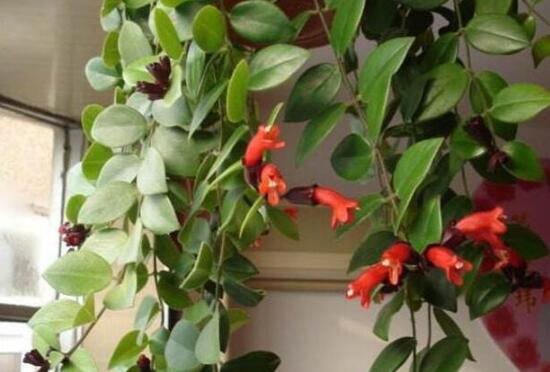
Indoor cultivation is not like outdoor cultivation; you have to create everything yourself. For example, to know how to grow a lipstick plant, we must first understand its growth habits. In this regard, the editor will explain in detail the cultivation methods and precautions for the lipstick plant from the aspects of soil, light, temperature, watering, fertilizing, and pruning. Let's continue reading.
II. Cultivation methods and precautions for the lipstick plant
1. Soil
To grow an indoor lipstick plant, the first thing is naturally to choose good potting soil. It is understood that the lipstick plant can grow best only in loose, fertile sandy loam, so you can use a soil mixed with peat soil, sand, and vermiculite as potting soil.
Precautions: Because the lipstick plant likes slightly acidic soil, you can add an appropriate amount of superphosphate to the potting soil to make the soil slightly acidic. In addition, pay attention to drainage, and never let water accumulate in the pot, to prevent root rot.
2. Light
In the cultivation methods for the lipstick plant, light is very important. The lipstick plant likes a semi-shaded environment. While giving it sufficient light, it should be properly shaded when the light is very strong. Simply put, shade it in summer, and in spring, autumn, and winter it can be grown outdoors.
Precautions: The lipstick plant likes light. Once the light is too strong or insufficient, its leaves will turn light green or yellow-green. Especially in winter, if the placement location is too shady, the lipstick plant is prone to yellowing leaves.
3. Temperature
How to grow a lipstick plant: temperature regulation is also very important. The lipstick plant likes warmth, fears high temperatures, and is not cold-tolerant. Its optimum growth temperature is about 25°C. Therefore, when the temperature is high in summer, the flower pot should be placed in a cool, ventilated, and breathable place; when the temperature is low in winter, good warmth measures should be taken, placing the lipstick plant indoors to overwinter, and adjusting the room temperature to above 12°C so the plant can overwinter safely.
Precautions: In a hot and humid environment, the lipstick plant is prone to rot; when the temperature is low in winter, symptoms such as leaf drop and dry, withered branches will appear. Therefore, when caring for it, everyone must pay attention to temperature regulation.
4. Watering
The lipstick plant likes moisture but cannot tolerate water accumulation, so while watering frequently, we must pay attention to controlling the amount. It is only necessary to keep the potting soil moist, otherwise it can easily cause root rot.
Watering amount: From March to September, the lipstick plant is in its vigorous growth period and has a relatively large water demand. We should water and spray frequently to increase humidity; in spring and autumn, when the weather is cooler, the watering amount should be appropriately reduced; in winter, when the temperature is low and water evaporates slowly, water less, and the potting soil should be slightly drier.
5. Fertilizing
After discussing watering, let's look at fertilizing. It is also indispensable in the cultivation methods for the lipstick plant. During the vigorous growth period from March to September, the plant has relatively high water and fertilizer requirements, so while watering more, a liquid fertilizer should be applied every 10-15 days.
Precautions: In autumn and winter, the amount of fertilizer should be reduced; during the flowering period of the lipstick plant, less nitrogen fertilizer should be applied, and attention should be paid to the duration of light and the application of phosphorus fertilizer.
6. Pruning
How to grow a lipstick plant: in addition to satisfying the above conditions, pruning is also very important. From March to September, the plant grows vigorously, and it can be appropriately pinched back to promote branching; after the winter flowering period, in order to save nutrients, promote new branches, and make it produce more buds and flowers, the remaining stems that have already flowered should be cut off.
What to do about yellowing leaves on the lipstick plant: achieve 6 points and have no worries about yellowing / water and fertilizer are the main causes
The lipstick plant should leave a deep impression on friends who have seen it. Its flowers look like lipstick, so it is also called the “beauty” of the spider plant family. In daily life, many people grow lipstick plants, but in the process of cultivating them, many people encounter yellowing leaves. So what should be done about yellowing leaves on the lipstick plant? In this regard, the editor summarized 6 causes. Let's take a look together!
I. Yellowing leaves on the lipstick plant: find the cause
Beginners often encounter yellowing leaves while growing lipstick plants, which seriously affects their ornamental value. So what should be done about yellowing leaves on the lipstick plant? In fact, this is mostly caused by improper daily care. To avoid yellowing, everyone needs to grasp the four key points of “likes shade and coolness, repot often, spray water often, and loosen the soil frequently.” In this regard, the editor will explain the causes of yellowing leaves on the lipstick plant and attach solutions.
II. Causes of yellowing leaves on the lipstick plant and solutions
1. Sudden environmental change
There are actually many causes of yellowing leaves on the lipstick plant, but environmental factors are the first thing everyone should consider. Because nowadays buying plants online is popular, this can easily cause a large regional span, and the lipstick plant cannot adapt for a while, resulting in yellowing leaves.
Solution: At this time, everyone can communicate with the seller to understand the growing environment of the lipstick plant before it was bought, and then at home change it to the same environment. After that, slowly change it until it fully adapts to the current environment, and then maintain it strictly according to the cultivation methods for the lipstick plant. After a period of time, the plant will recover its health.
2. Unsuitable soil
The lipstick plant likes loose, fertile, slightly acidic soil. Once it has not been renewed or repotted for a long time, the nutrient elements in the potting soil may be lost. At this time, after the leaves absorb fewer nutrients, yellowing will naturally appear.
Solution: At this time, an appropriate amount of alum fertilizer water can be poured to supplement soil nutrients, or the potting soil can be changed to loose, fertile, well-drained slightly acidic soil, so that the lipstick plant can regain its luster.
3. Insufficient light
Although the lipstick plant is a semi-shade-loving plant, it also needs sufficient diffused light. If it cannot receive sufficient light for a long time, the leaves lack photosynthesis, and the result is that the leaves lose their green color, slowly turn yellow, lose their proper ornamental value, and may even wither and die.
Solution: If the yellowing leaves of the lipstick plant are caused by insufficient light, everyone should take time every day to move the plant into the sunlight for a few hours. Of course, too strong light is not good either.
3. Temperature too low
The lipstick plant likes warmth and is not cold-tolerant. Once the growing temperature is too low, it will lead to poor growth, resulting in symptoms such as yellowing leaves, soft leaves, and leaf drop on the lipstick plant.
Solution: If yellowing leaves are found in winter, everyone should promptly raise the room temperature and take cold protection measures: cover it with plastic film, and remove the film after the temperature returns to a suitable level.
4. Too much watering
Although the lipstick plant likes a moist environment, it cannot be watered too much, otherwise it is easy to cause water accumulation in the potting soil, leading to root rot, and the result is yellowing leaves and even symptoms such as leaf and flower drop.
Solution: At this time, watering should be stopped immediately, and the flower pot should be moved to a ventilated place with diffused light; in severe cases, dig out the plant, cut off the rotten roots, change to new soil, and replant. Afterward, watering should follow the principle of watering when dry and stopping when wet, and never water too frequently.
6. Too much fertilizing
During the growth process of the lipstick plant, it needs sufficient nutrients, but if too much fertilizer is applied and it exceeds the plant's demand, the leaf tips will show yellowing.
Solution: Fertilizing should be stopped promptly, and more clean water should be poured to dilute the fertilizer. After about a week, it can improve; in addition, the soil in the clay pot can also be directly renewed a second time, repotted, and so on.
Overall, the lipstick plant is still quite easy to grow, but because many flower enthusiasts are beginners, yellowing leaves inevitably appear. However, after reading the whole article, I believe everyone has a better idea now. If yellowing leaves occur, just follow the methods above. That is all the editor will introduce about yellowing leaves on the lipstick plant, hoping it can help everyone.
How to grow spider plants so they become more luxuriant? Introduction to the cultivation methods of four different spider plants
Spider plants are all foliage plants that are very easy to keep alive, and basically do not need much careful attention. But for some beginners, making a newly bought spider plant become especially lush is actually not an easy thing.
In order to let more flower enthusiasts master the skills of caring for spider plants, this article will discuss the cultivation methods of these four different spider plants.
Aptenia cordifoliaIts leaves and flower colors are all very beautiful, the flowers are gorgeous, and it can also be eaten as a vegetable. It is suitable for growing in a ventilated place with sufficient sunlight.
Cutting method: Except in winter, it can be done in spring, summer, and autumn. The survival rate of cuttings is very high. Choose thicker branches and cut them to a length of about 10 cm.
After drying for one day, dip them in a little rooting powder and insert the cuttings into a medium mixed with garden soil and perlite.
Then water thoroughly, and after half a month they will begin to take root.
Lipstick plantAlso called flower vine grass, it is a very easy-to-grow flower. Both its flowers and leaves are very beautiful. It grows very fast, with luxuriant branches and leaves, and its flowering period is especially long. When hanging down, it looks very beautiful.
Cutting method: It can be propagated by cuttings in spring and autumn. Select healthy, thick branches, each about 10 cm long, and insert the cuttings into loose sandy soil.
Keep the soil moist and provide diffused light. After about one month, they can take root and sprout.
With proper pinching back, it can be transplanted into a flower pot and maintained with normal watering.
Goldfish plantIts flower shape is vivid and interesting. It is also called goldfish flower and kangaroo flower. It likes a warm, humid, semi-shaded environment. When the temperature is low in winter, it needs to be placed in a warm place. In summer, it needs shade.
Cutting method: Cuttings can be taken in all four seasons. Select one-year-old branches, 10 cm long, and keep four leaves.
Insert the cuttings into sandy soil, cover with a layer of plastic film, and maintain air humidity. They can take root and sprout in four weeks.
Then they can be topped and potted. Water when the potting soil is dry; it is very easy to care for.
Bamboo spider plantAlso called inch plant, its leaves have bright patterns, and the underside of the leaves is purplish red. It likes an environment with sufficient sunlight.
Cutting method: Cuttings can be taken in both spring and autumn. It is very easy to survive. Select creeping stems with young buds, about 10 cm long.
Insert the cuttings into the soil, and they can take root in one week.
In twenty days they can be transplanted into a pot. After watering, place them in a ventilated, diffused-light place for care. Usually pinch back more, water, and fertilize, and when they fill the pot they are truly beautiful.