-

Geraniums are a popular and common potted flower.
Geraniums come from southern Africa and settled in our country over a hundred years ago. They bloom in clusters, full and round, pleasing to the eye, and can adapt to both north and south, found in thousands of households. In hot seasons, place them in a shaded outdoor environment; in cold seasons, enjoy them indoors in bright light. They can bloom on time for "May Day," "National Day," New Year's Day, and Spring Festival, with a very long flowering period. Geraniums are also known as yangxiuqiu and rulahong, and are evergreen subshrubs of the genus Pelargonium in the Geraniaceae family. Young plants are herbaceous, fleshy and juicy; old plants are semi-woody with hollow pith. The whole plant has a distinctive scent.
-
Soybean molecular breeding technology successfully developed by South Korea
The Agricultural Biotechnology Research Institute of South Korea's Rural Development Administration recently successfully developed a soybean molecular breeding technology, which means that South Korea's mass production of organic soybeans containing anti-cancer components will become a reality. South Korea's regeneration technology for soybean plant bodies through tissue culture is not well developed, so trait-transformed soybeans are mainly imported from the United States. The Rural Development Administration revealed that molecular breeding technology is called third-generation genetic engineering technology. Using this technology, soybeans with higher added value can be produced, which is of great significance for increasing farmers' income.
-
Dianthus acicularis is an excellent drought-tolerant, water-saving groundcover plant
Most parts of northern China are resource-based severely water-scarce regions, with per capita water resources of less than 300 cubic meters, only 1/8 of the national average, and far below the international water-scarcity threshold of 1,000 cubic meters per capita. With the vigorous development of landscaping, water consumption for greening is growing ever larger, and this contradiction with the scarce water resources of northern China is becoming increasingly prominent. Dianthus acicularis has good drought tolerance and is an excellent water-saving plant material in landscaping. According to calculations, Dianthus acicularis consumes only 0.
-
How to grow Dianthus acicularis? Detailed guide to cultivation and care methods
I. Planting Dianthus acicularis. Dianthus acicularis has many advantages such as drought tolerance and water saving, alkali tolerance, tolerance of poor soil, cold tolerance, and a long green period. When planting, pay attention to the following issues: 1. Soil selection. The soil at the planting site is best sandy or semi-sandy soil. If a clay section is encountered, sand can be mixed in to improve it, which is beneficial for drainage and root growth. 2. Land preparation. Generally, only the 15 to 20 cm deep soil layer needs to be turned over, and stones and debris should be picked out. The soil does not need to be sifted. After the plot is leveled, planting can begin. If
-
Diagnosis and Treatment of Canine Vestibular Adenitis Explained
Canine vestibular adenitis is a disease caused by hyperplasia and hypertrophy of the vestibular glands and poor drainage of vestibular gland secretions. Some consider the disease to be a vaginal tumor, while others classify it as vaginal prolapse. In recent years, the author has diagnosed and treated 7 cases of this disease, all of which were cured. The incidence, clinical symptoms, treatment measures and effects of the disease are briefly summarized and reported below for the reference of colleagues. 1 Incidence and clinical symptoms Among the 7 affected dogs diagnosed and treated, 5 were Red Wolves and 2 were Shepherd dogs, aged 6-13 months,
-
How to choose fish medication? These are the most popular
Fish Parasite Killer This product is an external insecticide for black carp, grass carp, silver carp, bighead carp and crucian carp. It can kill Chinese anchor worms, Lernaea, Trichodina, Ichthyophthirius, Gyrodactylus, sporozoans, Dactylogyrus, fish lice, glochidia and other parasites on fish within a few hours, and can also kill aquatic centipedes, leeches and other pests. Fish Parasite Nemesis This product is a new type of highly effective insecticide (parasiticide) that can powerfully kill fish parasites such as Lernaea, Chinese anchor worms, Trichodina, Dactylogyrus, Gyrodactylus, sporozoans, and Diplozoon, and is effective for the four major Chinese carps, freshwater pomfret, mandarin fish, sea bass, eel
-
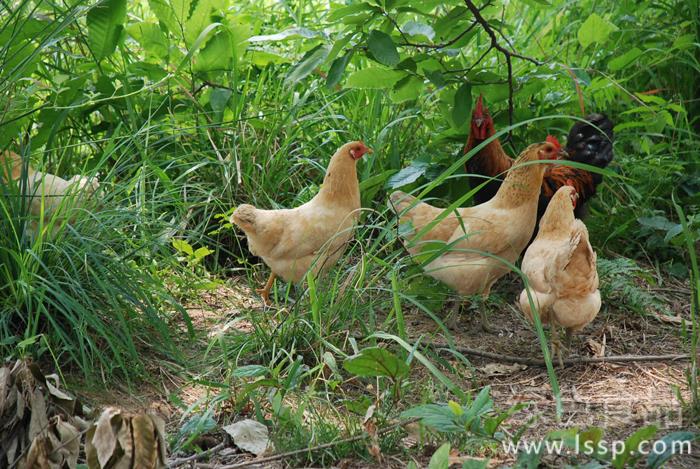
Free-range chickens are more popular than feedlot chickens, and new techniques bring high returns in raising them
Free-range chickens are more popular than feedlot chickens; new techniques bring high returns in raising free-range chickens
-
Techniques for large-scale rearing of bream summer fry, suitable for triangular bream and blunt snout bream
Bream (triangular bream, blunt snout bream) are high-quality freshwater fish. They are not only excellent species for pond culture but also suitable for stocking in large water bodies, where their tendency to readily form natural populations can be used to achieve resource protection and enhancement. The techniques for large-scale rearing of bream summer fry are described below: 1. Conditions of the summer fry rearing pond. The summer fry rearing pond requires an abundant water source, unpolluted water quality, and convenient filling and drainage. The area should not be too large, generally 1-3 mu, with a water depth of 1-1.2 m being suitable. The pond must not leak,
-
Detailed Explanation of the Pathogen and Epidemiological Characteristics of Swine Vesicular Disease
This disease is an acute infectious disease caused by the swine vesicular disease virus. Usually, only pigs can be naturally infected by this disease, while other animals such as cattle and sheep are not easily infected, so it can be distinguished from foot-and-mouth disease. The disease is characterized by vesicles on the skin of hairless parts of the pig's body and on the oral mucosa. Vesicles and erosions also occur on the skin of the coronary band, interdigital space, and heel, and around the teats of sows. This disease is widely distributed and spreads rapidly. It was first discovered in Italy in 1966. By the 1970s, after successively becoming epidemic in the United States, Austria, Hungary, and other Eastern and Western European countries, it also occurred in Japan
-
What are the symptoms of acute muscular rheumatism in pigs in autumn?
Rheumatism is an infectious allergic disease associated with hemolytic streptococcus. This summer there was a lot of rain, with long periods of continuous wet weather, and most pens were damp. At present the disease is on the rise. Symptoms: the disease is mainly triggered by draughts and by damp and cold conditions in the pig house, with sudden onset. The affected body functions are impaired; pigs with rheumatism of the lower back and limbs are more common, showing a back as stiff as a board and inflexible movement, with a sticking gait and short, slow steps in the early stage; as the disease worsens, the limbs are stretched out and the pig cannot stand, lies on the ground unable to get up, and when forced to stand, the limbs and the whole body muscles tremble, body temperature is slightly elevated, and appetite is reduced.
条件筛选