-

Dianthus acicularis is an excellent drought-tolerant, water-saving groundcover plant
Most parts of northern China are resource-based severely water-scarce regions, with per capita water resources of less than 300 cubic meters, only 1/8 of the national average, and far below the international water-scarcity threshold of 1,000 cubic meters per capita. With the vigorous development of landscaping, water consumption for greening is growing ever larger, and this contradiction with the scarce water resources of northern China is becoming increasingly prominent. Dianthus acicularis has good drought tolerance and is an excellent water-saving plant material in landscaping. According to calculations, Dianthus acicularis consumes only 0.
-
Soybean molecular breeding technology successfully developed by South Korea
The Agricultural Biotechnology Research Institute of South Korea's Rural Development Administration recently successfully developed a soybean molecular breeding technology, which means that South Korea's mass production of organic soybeans containing anti-cancer components will become a reality. South Korea's regeneration technology for soybean plant bodies through tissue culture is not well developed, so trait-transformed soybeans are mainly imported from the United States. The Rural Development Administration revealed that molecular breeding technology is called third-generation genetic engineering technology. Using this technology, soybeans with higher added value can be produced, which is of great significance for increasing farmers' income.
-
Geraniums are a popular and common potted flower.
Geraniums come from southern Africa and settled in our country over a hundred years ago. They bloom in clusters, full and round, pleasing to the eye, and can adapt to both north and south, found in thousands of households. In hot seasons, place them in a shaded outdoor environment; in cold seasons, enjoy them indoors in bright light. They can bloom on time for "May Day," "National Day," New Year's Day, and Spring Festival, with a very long flowering period. Geraniums are also known as yangxiuqiu and rulahong, and are evergreen subshrubs of the genus Pelargonium in the Geraniaceae family. Young plants are herbaceous, fleshy and juicy; old plants are semi-woody with hollow pith. The whole plant has a distinctive scent.
-
Detailed Explanation of the Method for Making Regular Potato Starch Noodles
1. Process flow. Raw material selection → starch processing → making starch paste and dough → extruding noodles through a perforated ladle → cooling and drying the noodles as finished product. 2. Key operating points. (1) Raw material selection: choose potatoes free from insect damage and rot, and wash off the sand, soil and dirt on the surface. (2) Starch processing: crush and filter the washed potatoes, add an appropriate amount of sour slurry and stir to precipitate (the sour slurry water is made by separately storing the floating water from the first precipitation); the amount of sour slurry used depends on the air temperature. If the temperature is around 10°C, the pH value should be adjusted to 5.6-6.0; if the temperature is above 20°C, the pH value should be adjusted to
-
Detailed Explanation of New Technology for Circular Pig and Chicken Rearing
With the arrival of the era of low profits in animal husbandry, raising only one type of livestock or poultry often fails to yield good returns due to various reasons such as market and cost factors. The new technology of efficient circular pig and chicken rearing is a practical technique particularly suitable for rural farmers. It is introduced as follows: Use lactic acid fermentation of chicken manure to feed pigs. There are many methods for feeding chicken manure to pigs, such as the sun-drying method, fresh-feeding method, and conventional fermentation method, but it is best to use lactic acid-fermented chicken manure. This is because this method can turn chicken manure into high-quality pig feed with good palatability. The fermentation method is: first
-
Straw Grows Small Mushrooms: A New Technology for Circular Agriculture
In the rice-producing areas of the south, the technology of rapid straw decomposition and return to the field is promoted; in the dry-farming agricultural areas of the north, the technology of straw bio-reaction carbon fertilizer utilization is the focus of promotion; in the key corn and wheat producing areas, the technologies of straw crushing and return to the field, straw silage for feed, and straw forming, solidification and gasification for fuel are promoted, achieving a fundamental shift from "storing grain in granaries" to "storing grain in the land." In Nannihe Village, Zhaoxian County, the village is not large, but it has already developed more than 200 button mushroom (Agaricus bisporus) sheds. Each mushroom shed can convert and utilize the straw produced from 20 mu of land and more than 3,000 kg of dry livestock and poultry manure, producing more than 2
-
Regularly eating steamed fish helps protect heart health
We often see reports in the media that "eating fish is good for the heart." However, Professor Wang Cunxin, an authority on fish research in China at the Institute of Oceanology, Chinese Academy of Sciences, reminded everyone in an interview with reporters that fish are divided into sea fish and river fish, with a wide variety of types, and different fish have different effects. Eating fish really can protect the heart. Professor Wang pointed out that eating fish is greatly beneficial to the heart, and this has already been confirmed. Eskimos and residents of coastal fishing villages in Japan have fish in all three meals a day, and their lower rates of cardiovascular disease are a good example.
-
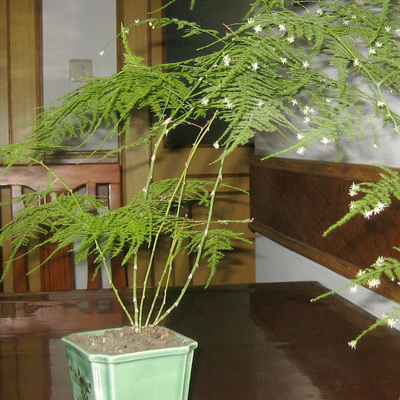
How to Grow Dwarf Asparagus Fern and How It Differs from Regular Asparagus Fern
Asparagus fern (Asparagus setaceus) is a plant many people love to grow, and it is just that popular. Is there also a kind of asparagus fern called dwarf asparagus fern? What is the growing method for dwarf asparagus fern? What are the differences between dwarf asparagus fern and regular asparagus fern: Growing methods for dwarf asparagus fern: (1) Characteristics of dwarf asparagus fern. To correctly master the growing method for dwarf asparagus fern,
-
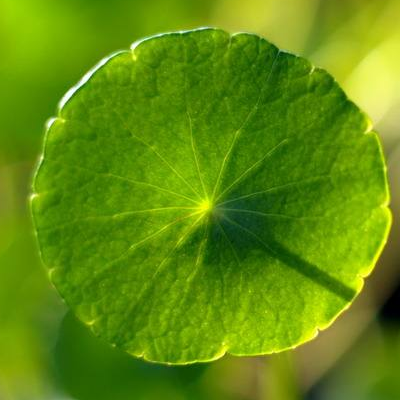
How to Convert Hydroponic Pennywort to Soil Culture and How It Differs from Lysimachia nummularia
Pennywort (Hydrocotyle vulgaris) is something many people absolutely love growing, and it is just that appealing. How do you convert hydroponic pennywort to soil culture? What are the differences between pennywort and Lysimachia nummularia (moneywort): How to convert hydroponic pennywort to soil culture: When moving hydroponically grown pennywort into soil for cultivation, do not water it from the moment you plan to transplant it.
-
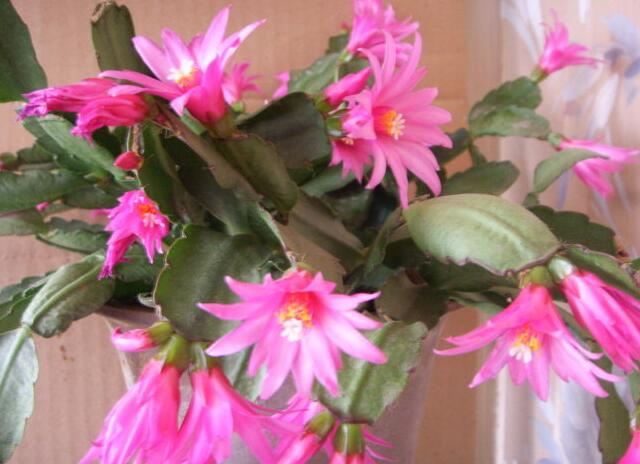
How to make a dancing fallen flowers bonsai? Sharing the regular style and hanging style methods
The dancing fallen flowers has not been introduced to our country for long. Its flower colors are gorgeous, and it has many flowers. It is suitable for hanging decoration, and its ornamental effect is no less than the common Christmas cactus, so it is well worth recommending to flower lovers. Let's make a pot of dancing fallen flowers that sways in the wind! Today, the editor brings you the method for making a dancing fallen flowers bonsai. Let's take a look at the details.
条件筛选