How to Grow Dwarf Asparagus Fern and How It Differs from Regular Asparagus Fern
Asparagus fern (Asparagus setaceus) is a plant many people love to grow, and it is just that popular. Is there also a kind of asparagus fern called dwarf asparagus fern? What is the growing method for dwarf asparagus fern? What are the differences between dwarf asparagus fern and regular asparagus fern:
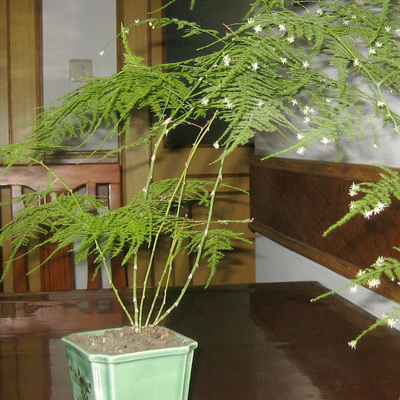
Growing methods for dwarf asparagus fern:
(1) Characteristics of dwarf asparagus fern
To correctly master the growing method for dwarf asparagus fern, the first step is to understand its characteristics. Based on the growth traits of this plant itself, creating a suitable growing environment for it helps promote its healthy growth. Asparagus fern is a moisture-loving plant, and it also loves warm, well-lit, well-ventilated environments. So placing dwarf asparagus fern in such an environment ensures it is not adversely affected by natural conditions.
(2) Soil
Based on the above characteristics, the growing soil for dwarf asparagus fern should be moist but well-draining, so that it can both provide sufficient water and effectively avoid root rot. For the soil, you can choose peat soil, perlite, garden soil, leaf mold and other soil types mixed in certain proportions. Note that the flower pot for dwarf asparagus fern should not be too large or too small; it is best to choose according to the size of the plant.
(3) Light
Dwarf asparagus fern grows better in a well-lit environment, but it should not be placed in direct sunlight for long periods, otherwise the branches and leaves will turn yellow or even wither. The light condition should be plenty of sunshine but no direct contact with sunlight, with semi-shade being optimal.
(3) Watering
The potting soil of dwarf asparagus fern can help us understand its water shortage, so whether it needs watering can be determined by observing how dry the soil is. Generally speaking, if the soil surface has no moisture at all, or even shows cracking, then the plant needs timely watering. If the soil surface is still moist, then there is no need to water again. The watering frequency should be determined according to specific conditions, following the growth pattern of dwarf asparagus fern.
(4) Fertilizing
The fertilizing method for dwarf asparagus fern is light fertilizer applied frequently; each application should not be excessive or too concentrated, as this will cause the plant to die. The fertilizer is usually mainly nitrogen fertilizer.
Differences between dwarf asparagus fern and regular asparagus fern:
Introduction to dwarf asparagus fern:
The characteristics of dwarf asparagus fern are that its leaf-like branches are fine, dense and short, with no trailing growth, so it has higher ornamental value as a home-grown plant. Large asparagus fern has stems and leaves that initially grow in clumps, and its leaf-like stems grow very long and in an irregular manner, requiring pruning and trellis tying.
Introduction to regular asparagus fern:
The cultivated varieties of asparagus fern include: large asparagus fern and dwarf asparagus fern. Dwarf asparagus fern is also called "cloud bamboo" and "asparagus fern ball"; because its needles are dense, like pine and bamboo, it also has the elegant name "cloud pine bamboo"; some flower lovers, because it was first found in Tangshan, call it "Tangshan asparagus fern". Unlike ordinary asparagus fern, its leaves are especially thick and substantial and its stems are very stout, and the dense needles together look very much like pine; and because its stems have a structure similar to bamboo nodes, it also looks like bamboo. It is a rare and precious mutated variety, and its effect when used for bonsai is very elegant and beautiful!
That is all for the growing methods of dwarf asparagus fern. Be careful to grasp the differences between dwarf asparagus fern and regular asparagus fern; they look a little different.
How to grow dwarf asparagus fern, growing methods and precautions for dwarf asparagus fern / loves semi-shade environments
Dwarf asparagus fern, a variety of asparagus fern, is just like its name suggests: the plant is very short and small, but its tree form is graceful and its color is fresh green, making it highly ornamental when grown indoors. In daily life, many people want to grow dwarf asparagus fern, so how do you grow it? Below are the growing methods and precautions for dwarf asparagus fern compiled by the editor, very detailed; friends who want to grow it should definitely take a look~
I. How to grow dwarf asparagus fern: understand its habits
Dwarf asparagus fern likes warm, humid, well-lit environments. It dislikes strong light and cannot tolerate high temperatures. When grown indoors, it should be placed in a ventilated semi-shady spot, and warmth should be maintained in winter. As for the growing soil, it is best to choose loose, fertile, well-draining soil. So how do you grow dwarf asparagus fern? Just satisfy its growing habits.
II. Growing methods and precautions for dwarf asparagus fern
1. Soil
To grow dwarf asparagus fern, you should first reselect the potting soil. Because many flower lovers' dwarf asparagus fern bonsai are existing potted plants bought from flower shops or online, and normal care can ensure the plant's growth. But that soil is relatively cheap; if you want dwarf asparagus fern to grow well, it is best to choose new soil.
Soil choice: According to the growing habits of dwarf asparagus fern, it likes loose, well-draining soil. For this, the editor recommends using soil mixed and prepared from peat soil, perlite, garden soil, leaf mold and other soil types in certain proportions.
Precautions: The flower pot for dwarf asparagus fern should not be too large, otherwise it will cause water shortage. In addition, the soil should not be too alkaline; humus soil needs to be added to neutralize it.
2. Light
The growth of dwarf asparagus fern cannot do without light, but it is also afraid of strong light, so in the growing methods and precautions for dwarf asparagus fern, everyone should pay attention to light. In summer when light is strong, shade should be provided, letting it receive sufficient diffused light; in other seasons, if the light is not strong, you can let it go outside to bask in the sun.
3. Temperature
In the process of growing dwarf asparagus fern, timely adjustment of temperature is also very important. Dwarf asparagus fern likes warm environments; the most suitable growing temperature is 5-25°C, and it can grow normally above 10°C.
Precautions: Dwarf asparagus fern cannot tolerate high temperatures; when it exceeds 30°C, it will go dormant; when below 0°C, the plant is also prone to frost damage. So when growing indoors, in summer dwarf asparagus fern should be placed in a ventilated, cool place, and in winter it should be placed indoors with the room temperature kept above 5°C.
4. Watering
Water is the source of life, so how do you grow dwarf asparagus fern? Watering is indispensable. Dwarf asparagus fern likes humid environments, but it dislikes waterlogging. If the soil surface is still moist, then there is no need to water again.
Watering method: Watering dwarf asparagus fern should follow the principle of "don't water until dry, and water thoroughly when you do"; wait until the potting soil surface has no moisture at all, or even shows cracking, then water promptly. As for the watering frequency, it should be determined according to the growth of dwarf asparagus fern.
5. Fertilizing
After watering, let's talk about fertilizing, which is also a very important part of the growing methods for dwarf asparagus fern. However, when fertilizing dwarf asparagus fern, you should apply light fertilizer frequently; each fertilization should not be too much or too concentrated, otherwise it will cause poor growth or even death of the plant.
Growing methods for dwarf asparagus fern
As a mutated variety, what points need attention in the growing methods for dwarf asparagus fern?
(1) Characteristics of dwarf asparagus fern
To correctly master the growing method for dwarf asparagus fern, the first step is to understand its characteristics. Based on the growth traits of this plant itself, creating a suitable growing environment for it helps promote its healthy growth. Asparagus fern is a moisture-loving plant, and it also loves warm, well-lit, well-ventilated environments. So placing dwarf asparagus fern in such an environment ensures it is not adversely affected by natural conditions.
(2) Soil
Based on the above characteristics, the growing soil for dwarf asparagus fern should be moist but well-draining, so that it can both provide sufficient water and effectively avoid root rot. For the soil, you can choose peat soil, perlite, garden soil, leaf mold and other soil types mixed in certain proportions. Note that the flower pot for dwarf asparagus fern should not be too large or too small; it is best to choose according to the size of the plant.
(3) Light
Dwarf asparagus fern grows better in a well-lit environment, but it should not be placed in direct sunlight for long periods, otherwise the branches and leaves will turn yellow or even wither. The light condition should be plenty of sunshine but no direct contact with sunlight, with semi-shade being optimal.
(3) Watering
The potting soil of dwarf asparagus fern can help us understand its water shortage, so whether it needs watering can be determined by observing how dry the soil is. Generally speaking, if the soil surface has no moisture at all, or even shows cracking, then the plant needs timely watering. If the soil surface is still moist, then there is no need to water again. The watering frequency should be determined according to specific conditions, following the growth pattern of dwarf asparagus fern.
(4) Fertilizing
The fertilizing method for dwarf asparagus fern is light fertilizer applied frequently; each application should not be excessive or too concentrated, as this will cause the plant to die. The fertilizer is usually mainly nitrogen fertilizer.