-

How to effectively prevent and control cotton angular leaf spot
Cotton angular leaf spot is a bacterial disease. Cotton can be affected from the cotyledon stage to the mature plant stage. After infection, dark green small spots first appear on the underside of the leaves, and later the spots gradually expand, restricted by the leaf veins to form polygonal oil-soaked lesions. When the bacterial fluid is moist, it is a yellowish-brown sticky substance, and after drying it becomes a white scab-like substance. In severe cases, it can cause the leaves to dry up and fall off. If diseased leaves are held up to the light, the lesion areas look like oiled paper. The causes are, first, continuous cropping on the same land, with the disease developing from bacteria carried by diseased residues in the soil; second, poor light, high humidity and high temperature, with damaged cotton branches and leaves, which favors
-
Symptom Identification and Control Methods for Cotton Angular Leaf Spot
Symptoms: This disease not only damages cotton seedlings but also harms the stems, leaves, and developing bolls of mature plants. When seedlings are infected, the cotyledons develop water-soaked irregular or round lesions that are dark brown; in severe cases, the cotyledons wither and drop off. When true leaves are infected, small dark green spots first appear on the underside of the leaves, then expand into oil-soaked lesions; on the upper surface of the leaves, the lesions are mostly angular, and sometimes the lesions extend along the veins in irregular streaks, causing the leaves to turn yellow and drop off. When stems are infected, water-soaked main lesions appear, then expand and turn black or rot, the diseased area becomes sunken, and the pathogen bends to one side. When the terminal bud is infected, it forms a "rotten top," causing the entire plant to die.
-
Repotting rhododendrons after flowering has its particularities; only by mastering the method can they survive well
When choosing a pot, select a suitable pot according to the size of the plant, with clay pots being best; generally the pot diameter (inner diameter) should not exceed half the crown diameter. Rhododendrons prefer acidic soil, requiring a pH of 4.25-5.5; without maintaining this acidity, potted rhododendrons are very difficult to keep alive, and the potting soil must be loose, well-draining and rich in humus; never use heavy clay soil. When using soil, it is best to prepare it according to the original root-ball soil of the rhododendron; plants previously grown in pine-needle soil should still use pine-needle soil, which can be mixed with a small amount of decomposed horse manure and bone meal, and
-
What are the symptoms of acute muscular rheumatism in pigs in autumn?
Rheumatism is an infectious allergic disease associated with hemolytic streptococcus. This summer there was a lot of rain, with long periods of continuous wet weather, and most pens were damp. At present the disease is on the rise. Symptoms: the disease is mainly triggered by draughts and by damp and cold conditions in the pig house, with sudden onset. The affected body functions are impaired; pigs with rheumatism of the lower back and limbs are more common, showing a back as stiff as a board and inflexible movement, with a sticking gait and short, slow steps in the early stage; as the disease worsens, the limbs are stretched out and the pig cannot stand, lies on the ground unable to get up, and when forced to stand, the limbs and the whole body muscles tremble, body temperature is slightly elevated, and appetite is reduced.
-
Detailed Explanation of the Pathogen and Epidemiological Characteristics of Swine Vesicular Disease
This disease is an acute infectious disease caused by the swine vesicular disease virus. Usually, only pigs can be naturally infected by this disease, while other animals such as cattle and sheep are not easily infected, so it can be distinguished from foot-and-mouth disease. The disease is characterized by vesicles on the skin of hairless parts of the pig's body and on the oral mucosa. Vesicles and erosions also occur on the skin of the coronary band, interdigital space, and heel, and around the teats of sows. This disease is widely distributed and spreads rapidly. It was first discovered in Italy in 1966. By the 1970s, after successively becoming epidemic in the United States, Austria, Hungary, and other Eastern and Western European countries, it also occurred in Japan
-
Techniques for large-scale rearing of bream summer fry, suitable for triangular bream and blunt snout bream
Bream (triangular bream, blunt snout bream) are high-quality freshwater fish. They are not only excellent species for pond culture but also suitable for stocking in large water bodies, where their tendency to readily form natural populations can be used to achieve resource protection and enhancement. The techniques for large-scale rearing of bream summer fry are described below: 1. Conditions of the summer fry rearing pond. The summer fry rearing pond requires an abundant water source, unpolluted water quality, and convenient filling and drainage. The area should not be too large, generally 1-3 mu, with a water depth of 1-1.2 m being suitable. The pond must not leak,
-
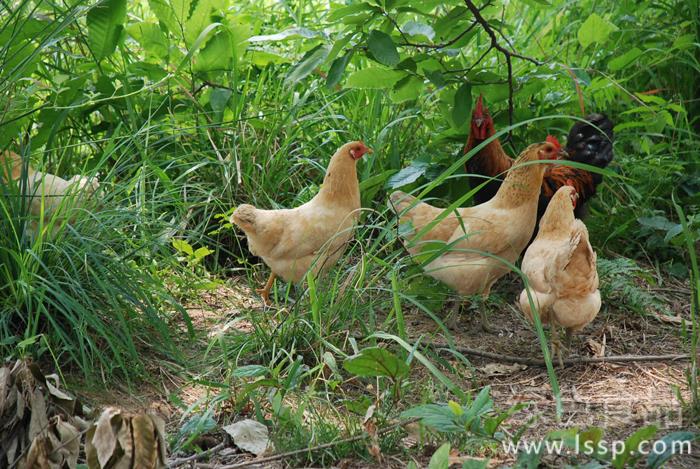
Free-range chickens are more popular than feedlot chickens, and new techniques bring high returns in raising them
Free-range chickens are more popular than feedlot chickens; new techniques bring high returns in raising free-range chickens
-
How to choose fish medication? These are the most popular
Fish Parasite Killer This product is an external insecticide for black carp, grass carp, silver carp, bighead carp and crucian carp. It can kill Chinese anchor worms, Lernaea, Trichodina, Ichthyophthirius, Gyrodactylus, sporozoans, Dactylogyrus, fish lice, glochidia and other parasites on fish within a few hours, and can also kill aquatic centipedes, leeches and other pests. Fish Parasite Nemesis This product is a new type of highly effective insecticide (parasiticide) that can powerfully kill fish parasites such as Lernaea, Chinese anchor worms, Trichodina, Dactylogyrus, Gyrodactylus, sporozoans, and Diplozoon, and is effective for the four major Chinese carps, freshwater pomfret, mandarin fish, sea bass, eel
-
Diagnosis and Treatment of Canine Vestibular Adenitis Explained
Canine vestibular adenitis is a disease caused by hyperplasia and hypertrophy of the vestibular glands and poor drainage of vestibular gland secretions. Some consider the disease to be a vaginal tumor, while others classify it as vaginal prolapse. In recent years, the author has diagnosed and treated 7 cases of this disease, all of which were cured. The incidence, clinical symptoms, treatment measures and effects of the disease are briefly summarized and reported below for the reference of colleagues. 1 Incidence and clinical symptoms Among the 7 affected dogs diagnosed and treated, 5 were Red Wolves and 2 were Shepherd dogs, aged 6-13 months,
-
How to grow Dianthus acicularis? Detailed guide to cultivation and care methods
I. Planting Dianthus acicularis. Dianthus acicularis has many advantages such as drought tolerance and water saving, alkali tolerance, tolerance of poor soil, cold tolerance, and a long green period. When planting, pay attention to the following issues: 1. Soil selection. The soil at the planting site is best sandy or semi-sandy soil. If a clay section is encountered, sand can be mixed in to improve it, which is beneficial for drainage and root growth. 2. Land preparation. Generally, only the 15 to 20 cm deep soil layer needs to be turned over, and stones and debris should be picked out. The soil does not need to be sifted. After the plot is leveled, planting can begin. If
条件筛选