-
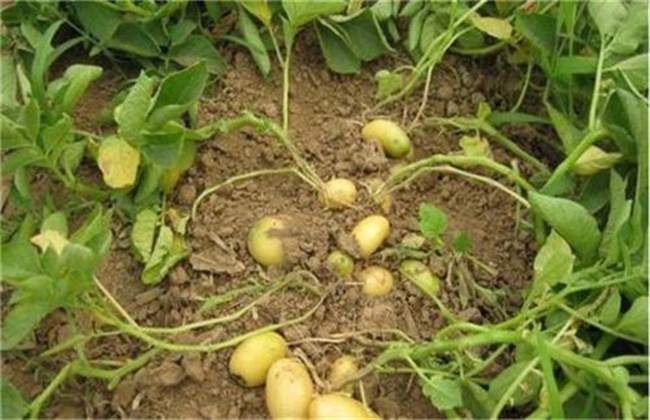
What to Do If Potatoes Only Grow Stems Without Forming Tubers? Prevention and Remedial Measures
Prevention and Remedial Measures for Potatoes That Only Grow Stems Without Forming Tubers
-
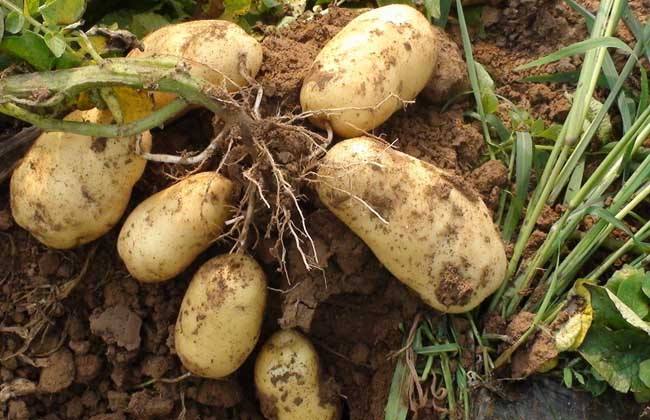
Reasons for Few or No Tubers in Potatoes and Preventive Measures
Reasons for Few or No Tubers in Potatoes and Preventive Measures
-

Will potato tubers continue to enlarge?
The tuberization stage is the period when tubers form and rapidly expand. Water consumption during the peak tuberization stage accounts for more than half of the total water requirement of the whole growth period. Soil moisture content should be maintained at about 70% of field capacity, that is, when picked up it forms a ball, and when dropped from a height of one meter it breaks apart; this is ideal. In the late tuberization stage, that is, one week to 10 days before harvest, irrigation should be stopped to facilitate harvest.
-
Potato tubers infected with Phytophthora cause cellar rot
Symptoms: Slightly sunken dark or purple lesions appear in patches on the surface of the tubers, extending less than 1cm into the tuber. White mold is generally not easy to see, but when humidity in the cellar is high, white mold grows on the diseased area, which is the pathogen's sporangiophores and sporangia. This causes cellar rot. For the pathogen, transmission routes and disease conditions, see Potato Diseases - Potato Late Blight. For control methods, see Potato Dry Rot.
-
Identification and Prevention of Physiological Disorders in Atlantic Potato Tubers
The Atlantic potato is a high-quality raw material for processing snack foods such as potato chips and French fries. Its growth period is relatively short, and it has strict requirements for the cultivation environment: it needs cool conditions but is not tolerant of low temperatures. During cultivation, freeze protection and fertilizer and water management should be done well to avoid physiological disorders such as black heart, hollow heart, starch leakage, cracking, and deformities, and to improve tuber quality and marketable yield. I. Tuber black heart 1. Symptoms: Irregular patterns ranging from black to blue appear in the center of the tuber. When oxygen deficiency is severe, the entire tuber may turn black. Usu
-
How to select and store sweet potato seed tubers? These methods you need to master
1. Timely harvest: If sweet potatoes are harvested too early, the yield is lower; if harvested too late, they are prone to frost damage, which affects storage. Therefore, it is generally best to begin harvesting when the temperature is around 18°C, and finish harvesting when the temperature is above 10°C (that is, before the frost-kill period). 2. Carefully select tubers: When harvesting and selecting good sweet potato varieties, you must dig and cut carefully to avoid wounds. In order to produce more sprouts, strong sprouts and lower costs, tubers weighing 150-200 g should be selected as seed. The selected tubers must be disease-free, free from flood damage, and also have the typical characteristics of the variety. At harvest,
-
Causes of Deformed Potato Tubers and Control Measures
Deformed potato tubers are a problem that some growers overlook while single-mindedly pursuing higher yields: deformed tubers often appear during tuber growth, especially in the spring crop of double cropping, where high temperatures and drought lead to a high proportion of deformed tubers, seriously affecting the marketability of potatoes and greatly reducing potato...
-
What are the reasons for long potato stolons and few tubers per plant
Recently, many potato growers have called in, reporting that this year's potato crop, compared with previous years, shows longer stolons and fewer tubers per plant, and asking what the cause is. This has to be explained starting from the morphological structure and growth characteristics of the potato plant and the weather conditions in our province during this year's potato growing season. Potato...
-
What methods are there for disinfecting round yam seed tubers?
How should yams be planted to achieve high yields? I would like some guidance. To achieve high yields when growing yams, the following cultivation techniques can be referenced: 1. Choose a suitable plot and do a good job of deep plowing and land preparation. Yam is a tuber crop, and its tubers go deep into the soil. It is drought-tolerant and afraid of waterlogging, and prefers deep, loose soil. Therefore, choose a high, dry area with good drainage...
条件筛选