-

Express Delivery Reaches Villages: The Finishing Touch of "Internet Plus Rural"
Without an inclusive, standardized, convenient and efficient logistics and express delivery system, it is difficult for goods and information to flow between urban and rural areas. Accelerating the development of the express delivery industry and promoting the development of rural e-commerce are mutually complementary and mutually reinforcing, and a virtuous cycle between the two will certainly
-
Agricultural and poverty-alleviation funds must not be embezzled or misappropriated
As of May this year, procuratorial organs nationwide handled a total of 29,000 duty-related crimes in agriculture-related and poverty-alleviation fields, accounting for 22% of the total number of duty-related crimes filed and handled by procuratorial organs during the same period. Duty-related crimes in agriculture-related and poverty-alleviation fields remain at a high level, in a prone and frequent state. (People
-
Who Touched the Land Expropriation Compensation? How Farmers Can Defend Their Rights
In the process of urbanization, infrastructure construction, shantytown redevelopment, and commercial development projects all involve the expropriation and compensation of land and housing, which has also given rise to many disputes. Recently, the Hongshan District People's Court of Chifeng City, Inner Mongolia, heard a case involving compensation for the expropriation of contracted land
-
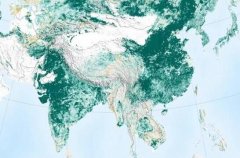
Earth is greener than it was 20 years ago, and China and India are the biggest contributors
Human activity on Earth usually has a negative impact on the environment: dumping plastic into the oceans, causing ice sheets to melt at an alarming rate, depriving polar bears of their habitat, and so on. But a new study of satellite data shows that over the past 20 years or so, the Earth
-
Is Cuban oregano (touch-me-not scented plant) toxic? Explaining the causes of yellowing leaves in potted cultivation
also be used to make tea, brew soup and so on, so it has quite a few uses. Let us take a look below at <strong>Is Cuban oregano toxic? Why do potted plants show yellowing leaves?</strong></span></p> <p style="text-align: center;"></p> <p style="text-indent:2em;"><strong>1. Is Cuban oregano toxic?</strong></p> <p style="text-indent:2em;">Cuban oregano is not toxic and can emit an inviting fragrance, as fresh as mint and carrying a faint apple scent. Cuban oregano is a small potted plant that can be both viewed and enjoyed for its scent, with an aroma like mint yet slightly appley. It refreshes the mind, clears heat and relieves summer heat, and repels mosquitoes. Cuban oregano can be kept indoors. Except for some friends who are allergic to the scent, everyone else can safely grow Cuban oregano at home; it can freshen the air and give off a faint fragrance.</p> <p style="text-indent:2em;"><strong>2. Why do potted Cuban oregano plants show yellowing leaves?</strong></p> <p style="text-indent:2em;">1. Too much watering</p> <p style="text-indent:2em;">Overwatering is a mistake many flower lovers make; too much water easily causes root rot. So first you need to check whether you have watered too much. Cuban oregano does not tolerate water; too much water causes root rot, and rotten roots make the leaves turn yellow.</p> <p style="text-indent:2em;">Cuban oregano likes to grow in dry soil, so when cultivating it the soil needs to be kept alternately dry and moist; on rainy days reduce or stop watering as much as possible, because soil that is too dry or too wet can both easily cause the plant's roots to rot.</p> <p style="text-indent:2em;">In late autumn, when the temperature gradually drops, gradually reduce the frequency of watering Cuban oregano, and water appropriately when the soil surface looks dry. You can also let it get a little rain. At ordinary times it still needs to be kept in sunlight. Moreover, plants placed in the open air clearly grow better than those indoors.</p> <p style="text-indent:2em;">When the temperature is below zero, do not water. When the temperature is too low, at this time both day and night it must be covered well with plastic sheeting or plastic bags, and watering is forbidden. If it is placed in the open air, let it get some sun during the day, and at night something must cover it, otherwise it will freeze to death overnight.</p> <p style="text-indent:2em;">2. Improper fertilizing</p> <p style="text-indent:2em;">Potted Cuban oregano has limited soil, and the fertility of the soil alone is certainly not enough, so it needs fertilizing. However, too much fertilizer or a lack of fertilizer can both cause the leaves to turn yellow. Too much fertilizer causes fertilizer burn; too little fertilizer means insufficient nutrients.</p> <p style="text-indent:2em;">During its growing stages Cuban oregano does not need much fertilizer; we do not need to fertilize it deliberately, and we should keep the fertilizing frequency at about once a month. By all means avoid too much fertilizer, which causes root burn.</p> <p style="text-indent:2em;">3. Natural causes</p> <p style="text-indent:2em;">As time goes on, the stems of Cuban oregano gradually become woody, and the surrounding leaves also turn yellow and gradually wither; this is normal, and after withering new branches gradually grow.</p> <p style="text-indent:2em;">4. Insufficient light</p> <p style="text-indent:2em;">Cuban oregano loves sunlight and is slightly shade-tolerant; its suitable growing temperature is about 5°C to 10°C. We need to place it in an environment with abundant sunlight for care, so only under strong light will the fleshy leaves of Cuban oregano be thick.</p>
-
How to Solve Calamondin Leaves Turning Yellow and Falling Off at a Touch
In everyday conversation, when people talk about calamondin, they immediately think of potted plants. In our minds, it is an ornamental plant, and its remarkable feature is that it can fruit multiple times a year with a long fruiting period. Its round, glossy fruit greatly enhances
-
A Detailed Guide to Impatiens Propagation Methods and Seed Dispersal
Impatiens is a flower plant that is not prized as rare but is very unique, and its cultivation method is not very difficult, which is an important reason most flower lovers choose to grow it. Its main propagation method is sowing, and it grows very fast; it takes only a few months
-
How Does Mimosa Pudica Survive Winter? Detailed Winter Care Methods
Mimosa pudica is a flower whose leaves fold up when touched, just like a little girl, and it is very interesting to grow. So how does mimosa pudica survive winter? 1. How does mimosa pudica survive winter? 1. Watering requirements. Mimosa pudica is a flowering plant native to the tropics that loves moisture, and it prefers a warm
-
Can Keeping Geese Repel Snakes? Practical Methods for Using Geese to Keep Snakes Away
After days of continuous rain, a "monster" flashed out inside a house, gliding away rapidly at the slightest touch. In the early hours of the 4th, a banded krait was found in a rented room in Jun'an, Shunde, and last week a resident in Daliang also reported a grass flower snake suddenly appearing at the elevator entrance. Snakes appearing frequently in residential areas have aroused concern. Animal experts say that because of the heavy rain ⟦4 <p>After days of continuous rain, a “monster” flashed out inside a house, gliding rapidly away at the slightest touch. In the early hours of the 4th, a banded krait was found in a rented room in Jun'an, Shunde, and last week a resident in Daliang also reported a grass flower snake suddenly appearing at the elevator entrance. Snakes appearing frequently in residential areas have aroused concern. Animal experts say that because of the heavy rain, snakes may have been forced out, and that geese can be kept to guard against snakes entering the house. </p><p></p><p><strong>Keeping Geese to Repel Snakes</strong></p><p>Yesterday, eyewitness Mr. Li said that in the early hours of the 4th, a snake less than one meter long was found at a rented house at the Kangle Road intersection in Jun'an Town, Shunde, throwing the rental house into panic. </p><p>The house is divided into several rooms for rent. A woman renting one of the rooms recalled that she was about to enter her room to rest when, in the dim light, she found a pile of something at the door, “black, like a snake.” So she picked up a broom beside her and tapped it. Suddenly, startled, the black thing quickly “swam” into the room. “It should be a snake, it scared me to death!” The woman immediately shouted for help from a fellow townsman nearby, but he did not dare enter the room to hit the snake, so they took a small table and blocked the doorway, and the two called the police for help. After police officers from the police station and the Jun'an fire brigade arrived, through questioning and inspection, they determined the snake was a highly venomous banded krait, commonly known as “guojixia.” </p><p></p><p>Mr. Li said that after the firefighters entered the room, they pinned down the snake's head with a bamboo pole, and then someone grabbed the snake's head with his hand. The action took only a few seconds, and the banded krait was captured. He relayed that, according to the firefighter who caught the snake, the banded krait is highly venomous, even more venomous than the cobra, with a pair of relatively long grooved fangs (front grooved fangs) at the front of the upper jaw. After being bitten, a person often dies from respiratory paralysis. Fortunately it was discovered in time, otherwise it would have been trouble if they had fallen asleep. </p><p>Coincidentally, a resident of Fengnan Garden in Daliang also once witnessed a snake breaking into a house. Ms. Luo, who lives on the first floor, said that just last week, while her mother was resting at home, she found a snake moving at the entrance, “the snake's body and head were clearly visible, yellow-green, yellow-green.” Ms. Luo said that not long before, after heavy rain, a snake was found at the elevator entrance of the residential compound, and someone bold killed it on the spot. “It scared the residents into screaming, and they did not dare enter the elevator.” The property management of Fengnan Garden said they had indeed received reports from residents, but property management personnel did not find anything when inspecting the lawn. The property management said the compound regularly sprays pesticide against the “four pests,” and is also closely monitoring the appearance of snakes. </p><p></p><p><strong>Expert Opinion: Heavy Rain May Have Forced Snakes Out </strong></p><p>Teacher Zhang Liang, a staff member of the South China Institute of Endangered Animals and a member of the Guangdong Zoological Society, has long studied reptiles. He analyzed that the main reason snakes enter houses is the changeable weather, often stuffy and hot, and sometimes with sudden heavy rainstorms. It is possible that snakes were flooded out of their hiding places by the rain and ran into residents' homes. It is also possible that rats are hiding in the homes, and snakes like to eat rats and come following the scent. </p><p>He said that because some snakes are venomous, the consequences of them entering a house and biting someone are unimaginable. To prevent snakes from breaking into homes, sulfur powder can be sprinkled, or some chemical preparations with irritating odors. “Snakes are relatively afraid of the smell of smoke, insecticides and pesticides,” he said. In addition, people can also try keeping geese, because geese like to confront snakes, and keeping geese can become the first line of defense against snakes entering the house.</p><p></p><p><strong>Building the Goose House </strong></p><p>1. Brooding house. The house is required to have good insulation, air circulation, and to be dry without drafts. The ratio of window lighting area to floor area is 1:10-15. The brooding house is suitable for raising 5-15 goslings under 20 days of age per sq m. </p><p>2. Fattening house. The house is equipped with shelving, divided into single-row and double-row types, and divided into small pens, each about 10-12 sq m, which can accommodate 60-80 medium-sized growing geese.</p><p></p><p><strong>Choosing the Site for the Goose House </strong></p><p>1. There is an adequate water source. </p><p>2. There is a feed production base for growing green feed. High-quality forage grass can provide 60%-80% of the daily dietary nutrition for geese. </p><p>3. The environment is quiet, the air is fresh, and there is shade from trees. </p><p>4. It is far from villages and towns, which is good for sanitation and epidemic prevention. </p><p>5. The goose house should be built on high, dry, flat or gently sloping land, facing south or southeast, and the soil should preferably be sandy soil with good water permeability, so that sunlight is good and drainage is facilitated, while also helping to prevent heat, moisture and cold. A simple shed can be built, with bamboo fences or coarse netting around it for raising the geese, or a shed can be built beside ditches and rivers using flowing water sources such as ditches and rivers for enclosed raising. For goose houses using a wooden structure, special attention should be paid to ventilation and heat dissipation in summer. The front and rear walls need two rows of windows, upper and lower, and the lower edge of the lower row of windows should preferably be 30 cm from the ground.</p><p></p><p>Perhaps many people do not know that keeping geese can also help repel snakes, but regardless of whether it has this effect, the essential purpose of keeping geese is still to make money, so in the breeding process, the choice and construction of the site are very important.</p>
-
Is Cuban oregano (touch-me-not) toxic? Is it suitable for growing indoors?
Cuban oregano is a potted plant with a unique fragrance, famous for its scent that closely resembles apple aroma, and many people want to grow it, so is Cuban oregano toxic? Is it suitable for growing indoors? 1. Basic introduction to Cuban oregano. Cuban oregano is a subshrub-like perennial herbaceous plant of the Lamiaceae family and the genus Plectranthus, much branched, with the whole plant covered in fine dense white fuzz. Succulent leaves, decussate, green, ovate, with bluntly serrate margins. Stems slender, prostrate, many-branched, leaves round, leaf blades fuzzy, flowers small, white.
条件筛选