-
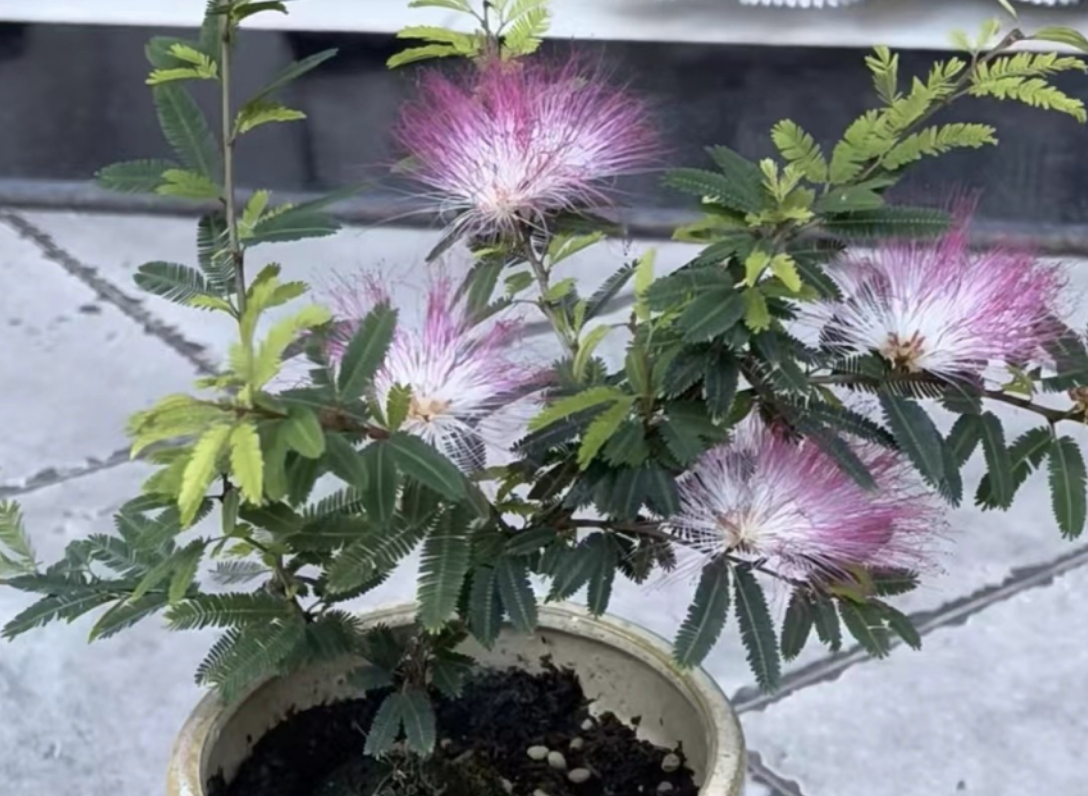
Is there a difference between Albizia julibrissin and Mimosa pudica?
As we all know, flowers of the same genus usually have some similarities. For example, Albizia julibrissin and Mimosa pudica. Although they have similarities
-

How to Care for Mimosa pudica in Winter? A Full Guide to Winter Care Techniques
Mimosa pudica, as the name suggests, is a grass that gets shy. In fact, it is because the leaves of Mimosa pudica are sensitive to heat and light and close immediately when touched by an external force. So how do you care for Mimosa pudica in winter? 1. Watering. Mimosa pudica is a flowering plant native to the tropics that likes moisture,
-
How to Grow Mimosa pudica? A Detailed Guide to the Latest Care Methods
Mimosa pudica, also known as zhixiu cao or pa xiu cao, is a perennial herbaceous plant in the Fabaceae family. Because its leaves are extremely sensitive, a gentle touch makes the leaflets immediately fold together left and right; a firmer touch makes even the pinnae and petioles droop to 60 degrees. At night it also assumes a dormant drooping posture, and it reacts the same way to sudden cold or electrical stimulation. This morphological reaction makes people find it extremely interesting, as if it were shy, which is why it is called mimosa. Below, the editor will introduce to you exactly how mimosa should be grown?
-
Is Mimosa pudica toxic? The latest answer is here
Is Mimosa pudica toxic? Actually, Mimosa pudica contains mimosine, which is mildly toxic. Long-term contact or ingestion can cause the hair follicles in skin cells to deteriorate, leading to yellowing and even shedding of hair and eyebrows. Eating Mimosa pudica can also cause hair loss in humans, therefore,
-
What are the latest flower meanings and legends of the sensitive plant (Mimosa pudica)?
The sensitive plant is also known as the touch-me-not, the shy plant, the shouting plant, the shamefaced plant, the laughing plant, the husband-and-wife plant, the bashful plant, and so on. It is a perennial herb or subshrub in the Fabaceae family. Because its leaves respond to heat and light and close immediately when touched by an external force, it is named the sensitive plant.
-
What are the characteristics of the sensitive plant (Mimosa pudica)? The latest explanation is here
The sensitive plant is native to the tropical regions of the Americas and is a perennial herbaceous plant of the genus Mimosa in the Fabaceae family. Because of its own unique physiological habits, it has many alternative names and nicknames, such as laugh-seeing grass, sensing grass, he-hu grass, shame-knowing grass, shy grass, bashful grass and husband-and-wife grass
-
A Complete Analysis of the Latest Mimosa pudica Growing Methods
Mimosa pudica is a perennial herb or subshrub of the legume family. The mimosa plant has a loose, spreading form, with delicate and graceful feathery leaves; its flowers, leaves and seed pods all have good ornamental value. It is robust in habit, grows quickly, and is relatively easy to keep alive, making it suitable as a potted flower on balconies and indoors, and it can also be grown in courtyards
-
What is the latest information on Mimosa pudica? This article gives you a detailed introduction
Mimosa pudica is a perennial herb or subshrub of the Fabaceae family. Because its leaves respond to heat and light and close immediately when touched by an external force, it is named Mimosa pudica. Its flowers, leaves and pods all have good ornamental value, and it is relatively easy to keep alive, suitable for balconies and indoors
-
Can Mimosa pudica Be Kept in the Bedroom? The Latest Answer Is Here
Mimosa pudica is native to the tropical regions of South America. It prefers warm, humid conditions, is not demanding about soil, likes light but can also tolerate partial shade, and its flowers, leaves and seed pods all have good ornamental value. It can therefore be kept indoors as a potted plant for enjoyment. Because its leaves respond to heat and light, and close immediately when touched by an external force, it is called mimosa.
-
Can Mimosa pudica Be Grown Indoors? The Latest Answer Is Here
We know quite a bit about Mimosa pudica: as soon as we touch its leaves, they immediately fold up, making it look shy and lovely, and many people are very fond of it. They want to grow a pot of it at home, tease it now and then, and add a little fun to daily life. But some say it is toxic, while
条件筛选