-
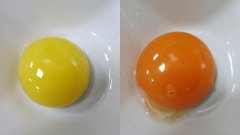
Taichung Sen 17 Transformed into Feed Rice, Livestock Research Institute Raises Delicious Rice-Fed Chickens
In order to expand domestic rice consumption in Taiwan, the Livestock Research Institute (hereinafter referred to as the Livestock Research Institute) specifically used Taichung Sen 17 as feed rice to replace corn, and found that free-range chickens fed feed rice showed significant improvements in both meat quality and flavor, making it suitable for the livestock industry
-

How to Achieve Coordinated Development Through Urban-Rural Integration
The Fifth Plenary Session of the 18th Central Committee of the Party made coordination one of the five major development concepts, proposing to focus on promoting coordinated urban-rural and regional development, promoting coordinated economic and social development, and promoting the synchronous development of new industrialization, informatization, urbanization and agricultural modernization. Facing the current urban
-
Central government allocates 400 million yuan to support agricultural development and build 220 improved seed breeding bases
According to a notice posted on the Ministry of Finance website on the 24th, in 2014, focusing on enhancing the capacity of improved seed breeding bases and improving the construction of the improved seed breeding system, the central government allocated 41.169 million yuan in comprehensive agricultural development funds to build 220 improved seed breeding bases in 28 provinces (regions and municipalities). The main construction contents
-
Leisure agriculture faces favorable development opportunities: how to choose a development model
In recent years, China's leisure agriculture has developed rapidly and become a new economic growth point. The development of leisure agriculture helps optimize the rural industrial structure, open up employment channels for farmers, advance agricultural industrialization, and promote the development and utilization of rural ecological and cultural resources, becoming an important way to
-
How to Break Through the Institutional Obstacles to Rural Development
The past decade has been the period in which our country's agriculture developed fastest, the rural landscape changed the most, and farmers gained the most tangible benefits; it has also been the "golden decade" for our country's rural economic and social development. However, with the in-depth advancement of industrialization, urbanization, marketization, informatization and globalization,
-
Ministry of Agriculture to Launch Family Farm Monitoring to Promote Regulated and Orderly Development
The Ministry of Agriculture plans to launch monitoring of family farm development this year. By establishing a dynamic monitoring and management system for family farms, it will produce annual monitoring reports on family farm development, provide a basis for family farm development, offer reference for the formulation of related support policies, and promote the regulated and orderly development of family farms.
-
The Ministry of Agriculture is planning the "Yinong Plan" to jointly advance the development of the agricultural Internet of Things
In early 2013, the State Council issued a document proposing that by 2015, large-scale demonstration applications of the Internet of Things, including in agriculture, be achieved in multiple fields. After that, the Ministry of Agriculture carried out regional pilot projects for the agricultural Internet of Things in Tianjin, Shanghai and Anhui, with the three places according to their respective
-
Agriculture around cities will show a trend toward park-like development
Green development is a theme of our times. Lu'an's urban development is very dynamic, and if Lu'an's agriculture is to achieve leapfrog development, it must be different from the past. First, it is suggested that Lu'an City coordinate urban and rural development through urban ecological agriculture. In the future, urban ecological agriculture can
-
Hybrid rice development is stalled: how can it be saved?
Data show that in recent years the downward trend in hybrid rice varieties has been very pronounced. The number of varieties with an annual promotion area of more than 1 million mu rose from 46 in 2002 to a peak of 59 in 2004, then declined year by year to 29 in 2012; the number of varieties with an annual promotion area of more than 5 million mu fell from about 9 in the early period to 1 per year at present; since 2007, no variety with more than 10 million mu has appeared. The average annual promotion area of a single main hybrid rice variety fell sharply from 2.133 million mu in 1993 to 374,000 mu in 2012, a drop of 82.5%.
-
Sustainable development of pastoral areas requires a long-term mechanism
From August 30 to September 3, Vice Minister of Agriculture Yu Kangzhen conducted a survey in the Xinjiang autonomous region on the implementation of the grassland ecological protection subsidy and reward policy and the transformation and development of the grassland livestock industry. He stressed that the grassland ecological protection subsidy and reward policy is a major measure taken by the central government to promote the sound and rapid development of pastoral areas, and that all localities must adhere to the basic principle of "combining production and ecology organically, with ecology taking priority," firmly establish the concept that "protecting ecology means protecting productivity, and improving ecology means developing productivity," further establish and improve a long-term mechanism for grassland protection and construction, actively advance the transformation and upgrading of the grassland livestock industry, promote the sustainable development of pastoral areas, and achieve "greener grasslands, a stronger livestock industry, and wealthier herders."
条件筛选