Taichung Sen 17 Transformed into Feed Rice, Livestock Research Institute Raises Delicious Rice-Fed Chickens
In order to expand domestic rice consumption in Taiwan, the Livestock Research Institute (hereinafter referred to as the Livestock Research Institute) specifically used Taichung Sen 17 as feed rice to replace corn, and found that free-range chickens fed feed rice showed significant improvements in both meat quality and flavor, making it suitable for the livestock industry to plan for replacement. Why is this?
Taichung Sen 17 has many benefits, leading to the development of rice-based feed ingredients
By using rice as a feed ingredient, the Livestock Research Institute stated that since Taiwan's rice production and quality are both at a certain level, developing feed rice can not only increase the source of raw materials, but also reduce the impact of price fluctuations in imported feed ingredients and revitalize farmland. In view of this, among the many Taiwan rice varieties to choose from, Taichung Sen 17 was ultimately selected for further research and production because it possesses multiple advantages such as high grain yield, high protein content, high brown rice milling rate, strong lodging resistance, and strong adaptability.
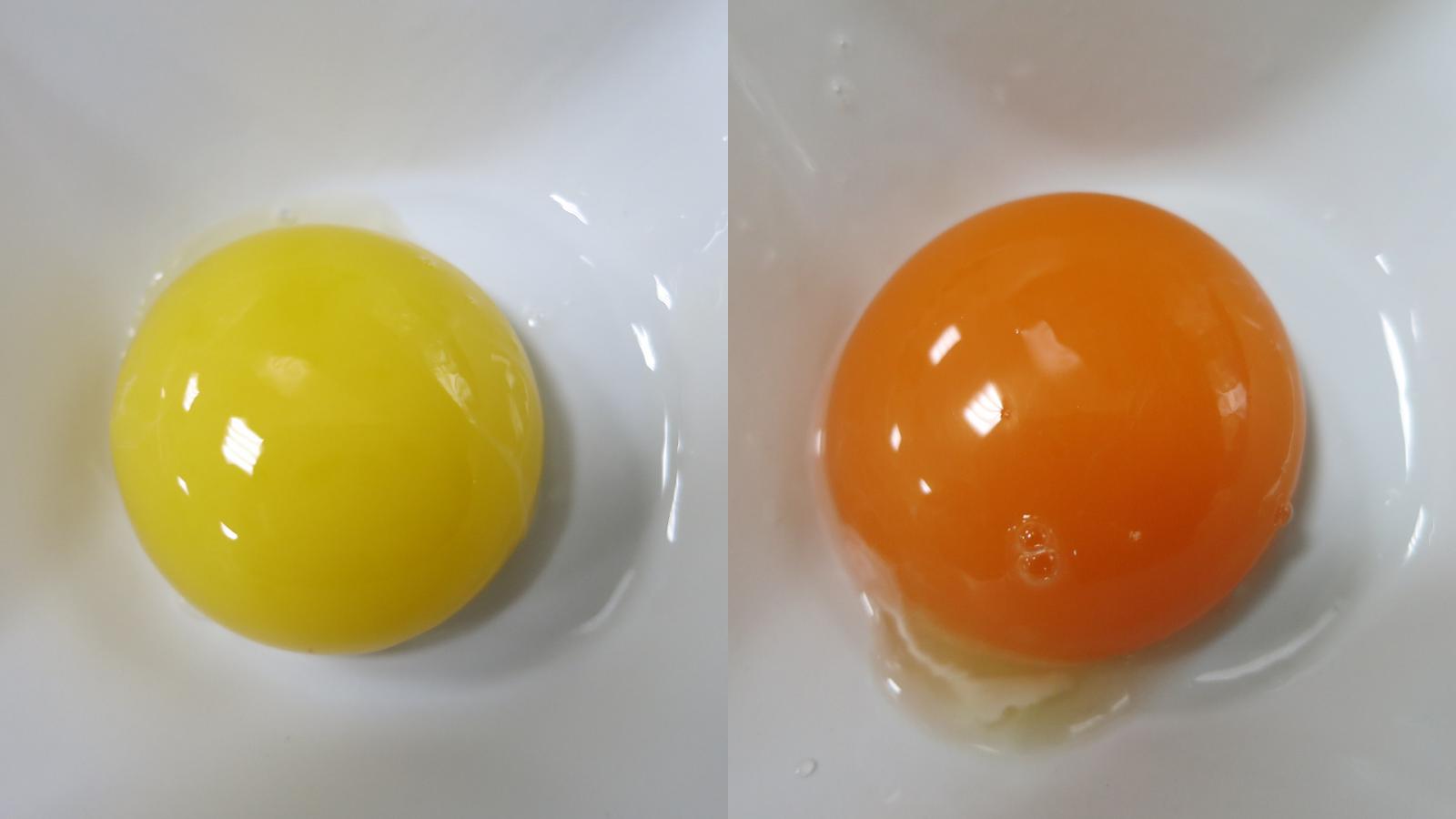
As shown in the left image, if 100% brown rice is used to replace the corn in the feed, the egg yolk color is lighter; after supplementing with carotenoids, the egg yolk color in the right image becomes more red.
Rice-fed free-range chicken meat is more tender, and the flavor is also good
After a period of experimentation, the Livestock Research Institute found that free-range chickens fed feed rice had more tender breast meat, and also scored better in aroma and flavor ratings; as for laying hens, the eggs produced had lighter yolk color compared to general laying hens because brown rice lacks lutein, so carotenoids can be supplemented during feeding to maintain their bright yellow color. The Livestock Research Institute also stated that although rice-fed poultry meat and eggs have some differences in appearance and flavor compared to general products, with the use of other functional feeds, the flavor or acceptability can still be further improved, and if relevant industry operators are willing to try production, they can further inquire.