-

Henan Food Sampling Inspection Announced: Testing Development Trends, Does All Food Need Sampling Inspection?
For people today, what goes into their mouths is increasingly judged on hygiene, cleanliness and other such issues, because there is more and more junk food now, which over time causes great harm to people's health. In response, Henan Province has adopted new measures. What are they?
-
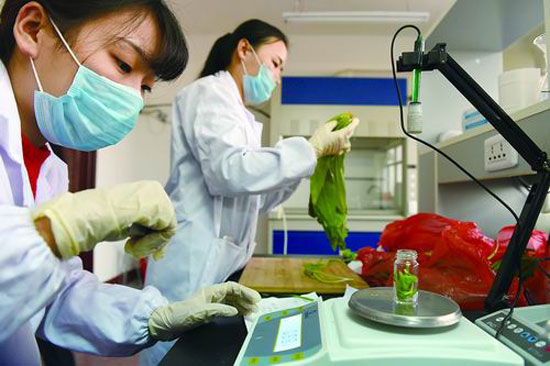
Beijing-Tianjin-Hebei joint prevention and control carry out pesticide residue testing, with results shared and mutually recognized
Beijing-Tianjin-Hebei joint prevention and control inspects pesticide residues, results mutually recognized
-

Shunde eel from Guangdong goes online for the first time, testing the waters of online sales
Shunde eel from Guangdong goes online for the first time
-
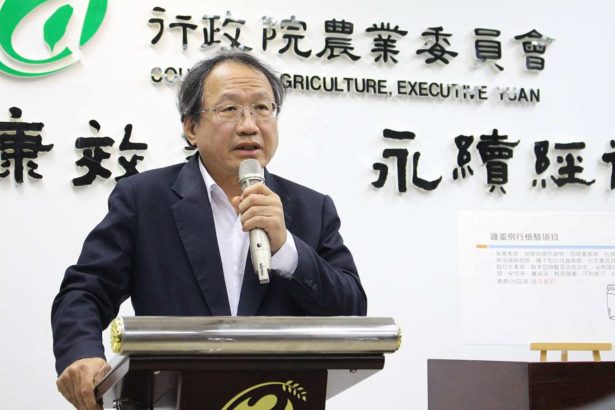
Fipronil tainted egg testing delayed for more than 10 days; Council of Agriculture demands Central Livestock Production Association complete testing within 48 hours
Fipronil tainted egg testing delayed for more than 10 days; Council of Agriculture demands Central Livestock Production Association complete testing within 48 hours
-
Key Technical Points of Soil Testing and Formula Fertilization for Rice
Based on the technical principles of soil testing and formula fertilization, and combined with the actual work of soil testing and formula fertilization in Pulandian City, 10 technical steps in the experimental process of soil testing and formula fertilization for rice were summarized. 1. Site selection: Select locally representative plots, and arrange experimental plots according to the areas of high-, medium-, and low-fertility farmland. The fertility status of the experimental site should be uniform and consistent, and the fertilization status of the previous crop should be as similar as possible. 2. Soil sampling and testing: Collect soil samples before plowing, using a "plum blossom shape" or "snake shape" to take 15-20 points, with a vertical depth of
-
Detailed Explanation of Key Technical Points for Soil Testing and Formulated Fertilization in Rice
I. Fertilization Principles 1. Soil testing and formulated fertilization for rice should follow the principles of determining yield target based on soil, determining fertilizer rate based on yield target, supplementing deficient nutrients, combining organic and inorganic fertilizers, and balanced application of nitrogen, phosphorus and potassium. First, soil testing is required. Soil testing is the prerequisite for soil testing and formulated fertilization; through analysis and determination of soil nutrients, the soil nutrient status and fertilizer supply capacity can be accurately grasped, providing a scientific basis for formulated fertilization. Second, a good formula must be prepared. The formula is the key to fertilization. On the basis of soil testing, according to soil characteristics, cultivation practices, crop nutrient requirements, production level and climate conditions,
-
DNA testing confirms the Formosan landlocked salmon is a species endemic to Taiwan, China
Taiwan's Shei-Pa National Park announced the results of its conservation research program, among which research on Taiwan salmon, also known as the Formosan landlocked salmon, has made a major breakthrough. Through DNA sequence mapping analysis, it has for the first time been confirmed that the Formosan landlocked salmon is a native species endemic to the Taiwan region of China, and did not evolve from the landlocked form of masu salmon introduced from Japan or from rainbow trout that escaped from farms, but is truly a unique variety endemic to Taiwan. According to a report by Taiwan's Eastern Broadcasting, Taiwan salmon, formerly named Formosan landlocked salmon and also known as Taiwan trout, Lishan trout and Cishan trout, is the only temperate fish species in the subtropical Taiwan region, China,
-
Hangzhou implements pre-slaughter urine testing for live pigs
To give residents peace of mind when eating meat, Hangzhou has implemented pre-slaughter urine testing for live pigs, effectively preventing pork from pigs fed "lean meat powder" from reaching the dining table. According to data provided by the Hangzhou Municipal Agriculture Bureau, so far a total of 4,552 pigs in Hangzhou have been pulled off the slaughter line after testing positive in urine tests. To give residents "peace-of-mind meat," Hangzhou began on September 20 implementing pre-slaughter urine testing of live pigs awaiting slaughter at 6 designated slaughterhouses in the urban area, whereby animal quarantine personnel conduct urine sample
-
Daily Testing Methods and Key Points During the Shrimp Grow-Out Period
Shrimp farming technicians should patrol the pond once in the early morning and once in the evening each day, carefully observing changes in the pond environment, water color, and the safety of shrimp activity, and keep records. The main testing contents are as follows: 1. During the grow-out period, viral pathogen testing should be carried out frequently, using methods such as T-E staining, nucleic acid probes, and PCR. 2. Remove crabs and rodents around the shrimp pond. Strictly prevent the introduction of dead shrimp from other shrimp ponds and water discharged from diseased shrimp ponds. 3. Measure water quality factors such as water temperature and dissolved oxygen. Daily
-
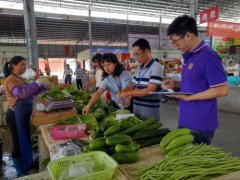
There are rapid pesticide residue detection methods, but 80% of pesticides cannot be detected
Rapid pesticide screening biochemical methods are fast and cheap, but 80% of pesticides cannot be detected. How can food safety be guaranteed? Let's take a look. "Rapid pesticide screening" is also called "rapid biochemical testing method," or "biochemical method" for short. It is promoted for its short testing time and low cost, and is widely used by major markets
条件筛选