-
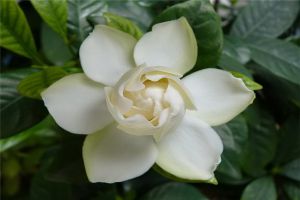
What is the best soil for gardenias? A full breakdown of soil mixing techniques
I believe many flower lovers are very fond of gardenias, yet do not know what kind of soil to use to grow them. Actually it is very simple: as long as the soil has a certain amount of nutrients and the ability to retain moisture and let air through, it will grow just fine. Also, if the soil is slightly acidic, that is even better! Specifically, we can mix sandy loam and peat soil at a 1:1 ratio, or mix leaf mold, sandy loam and river sand at a 2:2:1 ratio, to make the soil for growing it.
-
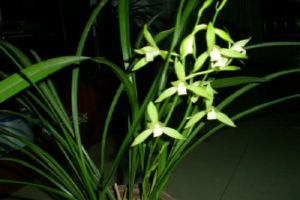
How to Grow Orchids So They Bloom Abundantly? A Detailed Guide to Care Techniques
It is a very popular flower in traditional Chinese culture, so many people grow it at home. So how should you care for it so that it produces more flowers? Naturally, you need to start with light, temperature, and fertilizer and water. Only with careful care can it grow beautiful flowers.
-
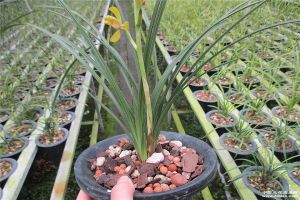
How to grow Cymbidium faberi so it blooms? A detailed guide to care techniques
Most people choose to grow this kind of plant, but problems may arise during the growing process. For example, why do we always see its glossy green leaves that look like garlic, yet never see its flowers? In fact, this is a fairly big question, and we need to examine every aspect to determine which step has gone wrong and caused it to look like this. So today we will talk about how to make it bloom.
-

-
How to care for orchids in early spring? Master these care techniques
Early spring is the full bloom period for Cymbidium sinense (Chinese orchid) and Cymbidium goeringii (Spring Orchid), and also the budding period for Cymbidium ensifolium (Four-season Orchid) and Cymbidium kanran (Cold Orchid). Early spring has many cloudy and rainy days, with large temperature fluctuations, and cold waves that tend to recur, which is extremely unfavorable for orchid growth. If poorly managed at this time, it can lead to root rot and bud rot in orchids, and can even cause flower rot in Cymbidium sinense and Cymbidium goeringii that are in full bloom. Because...
-
Complete Guide to Fertilizing Orchids: Methods and Techniques Explained
"A crop is a flower, all depends on fertilizer" - this farming proverb applies just as well to orchids. Orchids are fertilizer-loving plants, and the nutrients in the potting medium alone are hard-pressed to meet their year-round growth needs. After an orchid has been grown in a pot for a long time, the nutrient content in the potting medium gradually decreases, making proper fertilization necessary. Fertilization is an important part of orchid cultivation...
-
A Detailed Guide to Orchid Cultivation Methods and Fresh-Keeping, Storage and Transport Techniques
The medium for growing orchids very easily turns acidic. How can this be overcome? When sphagnum moss is used to grow orchids, after a few days the sphagnum moss becomes contaminated by organic-acid-producing bacteria and turns acidic, and then the orchid root zone easily develops black tips (Fusarium infection). Media for growing orchids are boiled in water or sterilized...
-
Detailed Guide to Orchid Care, Management Methods and Techniques
Orchids belong to the family Orchidaceae and are monocotyledonous plants, perennial herbs. They grow 20 to 40 cm tall, with long tubular roots. The leaves cluster from the base of the stem, are linear-lanceolate, slightly leathery, and grow in bundles of 2 to 3. The orchid is a traditional famous flower of China, a flowering plant renowned for its fragrance. With its distinctive leaves, flowers and fragrance, the orchid uniquely embodies the Four Pure Qualities (pure qi,...
-
The Style Characteristics of Orchids and Cultivation Management Techniques
Since ancient times, the noble character of the orchid has become a symbol of the excellent virtues of the Chinese nation, deeply loved by the Chinese people. In our country, there are countless poems, songs and odes praising orchids, and orchid culture has a long and profound history. Truly, "one orchid plant is a thousand paintings, one orchid spike is ten thousand poems." The fragrance of the orchid is hailed as the "ancestor of fragrance," the "nation's favorite," "...
-
Appreciation Techniques for Orchid Unusual Leaves and Variegation
1. Elegant plant form: The plant forms of Chinese orchids may look the same, but in fact their shapes vary: some are upright and vigorous, some are semi-arching with graceful curves, and some are obliquely spreading or fully pendulous, among others. Those that are refined and elegant are considered superior; only those that are vigorous yet still elegant achieve a balance of strength and grace, otherwise they are merely coarse wood. Bending and drooping do not equal weakness; there is strength within softness, and only when bending and drooping are moderate are the curves graceful. The leaves should be arranged neatly, or curved with posture and a sense of antique charm; a messy, disheveled look always seems lacking in beauty.
条件筛选