How to grow Cymbidium faberi so it blooms? A detailed guide to care techniques
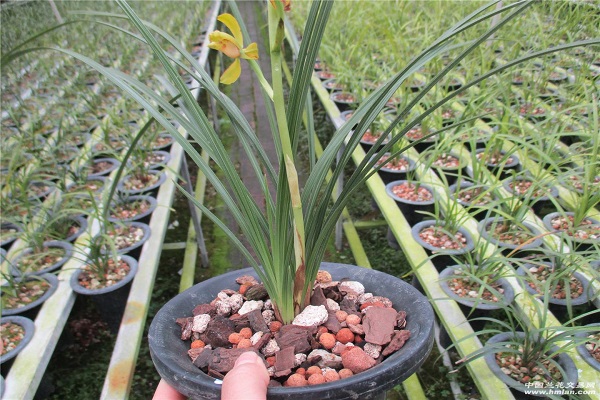
1. Roots
The roots are its foundation for survival, because for relatively new plants, most of their roots are short and small, so we need to use coarse lean soil to grow it for more than half a year, and during this period the soil does not need any fertilizer. The pot we give it also does not need to be very large; that way, new roots will grow better, and they will also grow thicker.
When its roots get bigger and bigger, we can switch to a slightly larger and deeper pot. Of course, at this time we can provide it with decomposed fertilizer. If it is a plant that was planted long ago or a relatively precious variety, its roots will directly appear thick and large, so we can directly use a relatively large and deep pot, and at this time decomposed fertilizer is still needed.
In addition, the soil we give it needs to be relatively loose, so the seedlings will grow faster, there will be more leaves, and the flowers can also open smoothly. Of course, we should also note that it cannot be divided into separate pots; it is best to place it in a place with relatively ample sunlight.
2. Water and fertilizer
It does not have high water requirements, but we must remember not to give it an environment that is too wet, because this may cause its roots to rot, which will also affect flowering. In addition, the air humidity should be above 40, and the concentration of the fertilizer solution should be relatively high; that way it will grow better, and the flowers will also open well.
3. Growth cycle
Its cycle is relatively long. A new seedling takes about two years to grow the central leaves, and it takes four years to be able to bloom. In addition, after it has adapted to the pot, it grows very quickly. So we cannot be impatient; it is best to give it a relatively relaxed environment. If what we selected is a weak seedling, then it should be grown with plain care, and after a few years it will definitely bloom. We should also not frequently turn over the soil, otherwise it will damage its roots, and adapting to a new environment is also relatively difficult, which will affect its flowering.