-

Plum Flower and Fruit Thinning Methods and Key Technical Points
Plum Flower and Fruit Thinning Methods
-

Key Technical Points for Landscape Application of Pentas
Pentas has excellent height, plant form and color, and can be combined with petunias or French marigolds to create summer color. It is heat-tolerant and drought-tolerant, can overcome scorching heat and humidity, and keeps blooming continuously until frost arrives. - Little five-pointed-star-shaped flowers scattered throughout large flower clusters create a very strong color impact.
-

Detailed Explanation of Practical Technical Points for Flower Enhancement and Fruit Retention in Lychee
Lychee Flower Enhancement and Fruit Retention Techniques
-

Methods and Technical Points for Regulating the Blooming Period of Baby's Breath
If baby's breath (Gypsophila paniculata) is grown in a greenhouse, its blooming period can be regulated even more effectively, aiming to bring it to market before the Spring Festival. The growth and flowering characteristics of perennial baby's breath are its growth and development characteristics. Apart from the two misleading characteristics - flowering under long-day conditions and the rapid elongation of the flower stems after the flower buds of baby's breath form
-

Cultivation Methods and Key Technical Points for Pistacia weinmannifolia
Pistacia weinmannifolia is drought- and barren-tolerant, with a well-developed root system and strong resistance. It is a pioneer tree species for afforestation and greening in dry-hot valley areas, and is also the main fuelwood timber there. Pistacia weinmannifolia has an attractive tree form and a fresh fragrance, with multiple edible and medicinal functions and broad development prospects. In North China it needs protection.
-

How to breed crickets? A detailed explanation of methods and key technical points
How to breed crickets
-
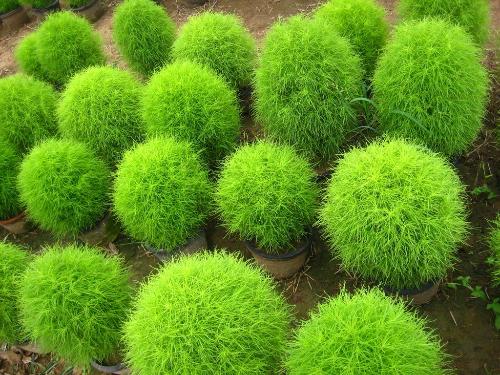
A detailed guide to the planting methods and key technical points for Kochia scoparia (summer cypress)
1. Sowing and seedling raising: can be direct-sown or raised as seedlings for transplanting. For open-field direct sowing, sow in early April; before sowing, apply plenty of base fertilizer. Hole sowing, row sowing or broadcast sowing are all acceptable. For seedling raising under protection, sow from early to mid-March, covering the seed with soil 3 to 4 times the seed diameter; seedlings emerge after 6 to 7 days.
-
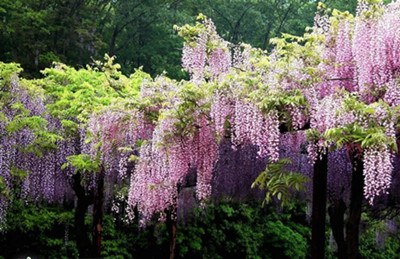
Detailed Explanation of the Key Technical Points for Wisteria Cultivation and Management
Wisteria, also known as tengluo, zhuteng, and huanghuan, Latin name: wisteria sinensis, belongs to the Fabaceae family, Wisteria genus, a deciduous climbing vine. The stem twines counterclockwise, the branches are relatively thick and sturdy, young branches are covered with white soft hairs, later becoming smooth; winter buds are oval. It is a deciduous climbing and twining large vine with dark gray bark that does not split.
-

Planting Methods and Key Technical Points for Chinese Yam (Dioscorea nipponica)
Planting Methods for Chinese Yam (Dioscorea nipponica)
-

How to prevent and control pests and diseases in an organic garden? These key technical points must be mastered
I kept saying I would write a pest control article, but because the chance of pests when growing at home is not high, I rarely have the opportunity to take photos of pest damage. So far I have only photographed red spider mites and aphids. Even whiteflies did not pay a visit this time, let alone leaf miners. So I am very sorry that there are very few self-taken photos of pests and diseases
条件筛选