Cultivation Methods and Key Technical Points for Pistacia weinmannifolia
Pistacia weinmannifolia is drought- and barren-tolerant, with a well-developed root system and strong resistance. It is a pioneer tree species for afforestation and greening in dry-hot valley areas, and is also the main fuelwood timber there. Pistacia weinmannifolia has an attractive tree form and a fresh fragrance, with multiple edible and medicinal functions and broad development prospects. In North China it needs protection. The plant can withstand low temperatures of -10 degrees Celsius, and prefers soil with ample sunlight and no water accumulation. It can be used for garden shrubs and cut branches.
Pistacia weinmannifolia is quite sensitive to fertilizer. For seedlings, apply as little fertilizer as possible or even none, to avoid burning the seedlings or causing excessive leggy growth due to overly rich fertility. Cuttings can be taken in both spring and autumn. Using plant non-test-tube rapid propagation technology, it can be done year-round: in the growing season take one leaf and one bud, and in the dormant period take a branch segment. During the tree's dormant period, select 1-year-old robust branches from a vigorous mother tree, cut them into propagation material 10-15 cm long and 0.3-1.0 cm thick, with the upper cut 1.0-1.5 cm from the bud and the lower cut 0.3-0.5 cm from the bud. For the propagation substrate, choose well-aerated river sand or perlite. Before rapid propagation, the substrate can be sterilized with chemical agents such as potassium permanganate. Soak the base of the cut end of the propagation material in 50 ppm-100 ppm ABT rooting powder or indolebutyric acid solution. The soaking time is 12-24 h. For leaf-and-bud propagation material with leaves, the treatment time should be 1-2 hours. Insert shallowly into the intelligent seedling bed and immediately start the system. Branch-segment propagation material from dormant bases generally begins to root in about 30 d, while leafy propagation material generally begins to root in 15-20 days, with a survival rate of over 95%. This is currently the most effective method for rapid propagation of Pistacia weinmannifolia.
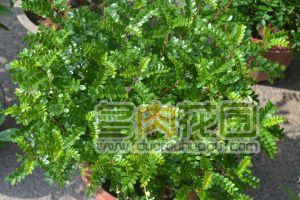
Pistacia weinmannifolia is mostly found in the high-altitude dry-hot valley areas of central and northern Yunnan and southern Sichuan in China. Pistacia weinmannifolia is shade-tolerant, prefers warmth, grows slowly and has a long lifespan. When planting in northern regions, attention must be paid to protecting seedlings from the cold.
Cultivation Methods for Potted Pistacia weinmannifolia
Choosing a Suitable Plant
Pistacia weinmannifolia is very popular among flower enthusiasts and is an ideal potted plant. Placing a Pistacia weinmannifolia bonsai indoors can create the feeling of wild mountains, waters and trees being brought into the home, natural and fresh. Therefore, potting is the first important step for potted Pistacia weinmannifolia.
Choose Pistacia weinmannifolia seedlings with curved trunks or slightly deformed shapes, or old trunks that look somewhat aged and have a quaint, aesthetically pleasing tree form; wild tree stumps are the best, but to protect the environment it is not recommended that flower enthusiasts do this!
Pruning
After the Pistacia weinmannifolia plant is selected, the next step is pruning and shaping.
After planning the shape and placement, prune according to the indoor space and actual environment. By means of heading back and thinning out, remove diseased and pest-damaged branches, leggy branches, and crossing and overlapping branches.
Potting and Shaping
Choosing a purple clay pot with good permeability as the home for a potted or bonsai Pistacia weinmannifolia is most suitable. After potting, press the soil firm and water to keep the soil moist.
Pistacia weinmannifolia is a sun-loving plant. Placing it on a balcony or windowsill in these well-ventilated and well-lit places will keep it growing well. In daily care, also pay attention to adjusting and correcting the plant's growth and shaping it as needed.
Usually, after several years of care and management, you can have a great Pistacia weinmannifolia bonsai/potted plant!
Care Precautions for Pistacia weinmannifolia
Transplanting and Repotting
Many flower enthusiasts repot and transplant Pistacia weinmannifolia after buying it. Leaf drop may occur after transplanting, which is a normal reaction, so flower enthusiasts need not worry too much.
Soil and Water
Pistacia weinmannifolia does not need very frequent watering. Generally, once every 3-5 days is fine, and be sure to water thoroughly (wet the bottom). Too much water easily causes root rot (what is commonly called burning out), so the soil also needs to be a type with good drainage and water permeability.
Outdoor Environment
This mainly concerns wind and sunlight. As for sunlight, it can be done daily, because Pistacia weinmannifolia likes light, but avoid prolonged exposure. Usually, a balcony or an indoor spot with sunlight is best. It does not matter even if it does not get sun, as Pistacia weinmannifolia has a certain shade tolerance.
As for wind, Pistacia weinmannifolia has little resistance. When kept at home, try to avoid having your beloved plant ravaged by wind! The connection points of the tiny leaves can easily turn your Pistacia weinmannifolia into a "Mediterranean" (bald in the middle)...
Temperature and Placement
Usually there is no problem placing it indoors. Considering that green plants release carbon dioxide and absorb oxygen at night, it is still better not to put it in the bedroom. In winter, as long as the room temperature is in the teens, there is no problem.
In addition, when the plant is weak, do not place Pistacia weinmannifolia in front of a computer to receive heat dissipation radiation.
Editor's Summary
The above are the cultivation methods and precautions for Pistacia weinmannifolia! After reading the editor's introduction, don't you want to rush out and buy a pot? Take action now and have your own Pistacia weinmannifolia!
What Are the Functions of Pistacia weinmannifolia? Cultivation Methods for Pistacia weinmannifolia
Pistacia weinmannifolia gets its name because when the leaves are picked or rubbed, they give off a fresh fragrance resembling a mixture of Sichuan pepper and citrus. Its leaves are fine and emerald green, the young leaves are red, and the branches are delicate, quite lovely. Together with its fresh fragrance, it has in recent years become increasingly popular as a small foliage potted plant. Compared with other indoor potted plants, Pistacia weinmannifolia has its own functions and cultivation methods. Today, let the editor take everyone to learn about what functions Pistacia weinmannifolia has and an introduction to its cultivation methods.
What Are the Functions of Pistacia weinmannifolia:
Speaking of the functions of Pistacia weinmannifolia, at present they mainly include its price as well as beauty, mosquito repellence and so on. For the specifics, let's look at the detailed introduction below:
1. The functions of Pistacia weinmannifolia are mainly application-oriented, such as medicinal use and making handicrafts from the branches. Compared with household potted Pistacia weinmannifolia, its ornamental role is greater.
2. Because Pistacia weinmannifolia has a strong pepper fragrance, merchants advertise that it has a mosquito-repellent effect. What I want to tell flower enthusiasts here is that although Pistacia weinmannifolia gives off a scent and may have a mosquito-repellent effect, it is also not suitable to place too much of it indoors. One of the taboos of placing plants indoors is that the plant has a strong scent, because this is not conducive to rest and may also trigger other allergic reactions. Compared with mosquito repellence, a healthy living and resting environment is more important. Of course, if the living room is large, placing one pot of Pistacia weinmannifolia is no problem, but by no means place it in the bedroom as well.
3. The leaves and bark can be used as medicine, with anti-inflammatory, detoxifying and astringent effects. For diarrhea, decocting the leafy top twigs in water and drinking the liquid works well; after the leaves are sun-dried and ground fine, they can be used as a raw material for temple incense; the fruit contains oils and can have a tooth-strengthening effect. It is effective for some types of ringworm.
4. Tannin can be extracted from the bark and used as a pharmaceutical monomer, in cosmetics and as a raw material for tanning leather.
5. The wood has beautiful grain and color, is hard and heavy, and is stable after drying. It can replace imported redwood in making musical instruments, furniture, wood carvings, handicrafts and so on.
6. The leaves can yield aromatic oil. In folk use, the leaves are often ground into powder to make "incense".
7. Fed to pigs, it is very good feed.
8. Landscaping and potted cultivation; it has the effect of purifying air and repelling mosquitoes and flies.
9. Beauty: Fresh leaves mashed into a paste and applied to the face can shrink enlarged pores, tighten the skin and reduce wrinkles, giving the skin a delicate appearance. It can inhibit the activity of tyrosinase and catalase, can also reduce and decolorize melanin, and can effectively scavenge reactive oxygen species, with a comprehensive whitening effect.
The above is a brief introduction to what functions Pistacia weinmannifolia has. I believe that after the above introduction, everyone will have a further understanding and knowledge of Pistacia weinmannifolia. Of course, as a common household potted plant, Pistacia weinmannifolia also requires special attention to its cultivation methods during the growing process. So what exactly are the cultivation methods for Pistacia weinmannifolia? Let's take a look at the introduction below:
Cultivation Methods for Pistacia weinmannifolia:
1. Soil selection for cultivating Pistacia weinmannifolia:
Pistacia weinmannifolia does not have high requirements for the cultivation medium, but water permeability must be good. Generally, well-aerated river sand or perlite is chosen as the substrate.
2. Fertilization methods for cultivating Pistacia weinmannifolia:
Pistacia weinmannifolia is drought-tolerant and barren-tolerant, and the more extensive the management of it, the better. Water as little as possible and fertilize as little as possible, because if even once you water while the substrate has not dried out, it will cause root rot. Likewise, if the fertilizer is even slightly too heavy, it will cause fertilizer damage. Pistacia weinmannifolia is quite sensitive to fertilizer. For seedlings, apply as little fertilizer as possible or even none, to avoid burning the seedlings to death due to overly rich fertility. After it grows larger, fertilization can be appropriately increased.
3. Watering methods for cultivating Pistacia weinmannifolia:
Do not water too frequently; once every 3-5 days is suitable. Each watering must be thorough, that is, the water must wet the bottom, but note that too much watering will cause root rot.
4. Temperature requirements for cultivating Pistacia weinmannifolia:
Pistacia weinmannifolia likes a warm environment, but can withstand low temperatures of minus 10°C. The most suitable temperature is 20-25°C. The substrate moisture should be medium, not too wet, and the air humidity should be about 60%.
5. Light requirements for cultivating Pistacia weinmannifolia:
It is best to cultivate it in a place with ample light. It is slightly shade-tolerant and should not be placed in a dark place for a long time. Since the Pistacia weinmannifolia plant can withstand a low temperature of -10°C, as long as it is kept indoors, frost damage will not occur in winter. Pistacia weinmannifolia likes light and can be sunned every day, but do not expose it to strong sun for a long time. Generally, placing it on a balcony or in an indoor spot with sunlight is fine. Pistacia weinmannifolia is also slightly shade-tolerant, and not getting sun for a few days will not affect its growth.