-

Detailed Explanation of Technical Specifications for Pollution-Free Pesticide Use in Potatoes
1. Cultivating strong seedlings free of pests and diseases (1) Seed potato selection: For pollution-free potatoes, seed potatoes that are pest- and disease-resistant, disease-tolerant, and free of pest and disease damage should be selected. A seed-production field free of pests and diseases should be strictly established, and pest- and disease-free small whole seed potatoes should be cultivated in the pest- and disease-free seed-production field. The small whole seed potatoes kept for seed should be selected during storage. After the seed potatoes are taken out of the cellar, they should be strictly selected, using young and mature tubers as seed, and eliminating tubers with undesirable traits such as irregular shape, rough and aged skin, protruding eyes, and dull skin color. The quality of seed potatoes shall meet the requirements for improved grain crop varieties or above under GB8079-1987.
-
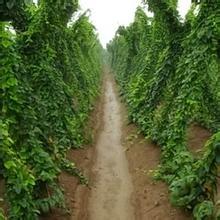
Fertilization technical specifications for pollution-free cultivation of yam
As long as several main aspects of production management are handled well, the planting benefits of yam will be greatly improved. In yam cultivation management, the key points are the application of base fertilizer, loose soil, treatment of yam seed pieces, timely topdressing, disease control, and taking measures to promote the growth of the rhizome as much as possible. 1. ...
-
Detailed Explanation of the Technical Specification for Pollution-Free Pesticide Use in Spinach
Technical Specification for Pollution-Free Pesticide Use in Spinach
-
Detailed Explanation of High-Yield Soybean Cultivation Technical Specifications
Soybean is a major oil crop in our province. Developing soybean production is of great significance for improving people's food composition, developing animal husbandry, and improving soil fertility through crop rotation. From the actual situation of our province, soybean production mainly relies on increasing per-unit yield to increase total output. To achieve the target of over 200 kg per mu, it is necessary to liberate soybean from corn fields, because intercropping and mixed cropping of soybean with corn is one of the reasons for the low per-unit yield of soybean in our province, so clean planting of entire fields should be promoted; second, actively promote high-yield cultivation techniques centered on equidistant sowing, with increased application of farmyard manure
-
Detailed Explanation of the Cultivation Technical Specification for Golden Privet
Golden privet (Ligustrum vicaryi) is a semi-evergreen or deciduous small shrub of the genus Ligustrum in the family Oleaceae. With its golden-yellow color, it is widely used in urban and rural landscaping in China. To improve seedling quality and the landscape effect of garden cultivation, the author of this article led the compilation of a local standard, the Cultivation Technical Specification for Golden Privet in the Tianjin region. The main technical points are excerpted as follows. 1 Site conditions: good drainage and irrigation conditions, flat and open, various types of sandy loam and loam rich in organic matter, pH range between 6.5 and 8.5, total salt content below 0.3%
-
How to carry out emergency prevention and control of swine streptococcosis? Interpretation of the technical specification
Swine streptococcosis is a zoonotic disease caused by hemolytic Streptococcus, and it is a Class II animal disease as stipulated in China. To guide the prevention and control of swine streptococcosis in all regions and protect the development of the livestock industry and human health and safety, in accordance with the
-
Technical Specification for Rice Seedling-Throwing Cultivation with Plastic Trays and Dry Raising
Variety selection According to different cropping rotations, variety characteristics and the safe full-heading stage, select high-quality, high-yield, stable-yield varieties with strong tillering ability and good stress resistance that are suitable for local planting, either balanced panicle-grain type or large-panicle type. In the riverside and southern Jiangsu areas, early-maturing late japonica rice varieties are mainly used, supplemented
-
The Ministry of Agriculture Issues the Technical Specification for Harmless Treatment of Dead Animals
To the animal husbandry and veterinary (animal husbandry and agriculture) departments (bureaus, commissions, offices) of all provinces, autonomous regions, municipalities directly under the Central Government, and cities under separate state planning, and the Agriculture Bureau of the Xinjiang Production and Construction Corps: In order to further standardize the operating techniques for harmless treatment of dead animals, effectively prevent and control major animal epidemics, and ensure
-
How to raise the striped snakehead gudgeon (grouper)? A detailed explanation of pond aquaculture technical specifications
Grouper, also called the striped snakehead gudgeon, is an important economic species for aquaculture along the coast of the South China Sea in our country, so can grouper be raised in freshwater? How is it raised? What are the pond aquaculture technical specifications? 1. Fry rearing technology 1. Requirements for fry ponds: freshwater grouper fry rearing
-
Detailed Explanation of the Technical Specifications for Scientific Fertilization of Cowpea
Cowpea (scientific name Vigna unguiculata), commonly known as horn bean, ginger bean, belt bean, hanging bean pod. Cowpea is divided into two types, long cowpea and rice cowpea, and belongs to the legume family. Cowpea is an annual plant of the legume family. The stem has three types: dwarf, semi-vining, and vining. In southern cultivation, the vining type is predominant,
条件筛选