-

With basic care done well after autumn, having succulents grow like crazy and fill their pots is no difficult task
The spring of succulents has arrived, and you still do not know how to care for them! Yatou has been worrying herself sick over you too, so take a look at this care guide, and start raising succulents from the basics! 1. Light Just as autumn begins, do not be too hasty; the early autumn sun is still...
-

When growing flowers, repotting is the most dreaded task; use a few kinds of residue to improve the soil and save yourself the trouble
Like many flower lovers, Momo dreads repotting more than anything. Every time she does it, the house ends up in a terrible mess, and it takes quite a bit of time. If not done properly, it can even damage the plant. Of course, if done well...
-

1700-year-old ancient tree still felled despite electric fencing; villagers' efforts to protect it are no easy task
Ancient tea trees over a thousand years old are rare anywhere in the world, but some lawbreakers want to take these trees for themselves. Now, to protect these thousand-year-old ancient tea trees, the state has spent huge sums and manpower to protect them. These ancient...
-
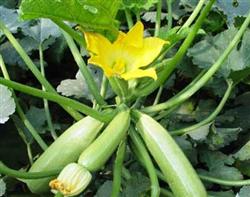
Three key management tasks after transplanting spring-sown zucchini
Early fruiting stage: the 20-25 days from transplanting to the harvest of the first fruit is the early fruiting stage. The key management points are keeping warm, controlling water, intertillage, and promoting roots and protecting seedlings. From transplanting to the recovery stage, keep the greenhouse closed for 5-7 days to preserve heat, cover with straw mats in the morning and evening, and maintain the daytime temperature inside the greenhouse at 25°C-30°C, nighttime at 15°C-18°C, and soil temperature at 20°C-25°C. After the recovery stage...
-
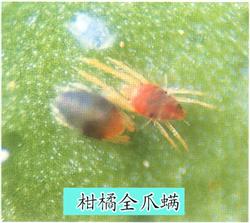
What are the key farming tasks for citrus cultivation in January?
The main citrus pest mites include citrus red mite (Panonychus citri (McGregor)), citrus rust mite (Phyllocoptruta oleivora Ashmead), citrus start leaf mite (Eotetranychus Kankitus Ehara), etc. Every year, citrus growers must spray pesticides 10 to 15 times to control citrus pest mites. China's citrus producing areas are distributed...
-

How to care for Phalaenopsis in autumn? A detailed guide to the key care tasks
Growth status of the plants in autumn (October-December). Because Phalaenopsis grows much later in spring than other epiphytic orchids, its growth stop period is also relatively late. Usually in the 10th month, when other epiphytic orchids stop growing, it still produces new leaves and new roots, and only stops growing completely by late autumn. At the same time as new roots grow, the old leaves near the base turn brown and fall off, which is a normal phenomenon in autumn. Because of the stimulation from low temperatures, flower buds begin to differentiate, and in some fast-growing varieties, a flower-bud-like protrusion can be seen at the base of the leaves
-
Lantang Pig Urgently Needs Conservation, Protection of Local Fine Breeds Is a Pressing Task
Lantang Pig: A Local Fine Breed Urgently in Need of Conservation. China's only inbreeding-tolerant local fine breed, priced as high as 8 yuan/jin. The Lantang pig originated in Lantang Town, Zijin County, Heyuan City, and has excellent characteristics such as early maturity and easy fattening, a docile temperament, tolerance of coarse feed, strong adaptability, strong reproductive capacity, thin skin, delicious meat, and a high degree of inbreeding tolerance. It is a local fine breed of China and has been included in the national-level livestock and poultry breed resource protection scope. However, due to changes in market demand in recent years, the number of Lantang pigs has dropped sharply, and the breed is in danger of extinction.
-
The key to soybean planting is to do a good job of three early tasks.
1. Early weed control. 3-4 days after soybean sowing and before emergence, use 50% acetochlor emulsifiable concentrate at 100-150 ml/mu, mixed with 30-40 kg of water for soil sealing. If weeds are already present in the field at the time of application, add 20% paraquat at 100 ml/mu and mix it in. If soybeans have already emerged and there is no time for soil sealing, use 10% quizalofop-p-ethyl emulsifiable concentrate at 60-75 ml/mu, or 15% fluazifop-p-butyl emulsifiable concentrate at 60-75 ml/mu, or 12.5% haloxyfop emulsifiable concentrate at 60-75 ml/mu, mixed with 40
-
Corn market forecast: Heavy buying and selling tasks, winter trading unlikely to be quiet
Corn market forecast: Heavy buying and selling tasks make it hard for the corn market to "hibernate"
-
Five major tasks identified for ecological and environmental development during the 13th Five-Year Plan period
Five major tasks identified for ecological and environmental development during the 13th Five-Year Plan
条件筛选