What are the key farming tasks for citrus cultivation in January?
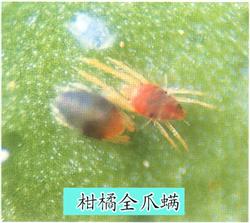
The main citrus pest mites include citrus red mite (Panonychus citri (McGregor)), citrus rust mite (Phyllocoptruta oleivora Ashmead), citrus start leaf mite (Eotetranychus Kankitus Ehara), etc. Every year, citrus growers must spray pesticides 10 to 15 times to control citrus pest mites. China's citrus producing areas are distributed...
 January (Minor Cold to Major Cold)
Dormant period, flower bud differentiation period
January to February is the coldest period of the year. As an evergreen fruit tree, citrus may suffer frost damage from time to time in our province. This winter, citrus areas in our province generally face a serious problem of insufficient precipitation. In high-yield years, harvesting is delayed, and combined with winter drought, once a cold wave strikes, it will cause serious frost damage. A cold snap at the end of December has already caused frost damage in some citrus orchards. Do a good job in winter management to improve next year's citrus production.
(1) Frost prevention measures
January is a period of high incidence of citrus frost damage. Citrus frost damage is the phenomenon of damage or death of vegetative organs and reproductive organs caused by low temperatures. Factors affecting frost damage include citrus variety (line), rootstock, plant growth status, pest and disease status, low temperature intensity, low temperature duration, weather, wind speed and topography, etc. After a citrus tree is frozen, spring sprouting is delayed, the number of leaves is significantly reduced, spring shoot growth is small, shoots are short and thin, the physiological fruit drop period is prolonged, and the fruit setting rate decreases. Leaves are storage sites for nutrients and are also important assimilatory organs before new leaves grow and synthesize photosynthetic products the following year. Preventing leaf drop in winter is an important measure to maintain tree vigor. The main measures for citrus frost damage are: 1. Whitewashing branches and trunks. Mix whitewash evenly and apply it to the main trunk and large branches, which both kills insects and sterilizes, and prevents freezing and sunscald. The formula can be selected as: quicklime 0.5 kg, sulfur powder 0.1 kg, water 3 to 4 kg, add about 20 g of salt. 2. Mounding soil and covering. Add turf soil, pond mud, soil miscellaneous fertilizer, etc., thicken the soil layer, protect roots and prevent cold, with a mound height of 20 to 30 cm. Use straw or other crop stalks to cover the tree disk or the whole orchard, with a thickness of more than 10 cm. For young trees, nurseries, etc., use grass curtains, woven bags, and films to build frost prevention sheds, set up windbreaks and other coverings for insulation. 3. For dry citrus orchards, before a cold wave arrives, apply 0.3% to 0.5% urea water plus 0.3% potassium dihydrogen phosphate as foliar topdressing 1 to 2 times. 4. Pay attention to watching and listening to weather forecasts. When a cold wave comes, smoke the orchard. Set up 4 to 5 smoke piles per mu of citrus orchard, and ignite them to produce smoke in the early morning when frost occurs. 5. In snowy weather, strengthen inspections, shake off snow in time, and prevent accumulated snow from breaking branches and trunks.
(2) Storage management
For ventilation warehouse storage, doors and windows should be shaded from light, and the indoor temperature should be kept at 5°C to 20°C, with 5°C to 10°C being most suitable. For loose-skin citrus types, 5°C to 8°C; for pomelos and sweet oranges, 3°C to 5°C; relative humidity 85% to 90%; the day-night temperature difference should be kept as small as possible. When the temperature is below 4°C, close doors and windows, strengthen indoor cold protection and warmth, and ventilate during midday. When the relative humidity in the warehouse drops below 80%, cover with plastic film to retain moisture. At the same time, methods such as sprinkling water on the floor or placing water in basins can be used to increase air humidity. If humidity is too high, it will cause puffiness to occur and increase the rot rate, so ventilation should be strengthened. During storage, when the temperature is below 4°C, close doors and windows, strengthen indoor cold protection and warmth, and ventilate during midday. Regularly check fruit rot. Rotten fruit should be picked out and handled. If there is not much rot, try not to turn the fruit.
(3) Clearing the orchard and preparing the orchard
Use the winter slack season to clear the citrus orchard, prune dead branches and diseased branches, properly shorten overgrown and weak branches, remove weeds, sweep up fallen leaves and rotten fruit, and whitewash tree trunks with lime, and use oyster shell lime to seal insect holes and cracks on tree trunks. For citrus orchards that need to be planted next spring, dig planting mounds, holes, and trenches well. For citrus orchards on coastal mudflats and paddy fields, where the groundwater level is relatively high, mound cultivation is suitable. The mound shape is 2.0 m at the bottom diameter, 1.2 m at the top diameter, and 0.8 m high. After settling, keep it at 60 cm. At the bottom, lay root-blocking cloth with a diameter of 1.2 m and a thickness of 1.2 mm, or cushion with tiles, etc., to inhibit the main root from extending downward. Newly reclaimed coastal mudflats should be built into mounds with added foreign soil. For coastal mudflats that have already been planted with pioneer crops to improve the soil, first use the surface soil as the core soil for building the mounds, and put the raw soil on the outer surface of the mounds. Dig planting trenches at a depth and width of 80 to 100 cm each. According to the required row and plant spacing, dig the mound bottom 30 cm deeper, and fill and press base fertilizer in the mound bottom or planting trench, applying 25 to 30 tons of organic fertilizer or green manure per hectare.