-

Is the Radermachera sinica suitable for growing indoors?
Some flower enthusiasts have some doubts about whether the Radermachera sinica is suitable for growing indoors, because some flower enthusiasts think it is suitable for growing indoors, while others hold a different view. So is the Radermachera sinica actually suitable for care indoors? Let us look at the following text: First, the Radermachera sinica likes a warm, humid environment with plenty of sunlight.
-

What flowers are suitable for placing indoors?
Growing flowers involves a lot of knowledge. Do you know which flowers are suitable for placing indoors? Let's take a look together: Dianthus: It has the ability to absorb sulfur dioxide and chlorides, and Dianthus can be planted wherever there are similar gases. Monstera: It has a very strong ability to absorb carbon dioxide at night
-
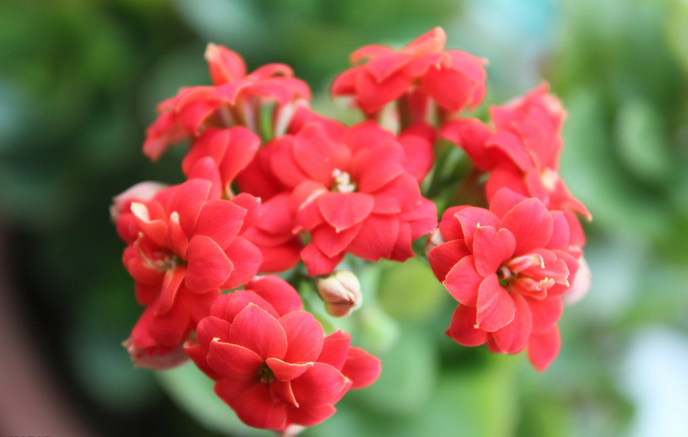
Is Kalanchoe suitable for growing indoors? You'll understand after reading this
Kalanchoe combines many flower colors, easy care and other advantages in one, and is very popular among flower lovers. Some flower lovers want to grow Kalanchoe indoors, but do not know whether Kalanchoe is suitable for indoor growing. Kalanchoe can be grown indoors, but it should be viewed according to specific situations. The first situation: during the flowering period, place Kalanchoe indoors for viewing
-
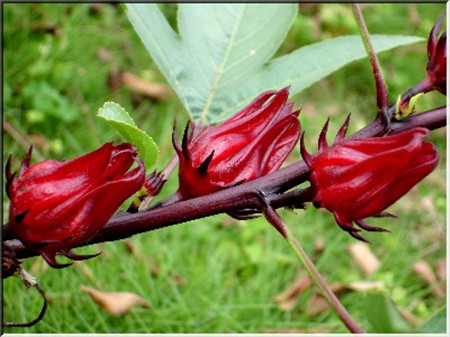
What environment is suitable for growing roselle?
Roselle (Hibiscus sabdariffa) is a tropical and subtropical short-day crop. It loves light and warmth and is intolerant of early frost, growing best at 25°C to 30°C. Generally, roselle (Hibiscus sabdariffa) is sown from March to May and harvested from September to November, with a whole growth period of 160-200 days.
-

What kind of growing environment, temperature and humidity are suitable for tulips?
Growing environment: Tulips like direct sunlight and can tolerate partial shade. In partial shade or with insufficient light, the leaves become tender and thin, weak in their upright stance, and are prone to breaking above the ground. They like moisture and are not very tolerant of drought, especially from the growth stage to the flowering stage. Once the water supply is insufficient, the leaf tips scorch and wilt, and the flower buds cannot open normally.
-

Yidu Red: an excellent dry chili variety suitable for export
I. Botanical characteristics. It has a distinct taproot and many lateral roots and root hairs. After the taproot is damaged, lateral roots develop quickly, so the transplant survival rate is relatively high. Adventitious roots are not easily produced on the stem. Branching begins from the 12th to 14th node; the first branching usually produces 2 branches, and the second branching usually produces 4 to 6 branches. The leaves are ovate or long-ovate, simple, alternate, with obvious veins and a relatively smooth surface. The corolla is white, and the fruit is horn-shaped, 8 cm to 15 cm long. The fresh pepper is green, and after maturity it turns red or dark red. II. Requirements for environmental conditions
-
What are the suitable varieties for protected cultivation of peach trees
1 Zaoxialu (1) Fruit characteristics: average fruit weight 90 g, maximum fruit weight 130 g; fruit round, fruit apex round and flat, two halves symmetrical. The ground color of the skin is light greenish white, with coloration on the fruit apex and sunny side, covering 50-70% of the surface. Down is sparse. Flesh milky white, flavor fairly sweet, aromatic; soluble solids 115%; clingstone, non-cracking pit, hard pit. (2) Growth and fruiting habits: tree habit open, tree vigor moderate. Many compound flower buds, flowers large-flowered type, abundant pollen, long, medium and short fruit branches all can bear fruit, fruit set rate
-
New yellow peach cultivar Golden Crown suitable for canning and fresh eating
'Golden Crown' (see color photo on inside back cover) is a superior yellow peach line for both canning and fresh eating, selected by the authors in the 1990s from naturally cross-pollinated seedling progeny of 'Jinxiu' yellow peach. After years of multi-site regional trials and production test plantings in Shandong and Jiangsu, its traits are stable and its overall performance is excellent. In September 2006, it passed expert appraisal organized by the Shandong Provincial Science and Technology Department. Cultivar characteristics: The tree has an open posture and vigorous growth, with strong bud-break and branching ability. One-year-old branches are yellow-green, with a reddish tinge on the sunny side near the base; after entering the fruiting stage
-
Two rare mushroom varieties suitable for summer and autumn cultivation
1. EC55 long-root mushroom (Oudemansiella radicata). Its fruiting body is tall and upright, beautiful and attractive, shaped like an open sun umbrella, with a cap (pileus) 8-15 cm wide, light coffee-colored, and a stalk (stipe) 20-55 cm tall, 1-2 cm thick, white to light brown, with white flesh, fine and delicate texture, crisp and tasty stalk, and delicious flavor. It has high nutritional and medicinal value, rich in protein, amino acids, carbohydrates, vitamins and various mineral elements. Regular consumption can strengthen the body and boost human immunity, and for patients with high blood pressure
-
Detailed Explanation of the Morphological Characteristics and Suitable Growing Environment of Pinellia ternata
[Morphological Characteristics] A perennial herb, 15-30 cm tall. The tuber is spherical or flattened-spherical. Leaves are basal, with long petioles; seedlings have a single leaf that is ovate-cordate, with a pointed tip and entire margin; from the 2nd and 3rd years onward, the leaves are trifoliolate compound leaves, elliptical to lanceolate. On the inner side of the lower part of the petiole, bulbils are produced, which can be used as propagation material. Monoecious; flowers are small and pale green. [Suitable Growing Environment] It prefers moisture and fears drought; it is averse to strong light; it is shade-tolerant and cold-tolerant, and the tubers can overwinter naturally. It is advisable to choose moist, fertile, deep, neutral sandy loam soil.
条件筛选