-
What kind of place is suitable for planting Paris polyphylla?
Where is Paris polyphylla suitable for planting? We also ask knowledgeable readers to help share their knowledge. Zhongdi Network has compiled the growing environment suitable for Paris polyphylla, listed below for readers' reference. Paris polyphylla is also known as Zaoxiu, Baiganzhu, Caoheche and Jinxian Chonglou; its rhizome is a well-known Chinese medicinal material. Paris polyphylla is a perennial herbaceous plant of the Liliaceae family,...
-
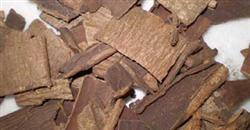
What kind of environment is suitable for growing Eucommia ulmoides?
What kind of environment is suitable for growing Eucommia ulmoides? Please introduce Eucommia ulmoides, a plant of the family Eucommiaceae, also known as simianpi and silianpi, with functions such as tonifying the liver and kidneys, strengthening bones and muscles, calming the fetus, and lowering blood pressure. It originated in China and has a cultivation history of nearly a thousand years. The growth rate of Eucommia ulmoides is relatively slow in the early stage, with the fast-growing period appearing at 10 to 20 years, and at 20...
-
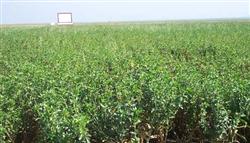
Where is Scutellaria baicalensis suitable for planting?
Where is Scutellaria baicalensis suitable for planting? Please give an introduction. Scutellaria baicalensis prefers a mild climate, tolerates cold, resists drought, and fears waterlogging. It originally grew wild on hillsides, field ridges, and sunny dry places at the edges of forests. It is not strict about soil requirements and is highly adaptable. Well-drained, fertile sandy loam is best, but it can also be planted in poor land in mountainous and hilly areas...
-
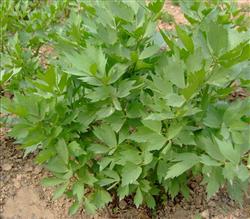
What kind of soil is suitable for planting Angelica sinensis? How to transplant
What kind of soil is suitable for planting Angelica sinensis? How to transplant? Please give guidance. For soil suitable for planting Angelica sinensis, you can refer to the following for treatment and transplanting: (1) Site selection and land preparation. For the seedling site, it is best to choose a shady, cool, fertile and moist virgin land or cultivated land, with loose-textured, fertile sandy loam as the best; for the cultivation site, choose fallow...
-
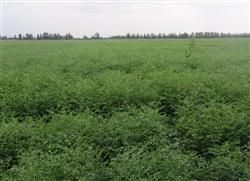
What Does Licorice Look Like? A Detailed Guide to Its Morphological Characteristics and Suitable Growing Environment
[Morphological Characteristics]Licorice (Glycyrrhiza) is a perennial herb, 30-100 cm tall. The entire plant is covered with short white pubescence and glandular hairs. The above-ground stem is upright, woody at the lower part, and the branchlets are angular and green. The leaves are alternate and odd-pinnately compound. There are 3-8 pairs of leaflets, ovate or ovate-elliptic, with entire margins, and the terminal leaflet is larger. The raceme...
-
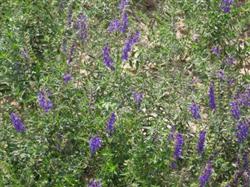
In which regions is Astragalus membranaceus suitable for cultivation and planting?
Where is Astragalus membranaceus suitable for cultivation? Please introduce the growing habits of Astragalus membranaceus. It has very strong adaptability and can be planted in ordinary soil. It is drought-tolerant and cold-tolerant, and yields abundantly in deep, loose, fertile soil. Planting method: it can be sown in spring, summer, or autumn. Before sowing, soak the seeds in warm water. After soaking for 6 hours, scoop the seeds out...
-

Where is Zhishi suitable for planting? Suitable production areas and environmental conditions
Where is Zhishi suitable for planting
-

What are the growing conditions for Eucommia ulmoides? A detailed explanation of its suitable environment requirements
Growing conditions for Eucommia ulmoides
-

Detailed Explanation of the Morphological Characteristics and Suitable Growing Environment of Pinellia ternata
[Morphological Characteristics] A perennial herb, 15-30 cm tall. The tuber is spherical or flattened-spherical. Leaves are basal, with long petioles; seedlings have a single leaf that is ovate-cordate, with a pointed tip and entire margin; from the 2nd and 3rd years onward, the leaves are trifoliolate compound leaves, elliptical to lanceolate. On the inner side of the lower part of the petiole, bulbils are produced, which can be used as propagation material. Monoecious; flowers are small and pale green. [Suitable Growing Environment] It prefers moisture and fears drought; it is averse to strong light; it is shade-tolerant and cold-tolerant, and the tubers can overwinter naturally. It is advisable to choose moist, fertile, deep, neutral sandy loam soil.
-
Growing environment requirements and suitable cultivation conditions for Pinellia ternata
Pinellia ternata is a shallow-rooted plant that prefers fertile soil, and was originally mostly found growing wild on moist, loose, and fertile sandy loam or humus soil. It prefers a mild, humid climate and a shaded environment, is afraid of drought, and avoids high temperatures. In summer, it is best grown in a semi-shaded, semi-sunny environment; it grows relatively well when soil moisture content is 20%-40%; drought and water shortage easily cause the seedlings to fall over. Generally, with changes in the growing environment, it can fall over 1-3 times a year. For Pinellia ternata, falling over is, on the one hand, an adaptation to adverse conditions, and more importantly, it increases the number of bulbils, that is, it carries out one round of asexual
条件筛选