-
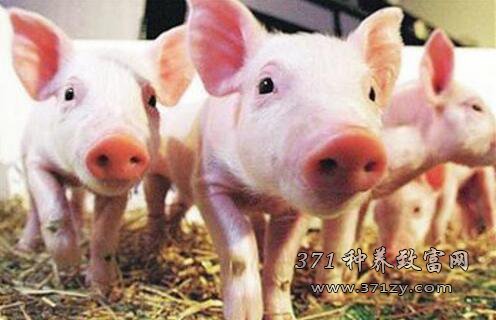
Is pig farming still profitable in 2017? Can it continue the super golden pig year of 2016?
Is pig farming still profitable in 2017? Can it continue the super golden pig year of 2016?
-

-
Where do safe vegetables come from? Full-process supervision secures every checkpoint
Strengthen full-process supervision to build safe vegetables with all efforts
-
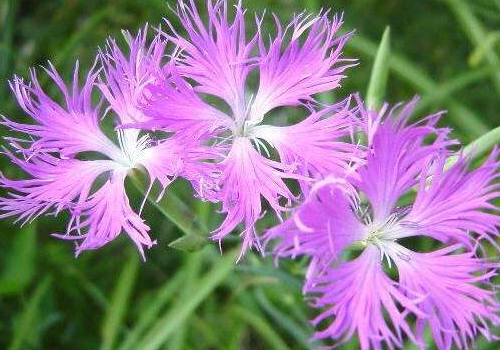
What is the sowing time and flower meaning of Dianthus superbus
Dianthus superbus, this is also a kind of plant, many people know it, and it can be seen in many places, so when should this Dianthus superbus be sown? What is its flower meaning: For seed collection, it is best to choose single plants that grow robustly and are free of pests and diseases. At the end of August, when the seeds turn dark brown, cut them off together with the stems and leaves.
-
Detailed Explanation of the Key Points of the "Three Supers" Rice Cultivation Technique
I. Select suitable varieties. Adapt to local conditions and choose high-quality varieties that can mature normally and safely in the local area, with moderate tillering, relatively large panicles, relatively high grain weight, strong stress resistance and disease resistance, upright leaves, a compact plant type, and outstanding high-yield performance. II. Sow early at the right time and sow sparsely to cultivate strong seedlings. (1) Seedling raising preparation. 1. Seedbed preparation. ① Seedbed selection: choose a pollution-free, flat and loose, fertile soil, good water-holding, wind-sheltered and sunny plot as a dedicated seedling field. ② Land preparation and arching: in order to achieve ultra-early sowing, prepare the seedbed soil and set up the frame the previous year, cover with plastic film in early to mid-March to promote thawing and raise soil temperature, shallowly plow the seedbed land 10 cm, and rake it level and fine. Make the bed 10 days before sowing, and dig a 13 cm deep ditch around the seedbed.
-
Weeds in sesame fields can be controlled with the herbicide WhiPSuper
[Trade name]WhiPSuper (WhiPSuper) [Common name]fenoxaprop-p-ethyl (fenoxaprop-p-ethyl) [Formulation]6.9% emulsifiable concentrate, 8.05% emulsifiable oil [Dosage]To control barnyardgrass, foxtail, green foxtail, crabgrass and other annual grass weeds, use 750-900 ml of 6.9% WhiPSuper per hectare or 600-750 ml of 8.05% WhiPSuper. To control wild oat, use 900-1050 ml of 6.9% WhiPSuper per hectare
-
Virus-free Technology and Industrial Development of Superior Potato Varieties
Aiming at the main problems currently existing in potato production, this study seized the favorable opportunity of planting-structure adjustment and extensively introduced superior potato varieties from home and abroad. Through trials and market-demand surveys, "Luyin No. 1" was selected as the main cultivar for Qingdao, with Kexin No. 3, Kexin No. 4 and Huayuan 525 as companion cultivars. Through systematic research on virus-free technology, rapid propagation technology and the acclimatization and transplanting technology of virus-free test-tube plantlets, the optimal virus-free protocol for potato was determined: taking 0.1-0.2
-
Queen bee rearing method: rearing queens using natural supersedure queen cells
Select excellent colonies with old queens as breeding stock; when they build supersedure queen cells, select and retain them. Move the comb with natural queen cells up into the super, place unsealed brood combs on both sides, insert a queen excluder between the brood box and the super, confine the queen to the brood box, and record the emergence date of the queen from each natural queen cell. Natural supersedure queen cells can be taken successively from this old-queen colony; queens from natural supersedure allow the excellent traits of the stock to be passed on more stably. When this natural supersedure occurs, the colony generally builds only a few queen cells, and the reared queens are of relatively good quality
-
Detailed Explanation of Super-High-Yield Cultivation Techniques for Shengtai No. 1 Rice
Shengtai No. 1 is a super-high-yield, disease-resistant new variety bred by the Rice Research Institute of the Guangdong Academy of Agricultural Sciences. It passed crop variety approval in Guangdong Province and Shaanxi Province, and received the first-ever subsidy from the Ministry of Agriculture of the People's Republic of China for high-quality and special-purpose new varieties of major crops. When cultivated in Jieyang City, its full growth period is about 132 days for the early crop and about 122 days for the late crop, belonging to the medium-late maturity type suitable for both early and late seasons. Its stem and leaf morphology is coordinated and rational, with a well-developed deep root system, medium-strong tillering ability, good fertilizer tolerance and lodging resistance, suitable for planting in areas with medium or higher fertility, with obvious yield-increasing effects. The panicles are large and long, with dense grain setting, and the panicle-grain structure
-
What about Xidou 3, a superior soybean variety for both grain and vegetable use?
I. Yield Performance In 1997, the Chongqing Soil and Fertilizer Station conducted a variety comparison trial in Yubei District, Banan District and Jiangjin City, where the average yield across the 3 trial sites was 146.4 kg/667 sq m, ranking first in the trial. In 1998, the Tongnan County Soil and Fertilizer Station conducted a large-plot comparative trial of Xidou 3 and Yudou No. 1, and the results showed that Xidou 3 had an actual yield of 236 kg per 667 sq m, a 14.6% increase over Yudou No. 1. Through years of multi-site trials, demonstrations, and promotion practices in various places, Xidou 3 has shown that it is currently a new ideal soybean variety for both grain and vegetable use in the southwest region, with high yield potential,
条件筛选