-

What to sow for autumn wheat? These new super-high-yield varieties are worth knowing about
The corn harvest has already arrived, and after that comes the autumn sowing of wheat. Every time this season comes around, the choice of wheat varieties becomes a headache for many farmer friends, and in recent years experts have continuously bred new varieties, each with its own advantages, occupying a place in the market by virtue of its own characteristics and gradually coming into people's view.
-
How to Save Seeds When Sowing Corn During the Busy Spring Season? Detailed Explanation of Super High-Yield Planting Methods
It is once again the busy spring season. As the saying goes, the whole year's work depends on a good start in spring. The seeds that have been stored away in the warehouse for months over winter are ready to awaken. Today, the editor will introduce to you: How to save seeds when sowing corn? What are the super high-yield planting methods? 1. How to Save Seeds When Sowing Corn
-
What are the new super high-yield wheat varieties?
The demand for wheat has always been very large. In order to increase its yield, experts at agricultural research institutes develop and trial-plant many super high-yield wheat varieties. Let us take a look at what new varieties there are. 1. New super high-yield wheat varieties. The new super high-yield wheat varieties include
-
Detailed Explanation of Rice Super-High-Yield Intensive Cultivation Technology
I. Technical Characteristics Compared with traditional high-yield cultivation techniques, the rice super-high-yield intensive cultivation technology system has the following characteristics. 1. Early transplanting of young seedlings. The intensive cultivation technology allows transplanting of 2-3 leaf-age seedlings in winter fallow fields or winter paddy fields, and 3-5 leaf-age seedlings in double-cropping fields
-
Detailed Explanation of Super-High-Yield Scientific Cultivation Techniques for Straw Mushroom
South of the Yangtze River, such as the Wuhan and Shanghai areas, June-August is more suitable; north of the Yangtze River, such as the Shijiazhuang and Beijing areas, late June to early July is more suitable. Guangdong is located in the tropical and subtropical zones; under natural conditions, it can be cultivated from late spring and early summer to late autumn, that is, from April to October, with late spring
-
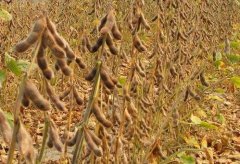
Introduction to the Agronomic Characteristics and Plant Traits of the Super High-Yield New Soybean Variety Tainan No. 7
The new green manure soybean variety Tainan No. 7 was developed by the Tainan District Agricultural Improvement Station through single-plant selection and pure-line breeding from green-pod bean and local green manure soybean landraces. The soybean cultivation cost for this variety should not be low! Tainan No. 7 has strong early growth vigor, high fresh plant biomass, tolerance to moisture, drought and
-
Detailed Explanation of Super-High-Yield Cultivation Techniques for Shengtai No. 1 Rice
Shengtai No. 1 is a super-high-yield, disease-resistant new variety bred by the Rice Research Institute of the Guangdong Academy of Agricultural Sciences. It passed crop variety approval in Guangdong Province and Shaanxi Province, and received the first-ever subsidy from the Ministry of Agriculture of the People's Republic of China for high-quality and special-purpose new varieties of major crops. When cultivated in Jieyang City, its full growth period is about 132 days for the early crop and about 122 days for the late crop, belonging to the medium-late maturity type suitable for both early and late seasons. Its stem and leaf morphology is coordinated and rational, with a well-developed deep root system, medium-strong tillering ability, good fertilizer tolerance and lodging resistance, suitable for planting in areas with medium or higher fertility, with obvious yield-increasing effects. The panicles are large and long, with dense grain setting, and the panicle-grain structure
-
Early-maturing soybean Chaofeng No. 3: an excellent variety with super-high yield, high resistance and high efficiency
Chaofeng No. 3 soybean is an early-maturing variety with super-high yield, multiple resistance and high efficiency, bred over 8 years by researchers at the Research Institute of Jilin Province Northern Seed Industry Company. This variety overcomes the prominent problems of the past, when large-scale production applications were not high-yielding, had poor internal quality, failed to meet national quality standards, and were prone to pod shattering in dry years, resulting in high but unstable yields and high yields without high returns. In March 2007, it successfully passed provincial certification. Chaofeng No. 3 has a growth period of 110 days, and from sowing to harvest requires an active accumulated temperature of 2300°C
-
Detailed Explanation of Key Techniques for Super-High-Yield Cultivation of Double-Season Rice in South China
(1) Sow at the right time and cultivate strong seedlings. For early rice, use dry-raised seedlings, with a seeding rate generally of 90 g/m2 and a sowing period in mid-to-late March; for late rice, use sparse sowing for strong seedlings or two-stage seedling raising, with a seed rate of about 1.0 kg per mu. (2) Ridge and bed cultivation. Bed width 3-4 m, ditch width 0.2-0.25 m, and open surrounding ditches well to facilitate water management and field operation management. (3) Wide-row close planting. The planting density is 30-40 hills/sq m, with a row spacing of about 25 cm. Generally, early rice has 3-4 seedlings per hill, and late rice is transplanted as single seedlings or double seedlings, ensuring
-
Super-high-yield new hybrid japonica rice variety Qiuyou Jinfeng successfully bred
The super-high-yield new hybrid japonica rice variety "Qiuyou Jinfeng", independently bred by Shanghai scientists, after 3 years of production demonstration planting, reached a per-mu yield of 801.9 kg, and has recently passed expert acceptance inspection. On December 31, 2006, a reporter learned at the Shanghai Minhang District Agricultural Science Research Institute that the cultivation of the excellent variety "Qiuyou Jinfeng" uses the genetic differences between the two parents of indica rice and japonica rice, with an excellent late japonica sterile line as the female parent, and selects excellent indica rice and excellent japonica rice restorer lines as the male parent, through "indica-japonica bridging" technology, applying
条件筛选