-
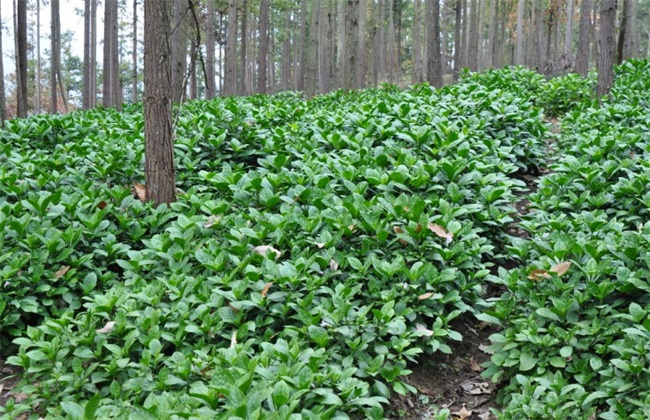
What medicinal herbs are good to plant in autumn? Recommended varieties suitable for autumn sowing
What medicinal herbs are good to plant in autumn
-
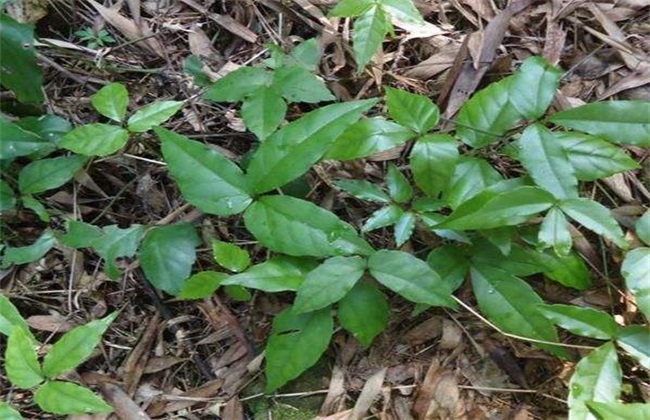
What kind of growing environment is suitable for Tetrastigma hemsleyanum?
The growing environment of Tetrastigma hemsleyanum
-
-

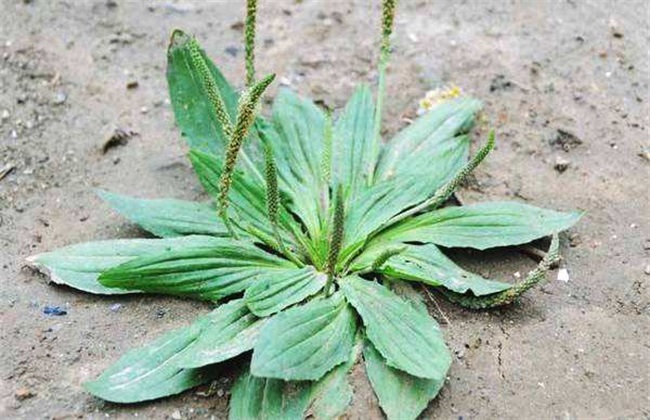
Morphological Characteristics of Polygonatum and Introduction to Suitable Growing Environments
[Morphological Characteristics] Perennial herb, plant height 30-120 cm. The whole plant is hairless. The rhizome is yellowish-white, slightly sweet in taste, thick and fleshy, growing horizontally, formed by several chicken-head-shaped sections connected into a shape thick at the head and tapering at the tail; the end bearing the stem is relatively thick, and after the stem withers it leaves a round stem scar like a chicken's eye; the nodes are distinct, with a few roots growing at the nodes. The stem is single, slightly curved, cylindrical. Leaves are usually in whorls of 4-5, sessile; the leaf blade is linear-lanceolate, with a curled tip, grayish bloom on the underside, parallel main veins, and the central vein thick and raised on the underside.
-
What kind of environment is suitable for growing Panax notoginseng?
Panax notoginseng is a shade-loving plant. It prefers a warm winter and cool summer environment, and fears severe cold and intense heat; it likes moisture but is afraid of waterlogging, and the ideal soil moisture content is 22%-40%. It can grow when the summer temperature does not exceed 35°C and the winter temperature does not fall below minus 5°C, with the suitable growing temperature being 18-25°C. Panax notoginseng has no strict soil requirements and adapts to a wide range, but loose, well-drained sandy loam is best. Any excessively clayey, excessively sandy, or low-lying, easily waterlogged plots are not suitable for planting. Continuous cropping is avoided, and the soil pH is 4.5-8. One-year-old Panax notoginseng has only 1 palmate
-
What are the suitable environmental conditions for the growth of Panax notoginseng?
1. Temperature: Temperature is the main factor affecting the normal growth and development of Panax notoginseng. It requires warm winters and cool summers, with small temperature differences across the four seasons, and an annual average temperature of 18-19°C is ideal. 2. Moisture: The growth and development of Panax notoginseng require a moist environment; it fears both drought and waterlogging. Soil moisture should generally be maintained at 25%-30%, and the relative air humidity should ideally be 70%-80%. 3. Light: Panax notoginseng is a shade-loving plant, sensitive to light, and avoids direct sunlight. Its growth and development require a cool, shaded environment with weak sunlight. Therefore, cultivation requires building
-
Why Schisandra chinensis seedlings should be soaked in water before planting and the suitable soaking time
Schisandra chinensis seedlings naturally have indistinct main and lateral roots and many fine fibrous roots. After the seedlings leave the nursery, they go through several stages such as transport, storage and transplanting, and water loss occurs in both the root and crown areas. Using such seedlings results in a low survival rate, so before planting they should be soaked in water for 24 hours.
-
Is honeysuckle suitable for growing in mountainous areas?
Honeysuckle, also known as Japanese honeysuckle flower or erhua, is a perennial vine whose flowers, leaves, stems and roots can all be used as medicine. In hilly and mountainous areas, growing honeysuckle on barren hills, hillsides and marginal land can both green the barren hills and wild ridges and bring relatively high economic returns. Honeysuckle has the functions of clearing heat and detoxifying, cooling the blood and resolving stasis, and can mainly treat externally contracted wind-heat, sores and ulcers with viral infection, red swelling with heat and pain, the early stage of warm disease, and bloody pus in the stool. Honeysuckle also contains a variety of trace elements essential to the human body, as well as enzyme acids beneficial to human health, and has a certain effect on anti-aging, cancer prevention and keeping the body light and fit.
-
What are the suitable humidity conditions for the growth of Gastrodia elata?
In addition to temperature, humidity is also an important factor in the growth of Gastrodia elata. The annual rainfall in Gastrodia elata-producing areas is generally above 1000 mm. In some producing areas in the southwest, rainfall is mostly around 1700 mm, and the average relative humidity is 70%-80%. The climate conditions are often continuous drizzle and rainy and humid, which are most suitable for the growth of Gastrodia elata. Therefore, in artificial cultivation of Gastrodia elata, the humidity during the growth period should be controlled at about 60%, and during the overwintering period at 30%-40%. When the temperature is high, it does not matter to Armillaria mellea, but the Gastrodia elata tubers are prone to rot; while when the humidity is low, Gastrodia elata
-
The most suitable planting time for Gastrodia elata and its impact on yield
Gastrodia elata is best planted during its dormant period. Winter planting in October to November and spring planting in March to April both give relatively good results. Gastrodia elata is generally not planted in summer, because this is precisely its growing season; digging it up at this time disrupts the relationship between Gastrodia elata and Armillaria mellea, and even if it barely survives, the results are very poor. Choosing an appropriate cultivation time is one of the important measures for increasing Gastrodia elata yields. The most suitable cultivation time is October to November (called autumn-winter planting), followed by February to March (called spring planting), and the worst is June to July
条件筛选