-

How to choose suitable species for edible mushroom cultivation
How to choose species for edible mushroom cultivation
-
Fertilizing and topdressing during edible mushroom care and management should follow the principle of "two suitables and two musts".
Fertilizing and topdressing during edible mushroom care and management should follow "two suitables and two musts".
-
Which edible mushrooms are suitable for cultivation in summer
These edible mushrooms are suitable for cultivation in summer
-
Recommended edible mushroom varieties suitable for summer cultivation
Edible mushrooms suitable for summer cultivation
-
Two "Suitables" and Two "Musts" for Fertilizing Edible Fungi, with a Detailed Explanation of Disease Identification Methods
Fertilizing Edible Fungi: Pay Attention to the "Two Suitables and Two Musts"
-
Fertilization Methods for Edible Mushrooms and Varieties Suitable for High-Temperature Cultivation in Summer
Edible Mushroom Varieties Suitable for High-Temperature Cultivation in Summer
-
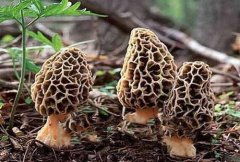
Who should not eat morel mushrooms? Raw-eating poisoning risks and main production areas
The morel mushroom gets its name because its shape closely resembles a sheep's stomach, so it is called morel. Wild morels are distributed in China's Shaanxi, Gansu, Qinghai, Tibet, Xinjiang, Sichuan, Shanxi, Jilin, Jiangsu, Hebei, Beijing, Hunan, Guizhou and other regions. Now
-
When is the most suitable time to plant straw mushrooms in northern regions?
Because straw mushrooms are a high-temperature strain, the suitable season for cultivating them is when the daily average temperature is stable above 25°C or the minimum temperature is above 23°C. In northern regions, June to September each year is the best season for planting straw mushrooms. Spawn preparation can be scheduled between May and June. In recent years, northern regions have broadened the suitable cultivation period by using winter-warm greenhouses.
-
What is the suitable cultivation season for the button mushroom?
The button mushroom (Agaricus bisporus) is a low-temperature fruiting fungus; it only produces fruiting bodies below 18°C, and the optimal temperature for mushroom production is around 16°C. Therefore, the cultivation season is mostly arranged in autumn and winter, continuing into early spring. Because of regional climate differences and variations in local microclimates, the cultivation period for mushrooms can be determined based on local meteorological data. Generally, the sowing period is when the local autumn average day-night temperature stabilizes at 22-25°C. Counting back about 23 days from this gives the date for building the compost pile; in the Jiangsu-Zhejiang area this is mid to late August,
-
Which edible mushroom varieties are suitable for cultivation in autumn and winter?
In autumn and winter, as mid-to-late rice, corn, cotton and sugarcane are harvested, not only is space and labor freed up for developing edible mushrooms, but waste materials such as straw, cottonseed hulls, bagasse, corn cobs and mixed wood shavings are also good raw materials for cultivating edible mushrooms. Therefore, autumn and winter are among the best periods for developing edible mushrooms. The button mushroom, commonly known as the mushroom, can be cultivated in open fields using mid-to-late rice paddies. Wheat straw, corn stalks, rice straw and thatch leaves can be used as raw materials; from composting to fruiting takes about 50 days.
条件筛选