-

Introduction to the Pleurotus ostreatus 5.39 strain variety
Introduced from Bulgaria, with stable yields and a biological efficiency of 90%. The mycelium grows at 3-35°C, with an optimum of 23-26°C; the mycelium is downy, white, with orange-yellow pigment. The fruiting bodies grow at 5-22°C, with an optimum of 14-18°C. The fruiting bodies grow in clusters, imbricate, grayish-blue when young and grayish-white when mature. The flesh is white, the caps are mostly shell-shaped, and the stipes are white and lateral. The spore print is light pink. The peak fruiting period of this strain is concentrated from late May to mid-June. To obtain more flushes, sunken-bed cultivation must be sown in early to mid-April, and greenhouse cultivation in mid to late March.
-
Cultivation Technical Points for the New High-Temperature Grey Oyster Mushroom Strain
In the spring of 2001, after our oyster mushroom variety comparison trial ended, when the temperature reached as high as 34°C, several oyster mushroom fruiting bodies successively grew on the waste material pile covered with overgrown weeds. The color ranged from greyish-white to greyish-black, the fruiting bodies grew in clusters, and the largest cluster weighed 2.4 kg. Through directional tissue isolation and fruiting trials using bottle cultivation and bag cultivation methods, it performed well. After 2 years of pilot-scale verification, it was confirmed to be an excellent strain for summer cultivation. By the spring of 2004, virus-free treatment was carried out, making its traits more stable, and it can serve as the dominant strain for summer oyster mushroom production.
-
Cultivation Points for the Extremely Late-Maturing Peach Strain Dongxuewang
Dongxuewang (tentative name) is a new strain bred by the Yimin Fruit Tree Research Institute of Qingzhou City, Shandong Province, using Dongxue Honey Peach as the female parent and Zhonghua Shoutao as the male parent. It was crossed in 1998, seedlings were raised in 1999, top-grafted in 2000, fruited in 2001, and multi-point trials were conducted in 2004. The strain characteristics and cultivation points are described below. 1 Characteristics 1.1 Botanical characteristics The Dongxuewang peach tree has a relatively open growth habit, 1-year-old mature branches are reddish-brown, and the main branches and perennial branches are grayish-white. Leaves are dark green, large, with a length of
-
Comparative Trial of Six Strains in Substitute-Material Cultivation of Lentinula edodes Using Liquid Spawn
In recent years, China's shiitake (Lentinula edodes) production has developed rapidly, with substitute-material cultivation of shiitake being particularly prominent. The traditional solid spawn production technology for shiitake requires a rather cumbersome three-stage process of mother culture, stock culture and cultivation spawn before it can finally be expanded to the production of cultivation bags. Its high labor intensity, cumbersome process, high rate of contaminant mold infection and long growth cycle all greatly restrict the development of shiitake. In this experiment, liquid spawn of 6 shiitake strains was cultured and compared in cultivation, so as to provide a certain theoretical basis for the promotion and application of liquid spawn for shiitake. 1 Materials and Methods 1
-
Methods and Key Techniques for Preserving Edible Mushroom Strains
Two methods are usually used for preservation: the slant low-temperature preservation method. This is the simplest preservation method, in which vigorously growing, uncontaminated slant tubes are placed in a refrigerator and preserved at a low temperature of 4°C~6°C, after which they are subcultured onto fresh slant medium every 2~3 months and, after incubation, preserved again. The other is the liquid paraffin preservation method. In this method, sterilized liquid paraffin is injected in a sterile room into the slant tubes to be preserved, with the paraffin added to a level 1 cm above the slant. Then a wooden stopper or rubber
-
Key Points and Methods of Edible Mushroom Strain Preservation Explained in Detail
Strains are a major biological resource and the primary means of production in edible mushroom cultivation. After a superior strain has been selected and bred, its excellent traits must be kept unchanged, or changed as little and as slowly as possible, so that production performance is not reduced and it can be used in production over the long term. Therefore, strain preservation is of great significance in edible mushroom production. I. Principles of strain preservation There are many methods of strain preservation, but the principles are much the same. First, select excellent pure strains. Use the spores, spore bodies and vegetative forms of microorganisms; second, according to their physiological and biochemical properties,
-
Introduction to the Ganoderma New Strain Satellite No. 2 Variety
"Satellite No. 2 Ganoderma" was sent into space aboard China's recoverable satellite launched as "961020" for a 15-day journey, where it was exposed to large doses of ultraviolet radiation and weightlessness in the cosmos, thereby producing genetic mutations; after screening and cultivation trials, a new high-quality, high-yield Ganoderma strain was selected. Compared with a Ganoderma strain that was not carried into space (the control strain), "Satellite No. 2" can increase fruiting body yield by 75.3%, its high-quality product rate reaches 88.9%, its average fermentation rate is 2.57%, and its cellulase activity
-
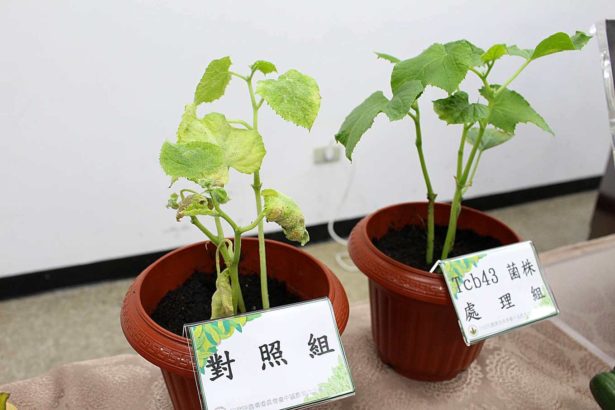
Tcb43 strain controls cucumber powdery mildew with 60% efficacy, also effective on muskmelon and red dragon fruit
Still troubled by powdery mildew on cucumbers? The Tcb43 strain achieves a 60% control rate, and it also works on muskmelon and red dragon fruit
-
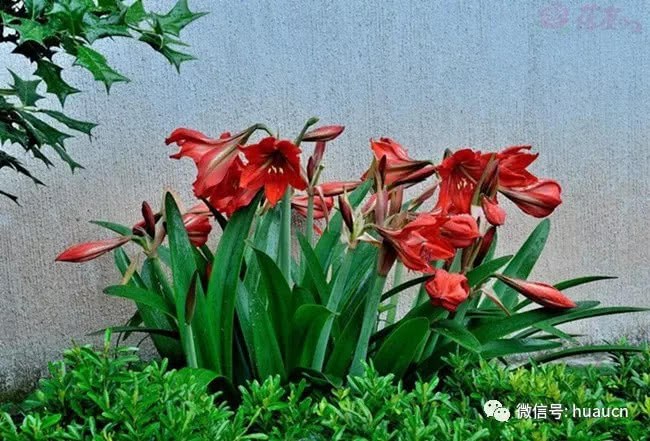
Flowers and green plants in companion planting rely on the mutual generation and mutual restraint of the five elements to achieve mutual benefit
I. Mutually beneficial flowers and green plants 1. Planting pot marigold (Calendula officinalis) together with Chinese rose (Rosa chinensis) can effectively control soil nematodes and make the Chinese rose grow vigorously; 2. Amaryllis (Hippeastrum) and night-blooming jasmine (Cestrum nocturnum), camellia and red Zephyranthes, pomegranate flower and sunrose (Portulaca grandiflora), lacecap hydrangea and Chinese rose, scarlet sage...
-
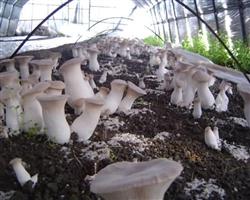
Characteristics and Cultivation Key Points of the Pleurotus eryngii Xueerong 251 Strain
1. After obtaining the cultivation spawn from the research institute, attention must be paid to temperature during packaging and transport; it is best to transport in the morning or evening, and guard against high temperatures cooking the spawn. After bringing the spawn home, it should be placed in a cool, dry, well-ventilated indoor area for dark-light incubation. After the spawn has fully colonized the bag, it is best to incubate for another 7 days before starting inoculation. 2. September...
条件筛选