-
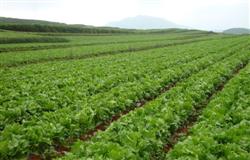
A Complete Guide to Composting Organic Fertilizer and Its Application Methods
Applying organic fertilizer in vegetable production can achieve the goal of continuously supplying various nutrient needs in the crop root zone, and can also gradually improve the organic matter and buffering capacity of vegetable garden soil, and can alleviate soil-borne diseases and continuous cropping obstacles in many important ways. Therefore, vegetable production has always valued the application of organic fertilizer. However...
-

Key Points and Methods of Farmyard Manure Composting Explained
Composting Techniques for Farmyard Manure
-
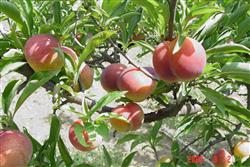
Foliar fertilizer is not the same as pesticide; the difference between the two must be clearly distinguished
I. Why are medium-element water-soluble fertilizers used for fertilizing fruit trees? 1. The soil is not lacking in calcium fertilizer; what is lacking is mobile ionic calcium, so when choosing fertilizer, be sure to choose a calcium fertilizer that dissolves quickly in water. Research shows that crops such as ginger, watermelon, chili pepper, eggplant, tomato, and grape absorb calcium far...
-
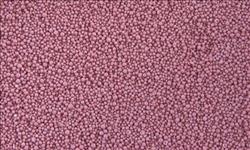
What are the methods for distinguishing potassium sulfate from potassium chloride?
How do you distinguish potassium sulfate from potassium chloride? Please give a detailed introduction. To distinguish potassium sulfate from potassium chloride, you can refer to the following methods: since potassium chloride is lower in price than potassium sulfate and cannot be used on chlorine-sensitive crops, to correctly distinguish and use these two fertilizers, note: first, when buying potash fertilizer, first look with your eyes at the appearance...
-
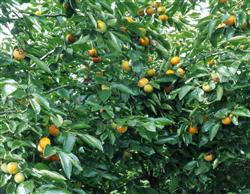
What fertilizer is best to apply before and after harvesting persimmon trees?
What fertilizer is best to apply before and after harvesting persimmon trees? Why apply fertilizer even after harvesting? Before and after fruit harvest, persimmon trees should be given nitrogen and potassium fertilizer to promptly replenish the tree's nutrients and raise its nutrient level, which helps the tree flower and fruit normally the following year. The specific method is: apply pre-harvest fertilizer 15~20 days before harvesting the persimmons, mainly with quick-acting, fast-dissolving nitrogen and potassium fertilizer. For trees bearing 50 kg or more, apply 2~3 kg of urea and 0.5~1 kg of potassium chloride or potassium sulfate per tree, or 1~1.5 kg of potassium sulfate, broadcast after rain or dissolved in 50~60 times clear water and drenched on. Apply post-harvest fertilizer within 10~15 days after harvesting, mainly with complete nitrogen, phosphorus and potassium fertilizer and high-quality organic fertilizer. Along with clearing the orchard, remove all kinds of weeds around the persimmon tree, then dig a ring-shaped trench 25~30 cm deep and 25~30 cm wide around the tree's drip line, thoroughly stir and mix 2~3 kg of nitrogen, phosphorus and potassium compound fertilizer with 40~50 kg of composted, fully rotted human, livestock and poultry manure, apply it into the ring trench, and cover with soil.
-
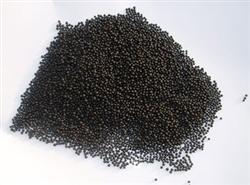
How to correctly distinguish organic fertilizer, bio-organic fertilizer and microbial fertilizer
Bio-organic fertilizer is a new type of fertilizer with the dual functions of organic fertilizer and microbial fertilizer, a new type of fertilizer where 1+1≥2. During market promotion, it was found that farmers and dealers find it very difficult to clearly distinguish the above three types of fertilizers, causing market confusion. The author provides the following analysis from a technical perspective: Click to get more organic fertilizer application techniques...
-
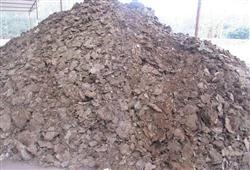
What are the composting methods for chicken manure and pig manure?
How should livestock and poultry manure be treated before it can be applied? How many days does chicken manure need to be piled and composted? How many days does pig manure need to be piled and composted before it can be applied? Below, Zhongdiwang gives a brief introduction for netizens' reference. 1. Chicken manure The nitrogen in fresh chicken manure is mainly in the form of urates, and this type of salt is not easily absorbed and utilized directly by crops, and it is also harmful to the growth of crop roots...
-
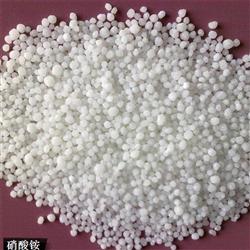
What is the difference between ammonium nitrate and ammonium sulfate nitrate? Distinguishing the two nitrogen fertilizers this way
What is the difference between ammonium nitrate and ammonium sulfate nitrate? What is the difference in application methods between ammonium nitrate and ammonium sulfate nitrate? The following Gengzhongbang Planting Network gives a brief introduction for netizens' reference. 1. Ammonium nitrate. Characteristics of ammonium nitrate. The chemical formula of ammonium nitrate: NH4NO3, containing 33%-34% nitrogen (N), including ammonium and nitrate...
条件筛选