A Complete Guide to Composting Organic Fertilizer and Its Application Methods
Applying organic fertilizer in vegetable production can achieve the goal of continuously supplying various nutrient needs in the crop root zone, and can also gradually improve the organic matter and buffering capacity of vegetable garden soil, and can alleviate soil-borne diseases and continuous cropping obstacles in many important ways. Therefore, vegetable production has always valued the application of organic fertilizer. However...
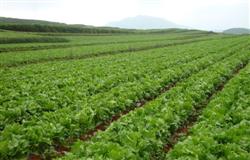 When composting non-decomposed organic fertilizer, the composting site should be chosen in a sheltered, sunny, high and dry place. Spread agricultural film on the composting ground or choose a cement ground. The livestock manure clumps in the farmyard manure should be broken up, and the straw should be chopped to below 5 cm and rolled, and about 3% superphosphate should be mixed in and turned evenly with the manure and soil before piling. Adding superphosphate is mainly to prevent the loss of nitrogen in the organic fertilizer and can increase the activity of microorganisms.
After piling, pat the surface flat with an iron shovel, coat it with mud about 10 cm thick or cover it with agricultural film, press the surroundings tightly to create an oxygen-deficient environment so that it decomposes quickly. Farmyard manure piles can decompose in about 60 days. When the color of the organic fertilizer changes from the original gray to purple or black, the texture is loose, and there is a foul odor, it indicates that it has decomposed, and it should be applied to the orchard in time.
When applying fully decomposed organic fertilizer to the orchard, choose a location outside the vertical projection of the tree canopy, dig a fertilization ditch 30-40 cm wide and 30-40 cm deep, mix the organic fertilizer with an appropriate amount of chemical fertilizer (nitrogen and phosphorus fertilizer) and topsoil evenly, then place it into the bottom of the fertilization ditch, and finally cover it with the subsoil raw soil that was dug out, or broadcast it over the whole orchard, and after broadcasting, turn it into the soil layer.